
In today’s Finshots, we explain why the rupee has been gaining against the dollar and whether this turnaround is because of something fundamental.
But here's a quick sidenote before we begin. If people depend on your income, you need to read this.
Most first-time earners skip insurance entirely or buy the wrong thing because someone sold it to them. Both are expensive mistakes.
That's why we're running a 2-day Insurance Masterclass to help you get it right from the start.
📅 Tuesday, 17th November 6:30 PM: Life Insurance
📅 Wednesday,18th November 6:30 PM: Health Insurance
👉🏽 Click here to reserve your spot today.
The Story
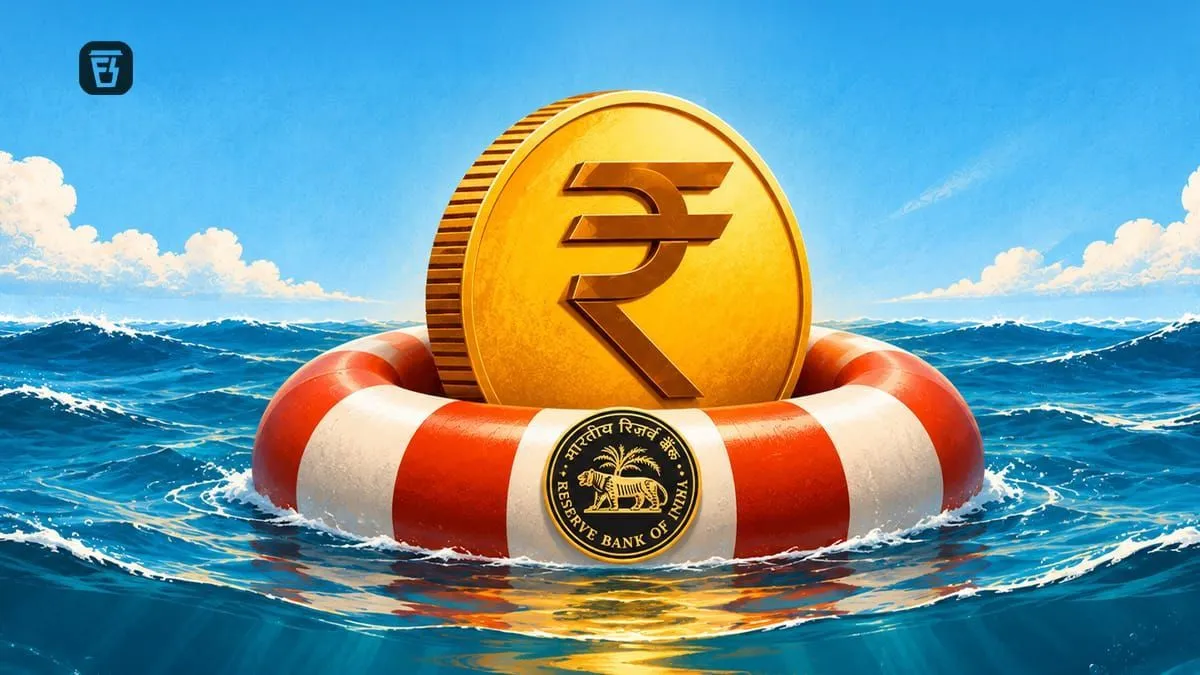
For much of 2026, the Indian rupee has been having a difficult time against the US dollar. It fell to a record low of around ₹96 in March and nearly revisited that level last month. But then, things began to change. The rupee staged a recovery and touched ₹93.63, its best level in six months.
So, at first glance, it looks like the RBI's efforts are finally paying off.
But to understand whether the rupee has genuinely stabilised, we need to look beyond its exchange rate and understand what is driving the movement. And the first thing we need to understand is that the rupee's value against the dollar doesn't necessarily tell us how competitive it is against the rest of the world.
To understand that, we must look at something called the Real Effective Exchange Rate, or REER. It compares a currency against a basket of trading partners' currencies, while adjusting for inflation. The REER suggests that the rupee has become considerably cheaper in real terms over the past year.
So the question is not simply whether the rupee has stopped falling against the dollar, but whether the RBI has managed to stabilise it without undermining the country's broader economic interests.
To begin with, there are signs that some pressure on the rupee has eased.
For starters, India's merchandise exports have been growing in double digits for six consecutive months. In September, exports grew by 23% year-on-year to over $44 billion, while imports grew at a lower rate. This helped narrow the merchandise trade deficit to $30 billion, compared with $33 billion in September last year.
There has also been some improvement in FPI investments in the country. Foreign investors had been pulling money out of Indian equities for much of the year, over $30 billion, by October 2026, to be precise. But November brought a reversal, with foreign investors buying nearly $6 billion worth of Indian equities in just 10 days. When foreign investors bring money into India, they need to convert their dollars into rupees to invest. This increases the supply of dollars in the market and supports the INR.
Then comes the RBI’s role.
You see, one of the biggest USD demand in India comes from oil companies, which need to buy dollars for crude oil imports. Usually, they get this via banks, adding to the demand in the regular forex market. So, in October, it introduced a special dollar window for Indian Oil Corporation, Hindustan Petroleum and Bharat Petroleum. Under the arrangement, the RBI supplies their entire dollar requirements, taking this demand away from the regular interbank forex market. This meant the oil companies no longer had to compete with other buyers for dollars in the market. By shifting their demand off the market, the RBI reduced demand for USD in the spot market.
Apart from this, the RBI also increased repo rates and introduced a Foreign Exchange Risk Reserve. Simply put, it’s a deposit introduced by the RBI to slow down the fall of the INR. It even introduced a USD-INR currency swap facility, under which banks can exchange dollars they receive through foreign deposits with the RBI for rupees at the prevailing exchange rate. This gives banks rupee funds that they can use for lending. After three to five years, banks return the rupees along with a pre-agreed premium to get their dollars back. Together, these measures helped ease the immediate pressure on the currency. But there is a catch. While this has certainly eased demand for USD, we can’t say it has eliminated it.
More importantly, the RBI can influence the supply and demand for dollars within India, but it cannot control how attractive the dollar is to investors around the world. And right now, global factors are making the dollar increasingly attractive.
For one, the US dollar has been strengthening. The US Dollar Index (DXY), which measures the dollar's value against a basket of six major currencies, recently broke higher and reached its highest level in around 18 months.
This was partly driven by stronger-than-expected US inflation and expectations that the Federal Reserve could raise interest rates again in December.
And why does this matter for the rupee?
When the Fed raises interest rates, investments such as US government bonds can offer higher returns. This makes dollar-denominated assets more attractive to global investors. Some may then shift money away from emerging markets like India and toward the US. To do that, they sell their rupee holdings and buy dollars, increasing demand for the latter.
Of course, the DXY does not directly measure the rupee's value. It tracks the dollar against six other major currencies. But a rising index tells us that the dollar is strengthening globally, which can make it harder for currencies like the rupee to appreciate.
Then there's the issue of India's trade deficit. While September showed an improvement, imports surged again in October, widening India's merchandise trade deficit to $39.88 billion. Among these, gold and petroleum imports were the major contributors. So, the improvement we saw in September may not necessarily signal a sustained reduction in India's demand for foreign currency.
And this brings us to a more fundamental problem: India's dependence on imported energy. We import roughly 90% of the crude oil we consume, and we pay for these purchases in dollars. Unlike some other factors, this vulnerability can't be fixed by currency-market intervention alone.
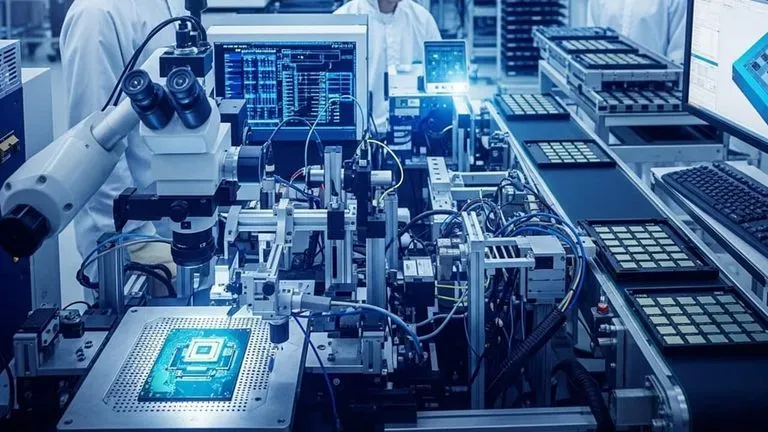
But reducing the oil import bill alone won't solve the problem. India also needs to become a more competitive manufacturing and exporting economy.
Last year’s Economic Survey points to something called “Mittelstand”, which is the experience of countries such as Germany, Japan, and Switzerland, as well as East Asian manufacturing economies, where MSMEs built strong manufacturing exports and deep integration into global value chains. The idea is that countries become less dependent on volatile foreign capital when they consistently earn foreign exchange through the goods and services they sell to the rest of the world.
India already has an excellent services export sector and a substantial remittance base. But it needs to complement these strengths with a more competitive manufacturing ecosystem. That means improving infrastructure, reducing regulatory friction, and making it easier for domestic businesses to participate in global supply chains.
Over time, this can help India earn more dollars through exports and reduce its dependence on foreign savings to finance its imports. And that is what will determine whether the rupee's recovery lasts.
Until then…
If you liked this story on the RBI stabilising the rupee, feel free to share it with your friends, family or even strangers on WhatsApp, LinkedIn or X.