India's retail inflation climbed to 6.09 percent in October, breaching the Reserve Bank of India's (RBI) upper tolerance limit of 6 percent, as a sharp rise in food prices continued to push up household expenses.
Inflation, measured by the Consumer Price Index (CPI), rose from 5.54 percent in September to 6.09 percent in October, according to data released on November 12.
The latest reading marks the ninth consecutive monthly increase in retail inflation, with the headline rate more than doubling from 2.74 percent in January 2026.
Food inflation, measured by the Consumer Food Price Index (CFPI), accelerated to 8.94 percent in October from 7.74 percent in September.
The October reading is particularly significant as inflation has moved beyond the RBI's mandated 2-6 percent tolerance band, with economists expecting price pressures to remain elevated over the next few months.
"India's headline inflation tested the upper end of the RBI's tolerance band in Oct to a two-year high, with a sharp food-driven upmove accompanied by signs of broadening out of price pressures on a sequential basis," said Radhika Rao, senior economist and executive director at DBS Bank.
Food prices drive inflation higher
Food prices continued to be a major driver of inflation, with onions, garlic, ginger and lemons witnessing particularly sharp price increases.
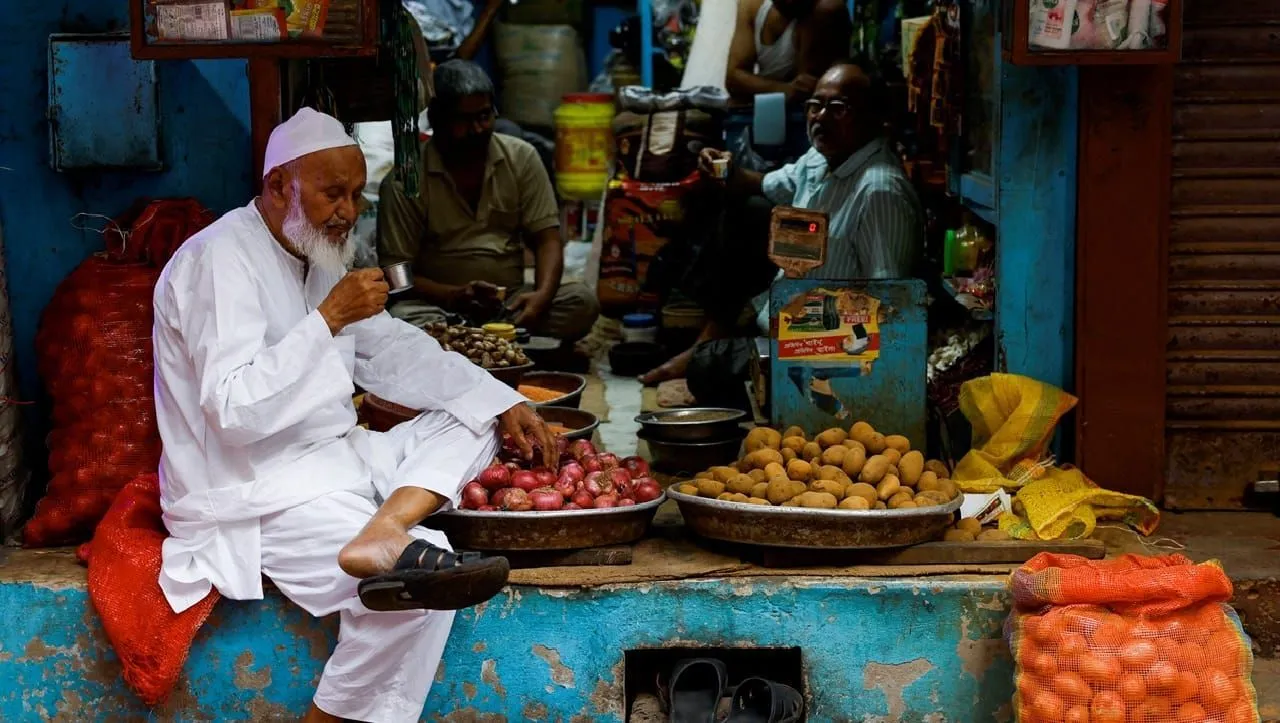
Onion prices surged 116.22 percent in October compared with the same month last year, accelerating from an already elevated 108.13 percent in September. Garlic inflation increased to 60.74 percent from 54.62 percent, while lemon inflation rose to 47.30 percent from 36.41 percent.
Not all vegetables witnessed an increase in prices. Potato prices declined 14.24 percent year-on-year, while cauliflower prices fell 10.57 percent. Brinjal and cabbage also recorded a decline in prices compared with last year.
The broader food and beverages category recorded inflation of 8.51 percent.
Aditi Nayar, Chief Economist at ICRA, said the sustained increase in food and beverages inflation played a key role in pushing up the headline number, even as price pressures broadened across 11 of the 12 CPI divisions.
ICRA expects food and beverages inflation to remain above 8 percent in November, with milk, sugar and onions continuing to exert upward pressure.
The deficient monsoon and inadequate replenishment of reservoir levels have also heightened concerns about the outlook for the rabi crop, potentially keeping food inflation elevated for longer.
Rural inflation climbs to 6.63%
Inflationary pressures remained more pronounced in rural areas, where headline inflation increased to 6.63 percent in October from 6.08 percent in September.
Urban inflation, meanwhile, rose to 5.41 percent from 4.88 percent in the previous month.
Food inflation in rural areas climbed to 9.09 percent from 8.06 percent in September, while urban food inflation increased to 8.68 percent from 7.18 percent.
Beyond food, restaurants and accommodation services recorded inflation of 10.06 percent, while personal care, social protection and miscellaneous goods and services registered inflation of 10.14 percent.
Other personal effects, a subgroup that includes items such as jewellery, recorded inflation of 25.44 percent.
Transport inflation stood at 5.84 percent, while clothing and footwear inflation was 4.96 percent. Housing, water, electricity, gas and other fuels recorded a relatively moderate increase of 2.90 percent.
Southern states record highest inflation
Tamil Nadu recorded the highest headline inflation among major states at 7.29 percent, followed by Telangana at 7.26 percent and Andhra Pradesh at 7.25 percent.
All three states recorded inflation substantially above the national average of 6.09 percent, highlighting regional differences in price pressures.
RBI rate hike in December increasingly likely
With inflation breaching the RBI's upper tolerance limit, economists expect the central bank to raise interest rates again in December as food prices and adverse base effects threaten to keep the headline reading elevated.
Nayar expects CPI inflation to average around 6.2 percent in the third quarter of FY27, slightly higher than the Monetary Policy Committee's projection of 6 percent.
ICRA also expects inflation to remain around 6.1 percent in November, with core inflation likely to rise further partly because of the unfavourable base effect arising from GST rationalisation.
"With the CPI inflation set to remain above the 6% upper bound of the RBI's tolerance band over the next couple of months, and GDP growth likely to ease only slightly in Q2 FY2027 relative to the previous quarter while remaining above the 7.0% mark, a further 25 bps rate hike in December appear almost certain," Nayar said.
Kotak Mahindra Bank expects further monetary tightening beyond December, with inflation likely to remain elevated on account of food prices, adverse base effects and the partial pass-through of higher commodity costs.
"We continue to expect the RBI to hike rates by additional 50bp in FY27, with further upside risks likely if food inflation flares up significantly and/or benign oil prices reverse trajectory," said Upasna Bhardwaj, Chief Economist at Kotak Mahindra Bank.