Market Mastery
Webinar by Vishal Malkan
Find the weak links
in your portfolio by Vishal Malkan
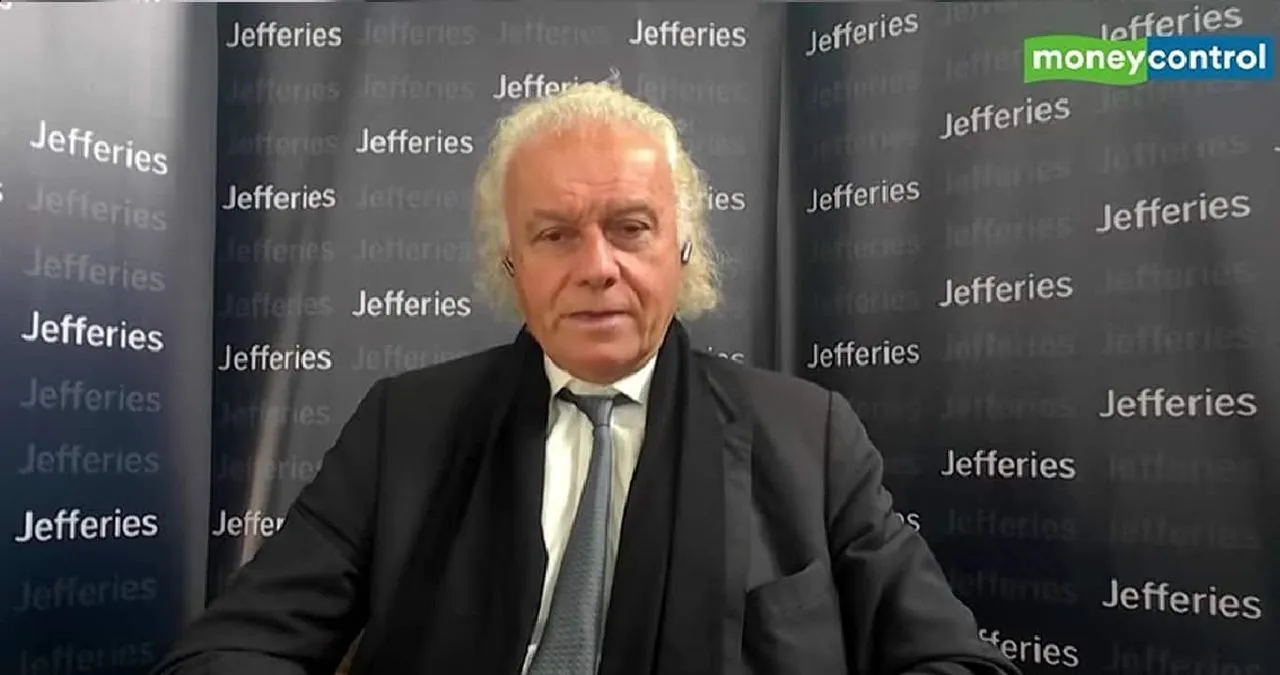
Jefferies has increased its recommended weighting on India in its Asia-Pacific ex-Japan relative-return portfolio, while reducing allocations to South Korea and Taiwan. The move reverses the firm’s earlier tilt towards North Asian technology and reflects strategist Christopher Wood’s concern that the global AI capital-expenditure cycle may be nearing a peak.
In his latest Greed & Fear note, Wood raised India’s recommended weight by 2 percentage points to 14 per cent, maintaining an overweight against its 12 per cent MSCI benchmark weighting. He cut South Korea and Taiwan by 1 percentage point each, to 18 per cent and 24 per cent respectively, leaving both markets underweight.
The change increases India’s overweight to 2 percentage points, while Korea remains 1 percentage point underweight and Taiwan 2.8 percentage points underweight. It reduces exposure to the two markets most closely tied to memory chips, foundries and semiconductor equipment, and increases exposure to a market whose earnings base is less concentrated in the AI hardware supply chain.
What changed
The adjustment is a reversal of Jefferies’ positioning earlier in 2026. As AI hardware stocks rallied and lifted the index weights of Korea and Taiwan, Wood had reduced India’s relative overweight and increased exposure to North Asian semiconductor names.
The latest move pushes the portfolio in the opposite direction. India is now being positioned not primarily as a domestic-growth overweight, but as relatively less exposed to a potential slowdown in AI-related capital spending.
That distinction matters. Jefferies is not arguing that India is insulated from a broad emerging-market selloff. Its case is narrower: if the main risk is a pullback in AI investment, India’s lower direct exposure to hyperscaler spending and semiconductor hardware becomes relatively more attractive.
Why Wood is cautious
Wood’s concern is that financial markets are becoming less willing to fund the next phase of AI investment, even though capital-spending plans remain elevated.
He points to the scale of the current cycle. AI-related capital expenditure — measured as non-residential private fixed investment in information-processing equipment, software and data-centre construction — contributed 1.39 percentage points, or 67 per cent, of US real GDP growth in the four quarters to September 2026. Investment in information-processing equipment and software has reached 5.35 per cent of nominal GDP, above the previous cycle peak of 4.46 per cent in late 2000.
Consensus estimates cited by Jefferies project roughly $1.04 trillion of capital expenditure by Microsoft, Amazon, Alphabet and Meta in 2027. Wood’s concern is not that the spending has already slowed; it is that markets may become less willing to finance spending at that scale.
The market evidence
Wood cites several signals of strain. Credit spreads and credit default swap spreads have widened for Amazon, Alphabet, Meta, Oracle, CoreWeave and SoftBank. Several hyperscalers have reported negative free cash flow even as they maintain or raise capital-expenditure guidance.
Semiconductor equities have also corrected sharply. Memory stocks are down about 40 per cent from their late-June peak, while the China AI Semiconductor Top 10 Index has halved from its mid-year high. The Philadelphia Semiconductor Index has recently seen one of its sharpest multi-day declines of the cycle.
Wood first raised the possibility of an AI-capex peak in March. He now argues that the latest market action is consistent with that warning.
What it means for India
For portfolios concentrated in the AI hardware supply chain, reducing Korea and Taiwan while adding India lowers direct exposure to memory, foundry and semiconductor-equipment cyclicality. India’s earnings drivers — domestic consumption, financials, infrastructure and a broader technology sector — are less directly tied to hyperscaler capital budgets.
That does not make India a safe haven in an absolute sense. It makes it a relative diversifier if the central risk shifts from broad emerging-market weakness to a sharper slowdown in AI-related investment.
Disclaimer: The views and investment tips expressed by investment experts on Moneycontrol.com are their own and not those of the website or its management. Moneycontrol.com advises users to check with certified experts before taking any investment decisions.