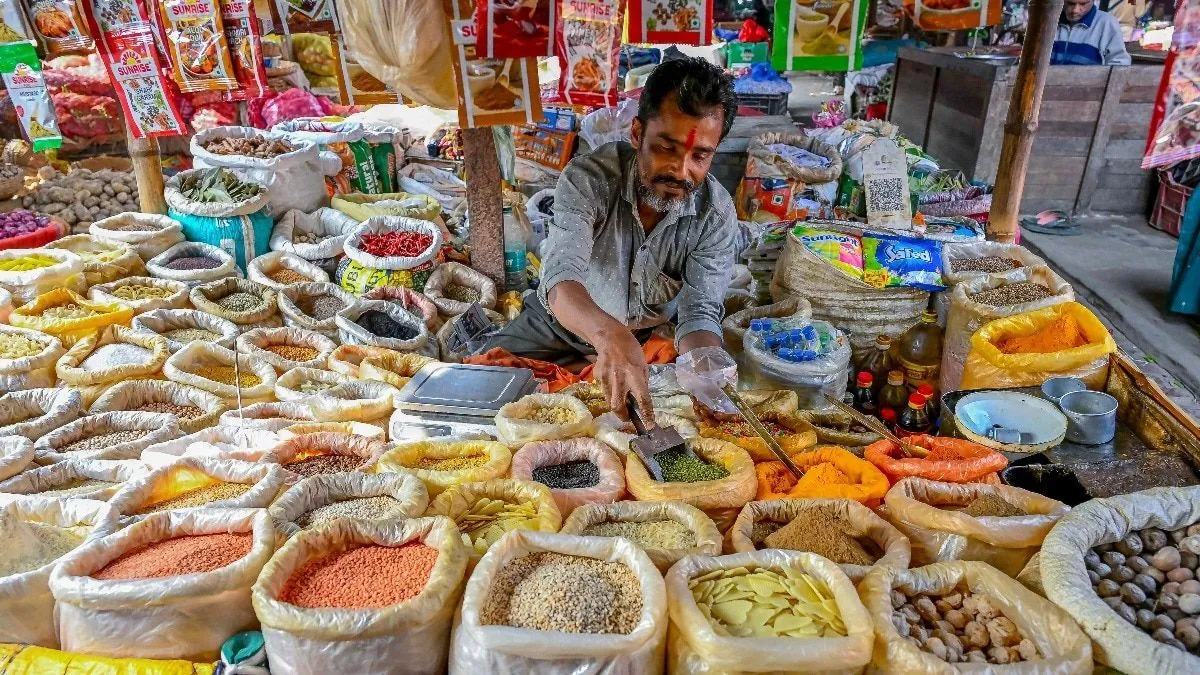
For millions of Indian households, the monthly grocery bill is becoming harder to manage. Cooking oil, vegetables, cereals, milk and other everyday essentials are taking up a larger share of family budgets, leaving less money for eating out, shopping, entertainment and even savings. Some households are having to make a more difficult choice — buy less or switch to cheaper alternatives. Now, a sharp rise in wholesale inflation suggests the pressure might not ease anytime soon.
Wholesale inflation climbed to 12.3% in October, staying in double digits for the second month in a row. In simple terms, the cost of goods is rising before they reach shops and consumers.
The scale of this squeeze is reflected in a nationwide LocalCircles survey of 74,311 respondents across 326 districts. The survey was conducted between September 18 and November 10.
Going by the findings, 98% of respondents said they were spending more on essential commodities than they were doing 12 months ago. Nearly 92% reported an increase of at least 10%, while 79% said their monthly spending had gone up by 15% or more.
With retail inflation also breaching the Reserve Bank of India's upper tolerance limit of 6% in October, touching 6.09%, the pressure on household budgets could intensify further.
With prices rising at both the wholesale and retail levels, the question is how much more households can absorb.
HOUSEHOLD BUDGETS ARE BEARING THE BRUNT
The LocalCircles survey, which took into account 1.34 lakh responses, suggests that the increase in household expenditure is not confined to a handful of families or a particular category of essentials.
On the question of how much more they were spending on household essentials compared with a year ago, 61% of the respondents reported an increase of more than 20% every month. Another 18% said their expenditure had risen by 15-20%, while 13% reported an increase of 10-15%.
The experience of consumers also points to a wide-ranging increase in the prices of everyday goods. In a separate question that received 21,637 responses, participants were asked which household essentials had become significantly more expensive over the preceding year. Multiple selections were permitted.
Ghee, butter and edible oils topped the list, with 75% identifying these products as having become costlier. Fresh vegetables followed at 73%, while 71% reported significant increases in the prices of rice, wheat and other cereals.
Milk and dairy products, including curd and paneer, and fresh fruits were each cited by 65% of respondents. Pulses and dals were identified by 62%.
Which essentials have become costlier?
(Based on 21,637 responses to a LocalCircles survey)CommodityRespondents reporting price riseGhee, butter and edible oils75%Fresh vegetables73%Rice, wheat and cereals71%Milk and dairy products65%Fresh fruits65%Pulses and dals62%
The increase is therefore being felt across several categories that form the foundation of an ordinary household's monthly consumption. When prices rise simultaneously across commodities such as cooking oils, cereals, vegetables, dairy and pulses, families have limited room to substitute one essential with another.
This also helps explain why the increase in household expenditure reported by consumers is considerably higher than the headline retail inflation rate.
India's consumer price inflation stood at 6.09% in October, while food inflation was higher at 8.94%. These are measures of price increases across defined baskets of goods and services. The LocalCircles findings, on the other hand, capture what respondents say they are spending more on their own household essentials.
The two measures are not directly comparable. Household expenditure also depends on the quantities purchased, individual consumption patterns and the composition of a family's shopping basket. Nevertheless, the survey offers an indication of how the cumulative rise in essential commodity prices is affecting household finances.
FAMILIES ARE CUTTING BACK, INCLUDING ON ESSENTIALS
Perhaps the more worrying finding is that households are no longer responding to higher prices merely by postponing discretionary purchases. The squeeze is beginning to affect consumption itself.
In another question, which received 20,384 responses, LocalCircles asked consumers how rising prices were changing their household spending and consumption habits. Here too, respondents could select multiple options.
Nearly three-fourths, or 74%, said they were reducing expenditure on discretionary activities such as eating out, shopping and entertainment. Half reported purchasing smaller quantities of essential commodities.
More significantly, 39% said they were consuming less milk, dairy products or other nutritious foods. An equal proportion reported buying fewer fruits and vegetables.
Another 39% said they were dipping into savings or borrowing money to manage household expenses. Meanwhile, 37% were switching to cheaper brands or lower-priced alternatives.
Only 8% reported no significant change in their consumption or spending behaviour.
These findings suggest that the impact of inflation is extending beyond lifestyle adjustments. Cutting down on restaurant visits or postponing shopping purchases may help households manage their monthly budgets. But reducing the consumption of dairy products, fruits and vegetables indicates that the pressure is reaching the food basket itself.
WHY WHOLESALE INFLATION MATTERS TO CONSUMERS
While retail inflation measures the change in prices paid by consumers, wholesale inflation tracks price movements at an earlier stage of the supply chain. A sustained increase in wholesale prices can eventually put pressure on manufacturers, distributors and retailers to raise the prices charged to customers.
The latest WPI numbers indicate that this pressure is building.
Fuel and energy costs have been a major contributor to the increase. Inflation in the overall fuel and power category climbed to nearly 33% in October, compared with around 26% in September.
The increase was particularly pronounced in crude petroleum and natural gas, where wholesale inflation reached 70.8%, against 57.3% in the previous month. A year earlier, prices in this segment had contracted by 7.2%. The low base of the previous year has therefore also amplified the latest year-on-year increase.
However, the increase is not restricted to food and fuel. Manufactured products, which have a direct bearing on the cost structures of businesses, recorded inflation of 9.5%.
Textiles, tobacco products, chemicals, rubber goods, metals and electrical equipment were among the manufacturing segments witnessing elevated price increases.
This matters because manufacturers facing higher input and production costs may eventually pass at least some of the increase on to buyers. The extent and timing of this pass-through will depend on factors such as demand, competition, margins and the ability of businesses to absorb additional costs.
Speaking to Business Standard, Madan Sabnavis, chief economist at Bank of Baroda, pointed to the pressure building on manufactured goods. He expects companies to face increasing difficulty in absorbing the rise in production costs indefinitely. "Companies have passed on only a limited part of the input cost increase to consumers, keeping in mind the overall inflation environment," he said.
The resulting increase in selling prices could gradually find its way into the core component of retail inflation over the coming months, depending on how businesses respond.
In other words, even if consumers have not experienced the entire increase in wholesale prices yet, the possibility of further price increases remains.
If higher wholesale costs continue to feed into retail prices, the burden could extend beyond monthly grocery bills to savings, borrowing and overall consumption. For households already reporting that essentials cost substantially more than they did a year ago, the next phase of inflation could prove even harder to manage. With all indices signalling inflation beyond the RBI's comfort zone, all eyes will be on its next monetary policy meeting in December.
- Ends