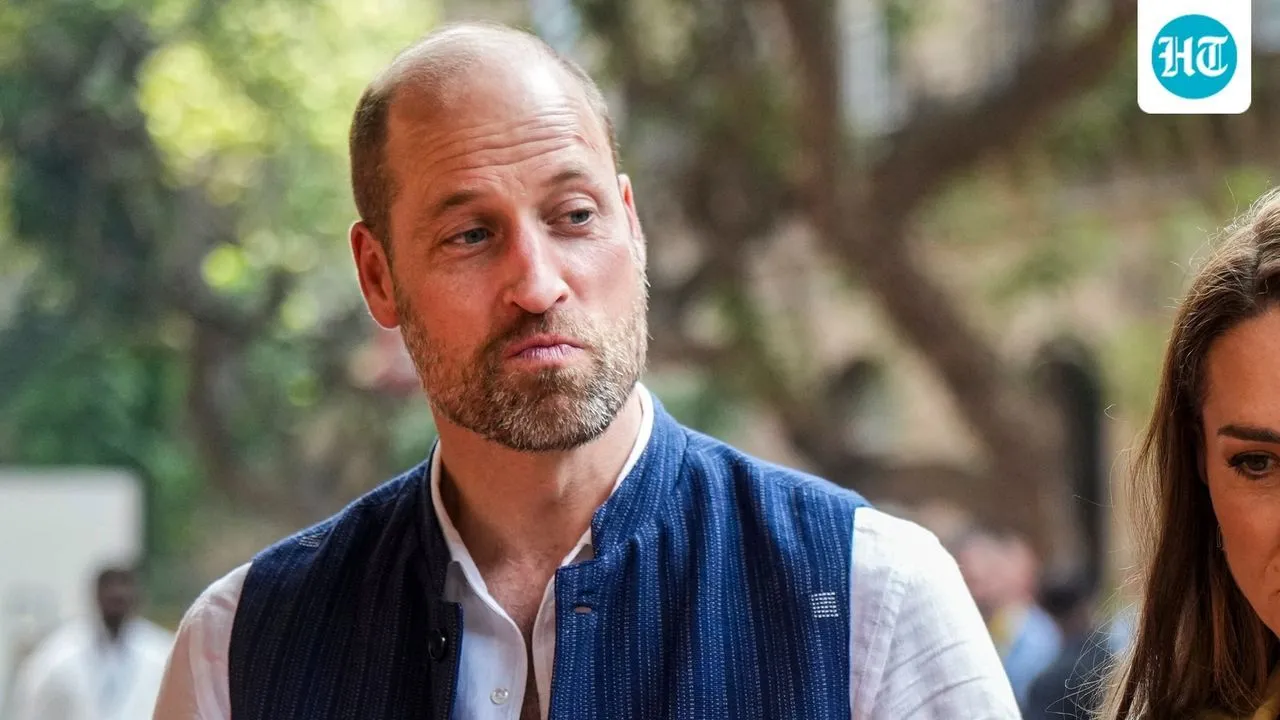
Reacting to a member of the British royal family wearing his brand's creation, Kher said he was particularly pleased about the recognition it brought to the artisans behind the garment.
"It’s cool. I’m more happy for the weavers to get recognition for their craft and the team who worked tirelessly to make the piece," he said.
A handloom fabric by West Bengal weavers
Kher said the fabric used for Prince William’s jacket was woven by Netai Mana and Brojokishore Maity through KARDO’s collaboration with Glocalweaves. The fabric was woven in Harali village, West Bengal.
"It is not a normal extra weft yarn. It’s heavier and double ply. Normal extra weft is lightweight. Therefore it took weavers time to develop this fabric," said the founder and creative director of KARDO.
Explaining the technique, Kher said, “This fabric is woven on a handloom using an extra weft technique, a process where motifs are laid into the cloth by hand with a denser thread across the warp,”
“Each design is built pick by pick, demanding precision, patience, and the skill of highly trained artisans. It is a slow and exacting craft, and one that gives the fabric its depth and character.”
The fabric took years to develop, he revealed. “The fabric took years to develop.One 12 metre thaan would take about 15 days [to weave],” he said, to give an idea of the immense amount of work that goes into handloom textiles.
(Also read: Earthshot Prize 2026: Why Prince William and Kate are in Mumbai and what the awards are about)
While developing the fabric was a time-consuming process, the jacket itself took considerably less time to make. “We custom made it. Extra weft 100% handloom cotton hand woven in Bengal,” he said. “It took two days to complete.”
Kher declined to reveal further details about who commissioned the jacket or when it was ordered.
London-born, India-based founder
Rikki Kher is the founder and creative director of KARDO, an Indian clothing brand that focuses on traditional textiles and artisanal craftsmanship. He has been working in the textile and fashion industry since 1993, with experience in textile production, garment manufacturing, clothing retail and wholesale sales.
Born and raised in London to Punjabi Indian parents, Kher grew up around textiles and fashion. According to an Open magazine article, his mother was a seamstress who made his clothes, while his father worked in the textile business.
He later lived in New York, Milan and Cyprus before moving to New Delhi in 2004. After arriving in India, Kher worked in sourcing and merchandising for Spanish department store chain El Corte Inglés. In 2007, he set up his own buying office.
His interest in Indian textiles and craft traditions gradually led him towards starting a clothing label. A visit to Jaipur, where he came across khadi fabrics, and the purchase of a handwoven ikat sari at a mela helped shape the idea.
“I thought that no one is doing textile crafts in menswear. So that’s what I am going to do,” he told Open magazine.
He founded KARDO in 2013, with the aim of bringing Indian textile crafts into contemporary clothing. The brand is known for its menswear made using traditional Indian textiles and artisanal techniques.