A film mounted on a massive budget of Rs 4,000 crore is no easy feat, especially when it is a culturally rich epic like Ramayana, with so many emotions attached to its representation.
It is our history. Our truth.
Scrutiny was an irrevocable part of the journey that Nitesh Tiwari's Ramayana was embarking upon. From its spectacular VFX, backed by the Oscar-winning studio DNEG and sister company ReDefine, under the leadership of producer Namit Malhotra, to whether the film would do justice to and carry forward the legacy of yet another adaptation of Ramayana, the debate could not be silenced and continues to reverberate among sections of the audience.
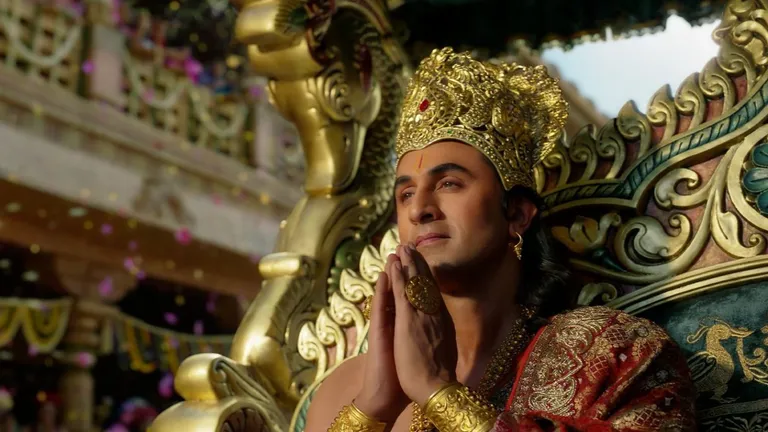
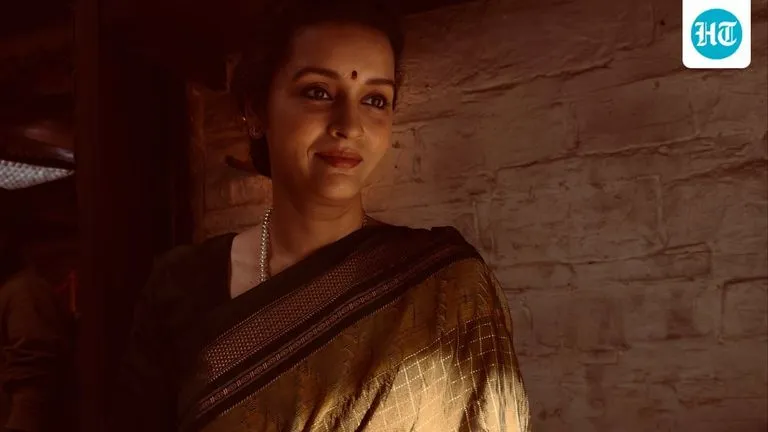
For Ramayana is finally in theatres, and the clash of opinions has only grown louder. What has intensified are the murmurs that Sai Pallavi is still miscast as Sita and that Ranbir Kapoor is not the perfect choice to bring the calm and composed demeanour of Lord Ram to the big screen.
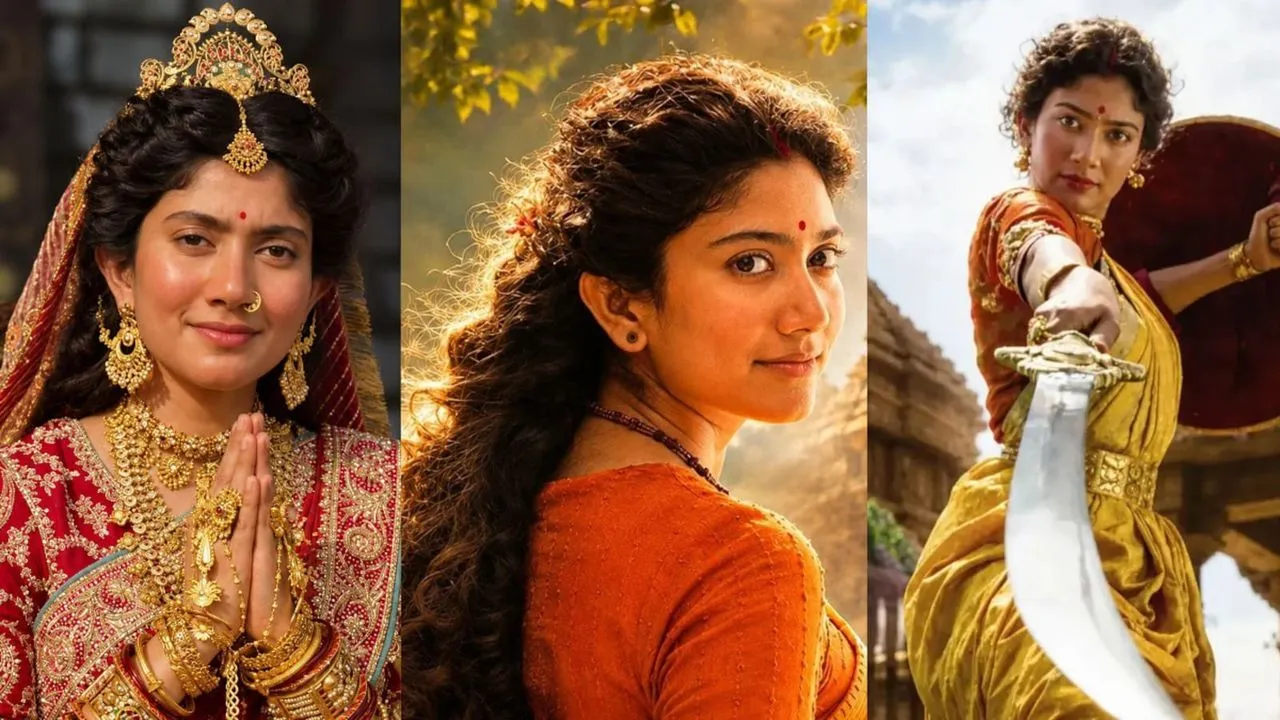
But we beg to differ. What Nitesh Tiwari did for Sita in Ramayana is give her agency. Sai Pallavi's Sita bends the age-old archetype of a damsel-in-distress. This Sita is the epitome of strength, resilience and leadership.
Sai Pallavi: The Sita Who Need Not Be Rescued
And that's exactly what makes her character so interesting. Sai Pallavi's Sita does not fade into the background as a passive figure in need of protection. This Ramayana adaptation writes Sita's story by taking inspiration from alternative texts like the Adbhuta Ramayana. She is highly articulate, brimming with physical valour and undoubtedly a self-reliant warrior princess.
Her introduction in the film begins with her childhood and how she showed promise from a tender age. A vital flashback sequence shows how she could effortlessly lift the massive bow of Lord Shiva, the Shiva Dhanush, at such a young age. An impossible feat, to say the least. It is a symbolic moment of her divinity, reflective of her immense physical and inner strength.
As she weds Lord Ram and comes to Ayodhya, she is not confined to the royal chambers but actively participates in the expansion and welfare of the kingdom.
She engages in state farming and trains children and local youths in swordsmanship and combat arts. She emerges as a trained warrior princess, and Nitesh Tiwari does not reduce the aesthetic to standard heroic set pieces.
One of the major sequences for which Sai Pallavi again faced a deluge of backlash was the 14-year forest exile segment. Aranya Kanda (The Forest Episode), the third book of the ancient Indian epic Valmiki Ramayana, also featured in Tulsidas's Ramcharitmanas.
As per the Valmiki Ramayana, there is no reference to Sita fighting alongside Lord Rama against demons during their 14 years of exile. Ram's brother Lakshman defeated Surpanakha, and both brothers together fought the demon Viradha. Rama also marched ahead alone to combat Khara, Dushana and their army.
But in Nitesh Tiwari's Ramayana, Sita's most crucial moment comes as she fights alongside Ram and Lakshman. She uses twin swords and archery to actively defend their perimeter, a brave representation of how Sita never needed saving; she held her own.
There is also the Adbhuta Ramayana, which portrays Sita as a powerful manifestation of Goddess Shakti. When dangerous forces are seen encroaching on their hermitage, Sita does not hide in the hut. She prepares for battle as the trio draw their weapons simultaneously.
It is also in this phase that the demoness Surpanakha, Ravana's sister, approaches Rama. She tries to deceive him after he rejects her proposals, taking the guise of Sita. When Lakshman chops off Surpanakha's nose in rage, Sita defends her. The arc positions Sita as a moral anchor who reprimands Lakshman for mutilating Surpanakha's nose. She stands firmly by the view that, irrespective of her demonic nature, such ruthlessness towards a woman is unacceptable. She also predicts here that the repercussions of this will not be good. Hinting at as we all know, Surpanakha going to Ravana and demanding revenge for her bruised ego was the key trigger that led to Sita's abduction.
There's the leaked waterfall scene, where Nitesh Tiwari completely flips the Sita dynamic as she protects her brother-in-law Lakshman when three vicious, wolf-like demons ambush him in the forest, leaving him brutally injured. She steps forward with a weapon in hand to protect a bleeding Lakshman, buying time until Ram arrives to deliver the final blow. Sita's maternal and protective instinct towards Lakshman reaches a crescendo here.
At every stage, Sita is consciously imagined as an equal partner to Ram. In traditional adaptations, Sita refers to her husband using formal honorifics like "Swami" or "Aryaputra". But this adaptation takes a progressive turn as Sita addresses her counterpart simply as Ram. It is a beautiful modern take on how they were equals, lifelong partners walking hand-in-hand through the wilderness.
And as the climax nears, Sita shows even more bravery and fierceness. Her ultimate test of agency occurs when mysterious forces lure Ram into the deep forest. Lakshman stays behind to protect Sita. As time passes and Sita senses that Ram might be in grave danger, she grows furious at Lakshman for not listening to her protests. As Lakshman refuses to leave her alone and go after Ram, Sita takes up the sword herself and threatens to march into the forest to protect him.
Neither does Sita wait for granted permission, nor does she stand by listening to men dictate her safety. Her self-reliant nature instantly resurfaces as she takes matters into her own hands if need be.
Why Was Sai Pallavi Constantly Trolled As Sita In Ramayana?
The trolling regarding Sai Pallavi's Hindi accent began long before Ramayana's first glimpse was unveiled. It started at a promotional event for her film Ek Din with Junaid, where a clip of her fumbling to speak Hindi went viral.
How could you then cast her as Goddess Sita in a major Hindu epic, they said.
She was also boycotted for previous comments on not viewing Ravana as entirely evil. But the most derogatory remarks came about her appearance. She was not considered 'beautiful enough' to be Goddess Sita. Sai Pallavi, who has always been vocal about her skin issues, was once again judged for her textured hair, styling and makeup.
And then the film released, and critics had more to say. More about her looks, more about her casting.
Some argued she lacked the grace and divinity that Goddess Sita embodies and should reflect on screen.
A post shared by HARSHA (@harshaframes.drp)
What gained steady momentum was the backlash towards Sai Pallavi over Sita fighting demons alongside Lord Rama in the forest. Critics believed that Sita never fought alongside Lord Rama and that this was a distortion of facts.
From nitpicking her styling to questioning her combat sequences, there have been plenty of questions asked and judgements passed.
But Sai Pallavi silenced her trolls, and how. If viewed through a wider lens, Nitesh Tiwari's Ramayana sketches a Sita who needs no rescuing. She prepares for war alongside her husband, her Ram. She is as much an asset in fighting off the demons and dangers that the 14 years of forest exile bring as her brother-in-law Lakshman, who accompanies them.
In the latest adaptation, Sai Pallavi's Sita rewrites her own history, her truth.