Advertisement
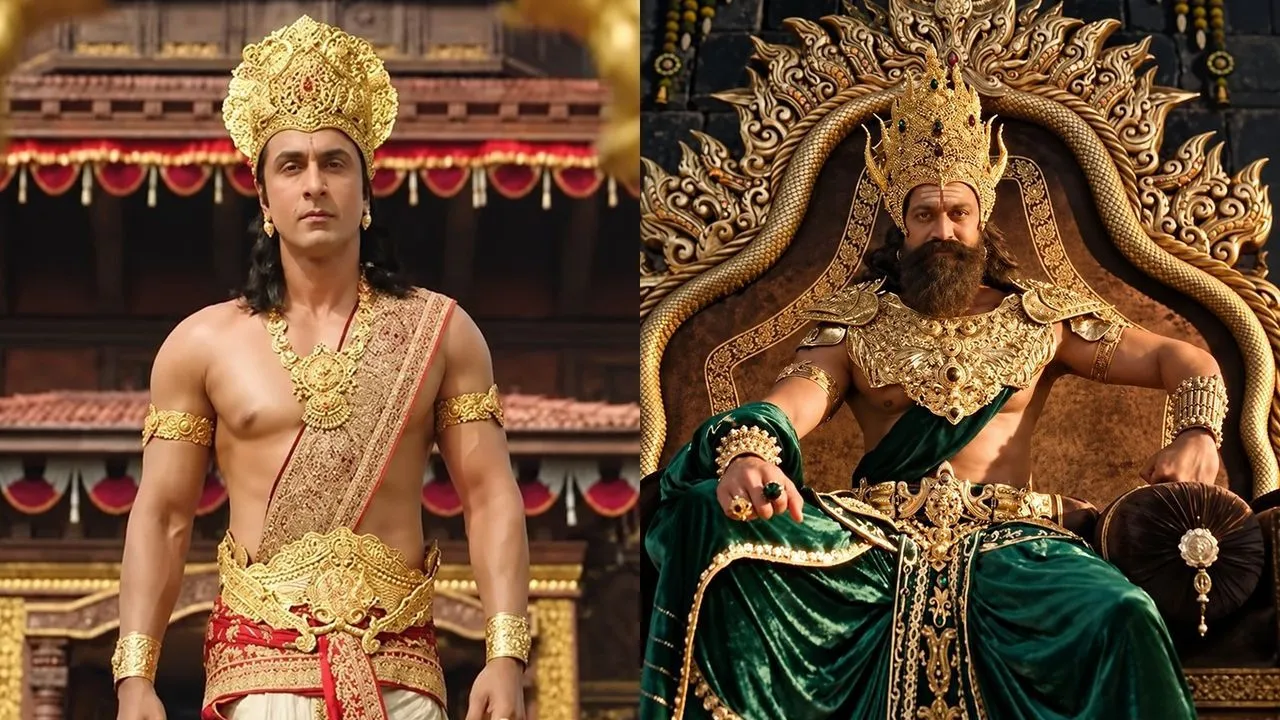
Ravana fights to establish his identity, gain power and uplift his clan, which is condemned to a life of drudgery and poverty. Though often relegated to the role of antagonist in popular retellings of the Ramayana, Ravana is given his due as a fascinating character known for his erudition and prowess as a warrior, and for being blessed by Lord Brahma and Lord Shiva. Though the film occasionally falls into the trap of telling rather than showing, his distinctive personality is established through the parallel narratives tracing his rise as well as the birth and coming of age of Rama.
The swagger Yash displayed in Toxic, where he strutted through casinos and crime dens, finds a more compelling purpose in Ramayana. He brings the right blend of swagger and menace to his portrayal of the 10-headed king. It is also interesting to watch Rakul Preet Singh as his sister, Surpanakha. Both characters, vilified in various versions of the Ramayana, get to express their ambitions and assert their individuality.
Is it possible that having Yash as the co-producer alongside lead producer Namit Malhotra, founder of Prime Focus Studios, nudged the makers to invest in building the character better? Perhaps, nonetheless, the contrast with how many of the other characters are developed is telling, particularly when the narrative shifts its focus to Ayodhya. This is where the story also begins to lose momentum, with characters that are not allowed the same level of complexity. In the syrupy-sweet world of Ayodhya, King Dashrath (Arun Govil) is benevolent and his queens embody kindness, until Manthara briefly stirs jealousy in Kaikeyi (Lara Dutta). The four sons of Dashrath, too, appear to carry forward their father’s legacy of kindness and virtue. One interesting departure is Lakshman, played by debutant Ravi Dubey, who has been given dialogues that bring out the character’s sense of humour and playfulness.
In a project of such ambition, it is inevitable that some characters will receive less attention than others. Characters such as Sumitra and Shatrughna barely get a line to speak. Ram, played by Ranbir Kapoor, and Sita, played by Sai Pallavi, fare better than the pre-release speculation surrounding their casting and the social media criticism following the release of the film’s visuals. Showing Sita fighting asuras alongside Ram and Lakshman is a welcome move, but she remains largely confined to the familiar ideal of the virtuous woman.
The film’s USP is undoubtedly its grand visuals, living up to the hype surrounding its VFX and scale. They lend the narrative much of its momentum. Ultimately, however, the visual extravagance cannot compensate for a narrative that is constrained by the conventional treatment of familiar figures. In this installment of the Ramayana, Ravana dominates with his presence, wisdom, might and technical wizardry (read: Pushpaka Vimana). Whether the balance will shift in Part Two, scheduled for release during Diwali in 2028, remains to be seen.
The writer is associate editor, The Indian Express. alaka.sahani@expressindia.com