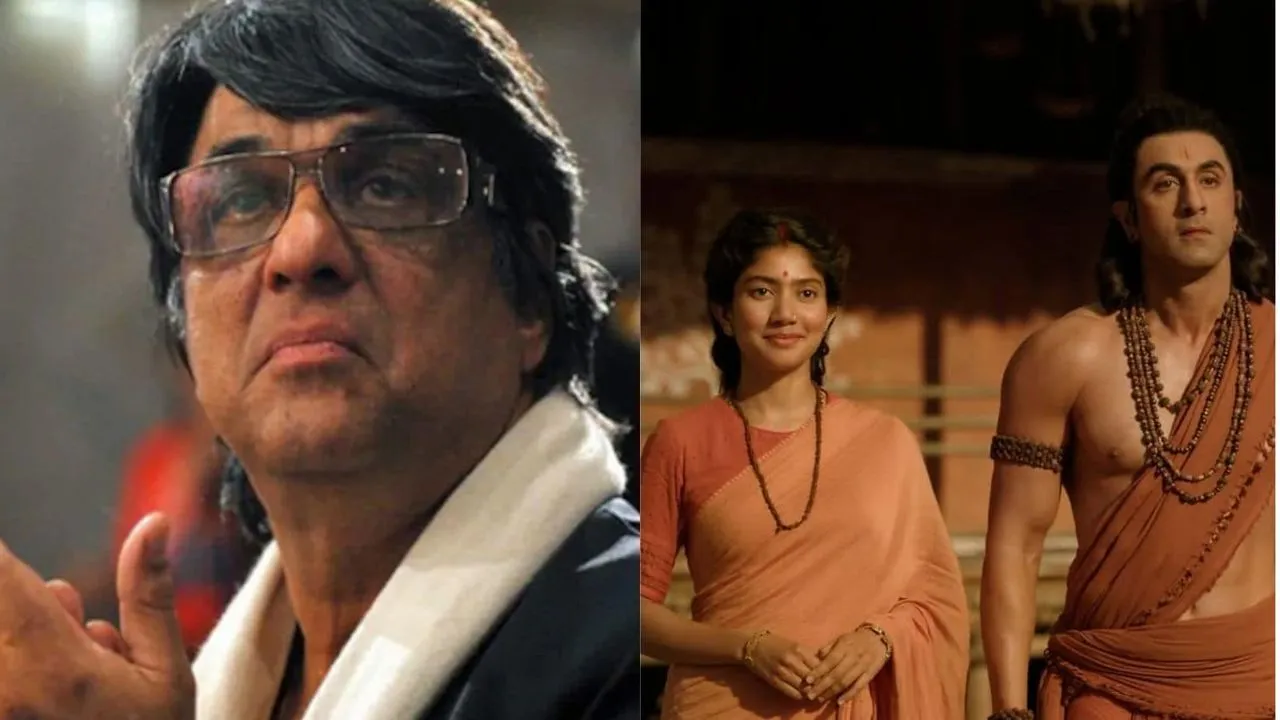
Actor Mukesh Khanna, best known for portraying Bhishma Pitamah in BR Chopra's Mahabharat, recently shared his views on modern retellings of the Ramayan in a lengthy vlog. While discussing the responses he had come across regarding Nitesh Tiwari's Ramayana, Khanna said he had heard a variety of opinions from viewers and social media users. He also referred to Adipurush, using it as an example while expressing concerns about reinterpretations of mythological texts. To note, he is yet to watch Ramayana.
He said, "Logo ke beech me kafi versions aa rahe hain. Kisi ne kaha sir badal dala, kisi ne kaha sir dhokha phir se, kisi ne Adipurush ka naam diya, kisi ne kuch ye kaha."
(Translation: "Many different versions and opinions are circulating among people. Some have said things have been changed, some have said it is another betrayal, some have referred to Adipurush, and others have expressed different concerns.")
Khanna continued, "Aur main abhi dheere-dheere sabko dekh raha hun aur sab yahi keh rahe hain sir ye another hamare se cheating hui hai. Cheating ka matlab kya hota hai? Aap apna narrative Ramayan ya Mahabharat ke through dalna chahte hain."
(Translation: "I am gradually observing all these reactions, and many people are saying that they have once again been cheated. What does that mean? It means you want to insert your own narrative through the Ramayana or Mahabharat.")
Referring to comments made around Adipurush, he said, "Jo Adipurush ke writer ne kaha tha ki main aaj ke bachho ke liye Ramayan likh raha hun, aaj ke modern bachho ke liye maine modern Ramayan banai hai. Sir, sharm aani chahiye aur baad me unko sharm bhi aayi, unhone mafi bhi mangi."
(Translation: "The writer of Adipurush had said that he was writing the Ramayan for today's children and had created a modern Ramayan for modern kids. Frankly, one should feel ashamed for saying that, and later he did feel ashamed and even apologised.")
Drawing a comparison with his own superhero show, Khanna added, "Ki aap aaj ke bachho ke liye humne bhi Shaktimaan banai thi, par humne apne dharm ka majak nahi udaya tha, dharm ko change nahi kiya tha. Shaktimaan ussi sanatan dharm me ussi chakro ke sath me unhone bachho ko sikhaya hai."
(Translation: "We also made Shaktimaan for children, but we did not mock our faith or alter it. Through Shaktimaan, children were taught values within the same Sanatan Dharma and its traditions.")
Khanna went on to criticise some of the creative choices made in Adipurush.
"Aap suddenly bolte ho ki aap jo hai usme Adipurush me Hanuman ka character change kar diya, Ram ko mooch de di, Hanuman tapori dialogue bol raha hai. Wo unhone kaha aaj ke bachhe aaj ke gaon me aise bolte hain. Are sab bolte honge, lekin aap film kyun bana rahe ho uske upar? Aap film me kyun dikha rahe ho? Bolte honge, wo theek hai, unke gaon me karte honge jo bhi karte honge, aapko koi haq nahi hai."
(Translation: "You suddenly change Hanuman's character in Adipurush, give Ram a moustache, and make Hanuman speak street-style dialogues. They said that children in today's villages speak like that. Fine, maybe they do, but why are you making a film based on that? Why are you showing it in the film? They may speak that way, and people may do whatever they do in their villages, but you have no right to alter these characters.")
Stressing the responsibility filmmakers carry while adapting revered texts, he said, "Because when you make a film, you have a responsibility. You become very, very responsible person. Whatever you show will be seen through the magnifying glass by the people who are representing this dharm, jisme sadhu-sant aa jate hain, jisme bade-bade vicharak aa jate hain, bade-bade kathavachak aa jate hain."
(Translation: "Because when you make a film, you carry a responsibility. You become a very responsible person. Whatever you show will be scrutinised closely by people who represent this faith, including saints, scholars, thinkers and religious storytellers.")
Khanna further said, "Aap majak nahi kar sakte jo kiya gaya hai. Isi beech me maine ek, maaf karna main badnam hun, dhrisht hun, mere yahan tak aata hai, main nahi rok pata. Meri jagah pe koi aur hota toh shayad nahi bolta, jo ki mujhe even kaha gaya hai sir aap bolte ho aur koi nahi bolta."
(Translation: "You cannot make fun of these things the way they have been done. Forgive me, but I have a reputation for speaking openly and bluntly. When such matters reach me, I cannot stay silent. Someone else in my place might not speak up. In fact, people often tell me that I say things that others do not.")
The film was released on November 5.