Beyond the daily AQI
Fine particulate matter, particularly PM2.5, is concerning because these particles are small enough to penetrate deep into the lungs. Some can enter the bloodstream. Their chemical composition may include metals, organic compounds and other substances capable of triggering inflammation, oxidative stress and DNA damage over time.
How does PM2.5 actually cause cancer?
Think of PM2.5 as tiny particles that can travel deep into the lungs, reaching areas where oxygen enters the blood. These particles can carry harmful chemicals, some of which irritate lung tissue and trigger repeated inflammation. Over time, this can produce what is known as oxidative stress, a process in which harmful molecules damage the DNA inside our cells. DNA is the instruction manual that tells cells how to grow, repair themselves and die when necessary. When this genetic instruction manual is damaged and the body fails to repair it properly, some cells may begin to grow uncontrollably, eventually forming cancer.
This is why the strongest established link between air pollution and cancer is with lung cancer: the lungs receive the most direct and sustained exposure. Research has also found associations between long-term air pollution exposure and cancers beyond the lungs. This may partly be because some fine particles and their harmful chemical components can enter the bloodstream and potentially affect other organs. However, the evidence is strongest for lung cancer, and it would be misleading to suggest that PM2.5 is proven to cause all types of cancer.
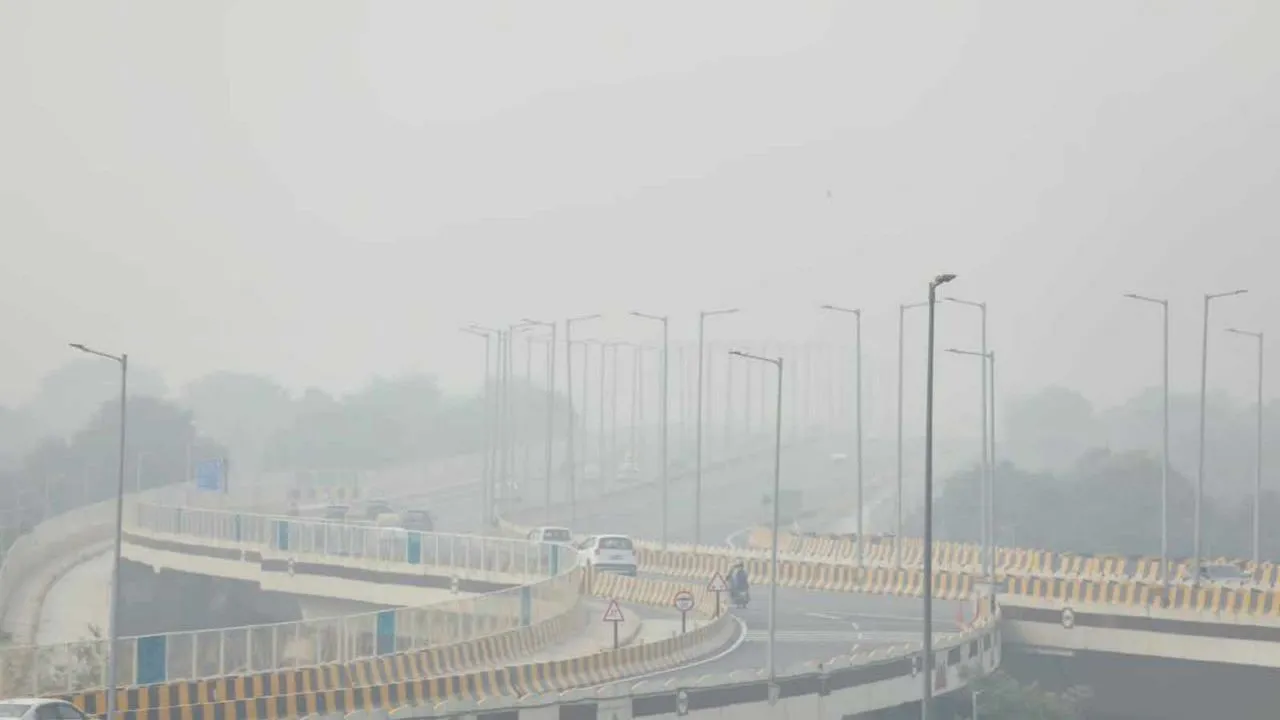
A February 2026 assessment by the Commission for Air Quality Management (CAQM), analysing source-apportionment studies from 2015–2025, identified secondary particulates (27%), transport (23%), biomass burning (20%), dust (15%) and industry, including thermal power plants (9%) as major contributors to Delhi’s winter PM2.5 burden. The problem is persistent. A Scientific Reports study analysing Delhi’s air quality between 2019 and 2023 found that daily PM2.5 measurements exceeded India’s national standard on approximately 60% of measurement days and the WHO guideline on 98.4%.
Diwali can add another layer of exposure. A June 2026 study in Scientific Reports found a 19% increase in Delhi’s PM2.5 levels during Diwali 2024, with pollution remaining elevated in the following days.
What does this mean for cancer risk?
A 2026 evidence review by the Union for International Cancer Control (UICC) and the George Institute for Global Health, synthesising 42 systematic reviews and meta-analyses, reported that long-term PM2.5 exposure was associated with an 11% higher overall risk of developing cancer.
This is a global association, not an estimate of cancer cases caused by Delhi’s pollution. Individual risk also depends on age, genetics, smoking, occupational exposure and other factors. An important concern is lung cancer among non-smokers. While tobacco remains a major risk factor, air pollution is a recognised carcinogenic exposure. We must therefore avoid assuming that someone who has never smoked is automatically protected from lung cancer.
Are we measuring the right things?
There is encouraging progress. AIIMS Delhi launched the AIRCARE study in March 2026 to investigate the relationship between long-term air pollution exposure and lung cancer. It plans to study 1,615 lung cancer patients and an equal number of controls, examining exposure patterns and potential genetic susceptibility.
In October 2026, the Integrated Atmospheric Chemistry and Aerosol Toxicity Analysis Laboratory (AATAL) was inaugurated in Delhi-NCR to investigate pollutant composition, sources and potential health implications, moving beyond conventional AQI measurements.
From pollution monitoring to cancer prevention
For meaningful prevention, we need long-term exposure mapping, neighbourhood-level pollution data, chemical composition analysis and population-based cancer registries. Linking these datasets could help identify vulnerable communities and understand why some individuals develop cancer despite having no obvious conventional risk factors.
Individuals can reduce exposure by avoiding outdoor exertion during severe pollution episodes, using well-fitted N95 masks when necessary, improving indoor ventilation and filtration where feasible, and avoiding tobacco. However, personal precautions cannot replace systemic emission control. If cancer prevention is to become truly comprehensive, clean air must become part of the conversation.
(The author is Director, Founder and Medical Oncologist, M|O|C Cancer Care & Research Centre)