A new COVID-19 variant, PJ.2.1, is attracting attention as it spreads across North America and other parts of the world. First identified in Ontario, Canada, in May 2026, the emerging SARS-CoV-2 lineage has subsequently been detected in the United States, Europe, Australia, New Zealand and parts of Asia. Its spread has raised questions about whether it could trigger another wave of infections and whether existing immunity offers sufficient protection.
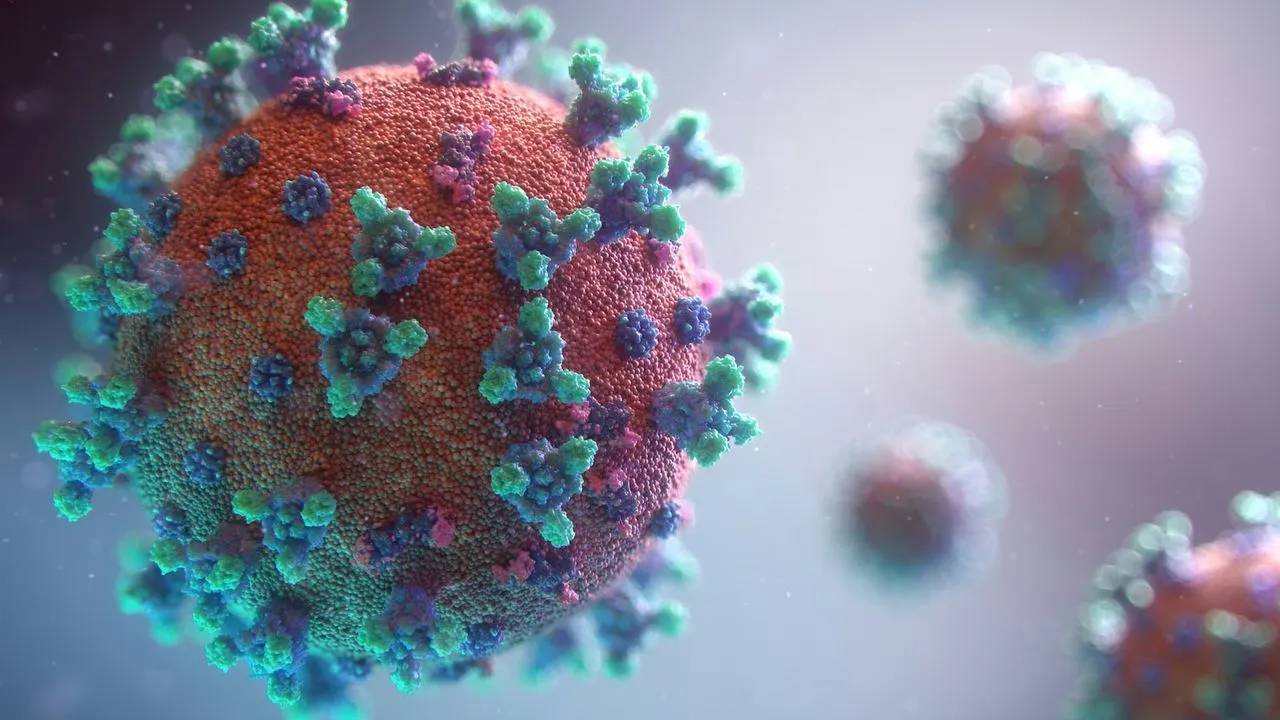
The variant has a highly mutated spike protein, the part of the coronavirus that helps it enter human cells. However, preliminary research published in the Journal of Infection suggests that its growth may be linked more closely to increased binding to the ACE2 receptor than to a substantial ability to evade vaccine-induced antibodies.
The World Health Organization (WHO) has also highlighted that COVID-19 symptoms can overlap with those of influenza and other respiratory infections, making diagnosis based on symptoms alone unreliable. While the emergence of PJ.2.1 warrants continued surveillance, there is currently insufficient evidence to establish that it causes more severe illness than previously circulating variants.
What Is The New COVID-19 Variant PJ.2.1?
PJ.2.1 is a lineage of SARS-CoV-2, the virus responsible for COVID-19. Researchers describe it as a saltation variant, referring to a virus that emerges with a relatively large number of genetic changes rather than accumulating mutations gradually. According to research published by Markus Hoffmann and colleagues in the Journal of Infection in October 2026, PJ.2.1 originated from MC.10.1.7, a descendant of the JN.1 lineage that circulated until May 2025.
The first documented PJ.2.1 sample was identified in Ontario on May 2, 2026. Subsequent detections were reported in Alberta, British Columbia and New Brunswick in Canada. The United States recorded its first detection in New York City on June 30, followed by cases in several other states, including California, Arizona, New Jersey, Virginia, North Carolina, Missouri, Oklahoma, Colorado and Florida.
International detections have also been reported in Singapore, Australia, New Zealand, Israel, France and Spain. In Spain, researchers identified evidence of local transmission chains across multiple regions. Public Health Ontario's genomic surveillance report provides further evidence of its growing presence. PJ.2.1 accounted for 25.2% of sequenced SARS-CoV-2 samples between September 20 and October 17, up from 16.9% in the preceding four-week period.
READ | XFG Covid Variant Fuels Surge In Hospital Admissions In UK: Key Symptoms Of 'American Covid' Explained
Why Is PJ.2.1 Spreading? What Does Research Say?
One of the important findings of recent research is that PJ.2.1 appears to interact more efficiently with ACE2, a receptor found on the surface of human cells.
SARS-CoV-2 uses its spike protein to attach to ACE2 receptors and gain entry into cells. Changes in the spike protein can influence how effectively the virus interacts with these receptors, potentially affecting its ability to infect cells.
In laboratory experiments, researchers found that PJ.2.1 was less susceptible to inhibition by an antibody targeting ACE2 than the other variants examined. This suggests that its spike protein may bind more effectively to the receptor.
The researchers also investigated whether PJ.2.1 could escape antibodies produced following vaccination. Their findings did not indicate substantially greater immune evasion compared with most of the other variants tested.
In particular, antibodies from people who had received an LP.8.1-adapted COVID-19 vaccine were able to neutralise PJ.2.1. Its sensitivity to neutralisation was only 1.8 times lower than that of the LP.8.1 reference variant. The findings suggest that increased ACE2 binding, rather than significantly enhanced antibody evasion, could be contributing to the variant's spread.
However, these experiments were conducted using laboratory models. They do not establish how efficiently PJ.2.1 spreads between people or whether it causes more severe disease in real-world settings.
READ | Omicron RF.5 In Andhra Pradesh: Can This Variant Cause Severe Illness?
What Are The Symptoms Of PJ.2.1 COVID-19?
There is currently no established symptom profile unique to PJ.2.1. The symptoms associated with COVID-19 can resemble those of seasonal influenza, the common cold and other respiratory infections.
The WHO identifies several common COVID-19 symptoms, including:
Fever or chills
Cough
Sore throat
Runny or blocked nose
Headache
Muscle and body aches
Fatigue and weakness
Some people may also experience shortness of breath, gastrointestinal symptoms, or changes in their sense of smell and taste.
According to the WHO, COVID-19 and influenza can produce overlapping symptoms, including fever, cough, runny nose, sore throat, headache and fatigue. Therefore, it is not possible to reliably distinguish between the two infections based on symptoms alone.
This is particularly important during periods when multiple respiratory viruses are circulating. A person experiencing a sore throat, fever or persistent fatigue should not automatically assume that they have a common cold or influenza.
Diagnostic testing can help establish whether an infection is caused by SARS-CoV-2 or another respiratory virus. Genomic sequencing is then used by public health laboratories to identify the specific viral lineage.
READ | Covid Is Now Endemic Like Flu: What That Really Means For Your Health
Is PJ.2.1 More Dangerous Than Previous COVID Variants?
At present, there is insufficient clinical evidence to conclude that PJ.2.1 causes more severe COVID-19 or increases the risk of hospitalisation and death. The research published in the Journal of Infection primarily examined the variant's genetic characteristics, cell entry and susceptibility to antibodies. It did not establish an increase in disease severity among infected patients.
The distinction between transmissibility, immune escape and disease severity is important. A variant may spread more rapidly without necessarily causing more serious illness.
The researchers also noted that PJ.2.1 was detected more frequently among older age groups, particularly individuals aged 70 and above. However, this observation does not establish that the variant specifically targets older people or causes more severe disease in them.
Older adults, people with weakened immune systems and individuals with underlying conditions such as diabetes, heart disease and chronic respiratory illnesses remain at greater risk of severe COVID-19 complications.
READ | 22.1 Million Excess Deaths Linked To Covid-19 In 2020-2023, New WHO Report Estimates
Should People Be Worried About PJ.2.1? What About Vaccines?
The emergence of PJ.2.1 is a reason to maintain genomic surveillance and respiratory infection precautions, rather than panic.
The WHO's COVID-19 variant-tracking framework monitors emerging lineages based on their genetic characteristics and potential public health implications. Importantly, PJ.2.1 was not included among the variants of interest or variants under monitoring listed in the WHO's last update (July 2026). Its emergence and spread should therefore not be confused with a formal WHO designation of a variant of concern.
COVID-19 vaccination continues to be an important measure for reducing the risk of severe disease, hospitalisation and death. The laboratory findings involving vaccine-induced antibodies are encouraging, but they do not establish the effectiveness of vaccination against infection with PJ.2.1 in real-world conditions. People at higher risk should consult their healthcare providers about recommended COVID-19 vaccinations and boosters.
For India, the Indian SARS-CoV-2 Genomics Consortium (INSACOG) continues to provide a framework for monitoring genetic changes in circulating coronavirus strains through genomic sequencing. However, the available data do not establish whether PJ.2.1 has been detected in India.
The emergence of PJ.2.1 highlights how SARS-CoV-2 continues to evolve even years after the COVID-19 pandemic. Although its increasing presence across several countries warrants attention, current research does not establish that it causes more severe illness or significantly escapes vaccine-induced immunity. Continued genomic surveillance, appropriate testing and vaccination of vulnerable populations remain important to managing the ongoing risk of COVID-19.