Advances in focused ultrasound could dramatically change treatments for brain tumors, Parkinson’s and other neurological diseases, according to a series of scientific papers written by UVA Health experts.
Ahead of a three-day event celebrating milestones in focused ultrasound research, Richard Price, research director of the University of Virginia’s Focused Ultrasound Center, spoke with UVA Today about the developments in this technology and the role UVA has played.
Q. What do you do at UVA?
A. I’m a professor in the radiology and medical imaging department. I research image-guided therapies and therapeutic approaches for different diseases, ranging from brain tumors to melanoma and breast cancer … using imaging like MRI or ultrasound.
Focused ultrasound is basically just what it sounds like. It’s the concentration of ultrasonic sound waves into a small region to create effects in the tissue of interest that we’re are treating.
Q. You recently released three papers, including one in Advanced Science. What were the main findings of your research?
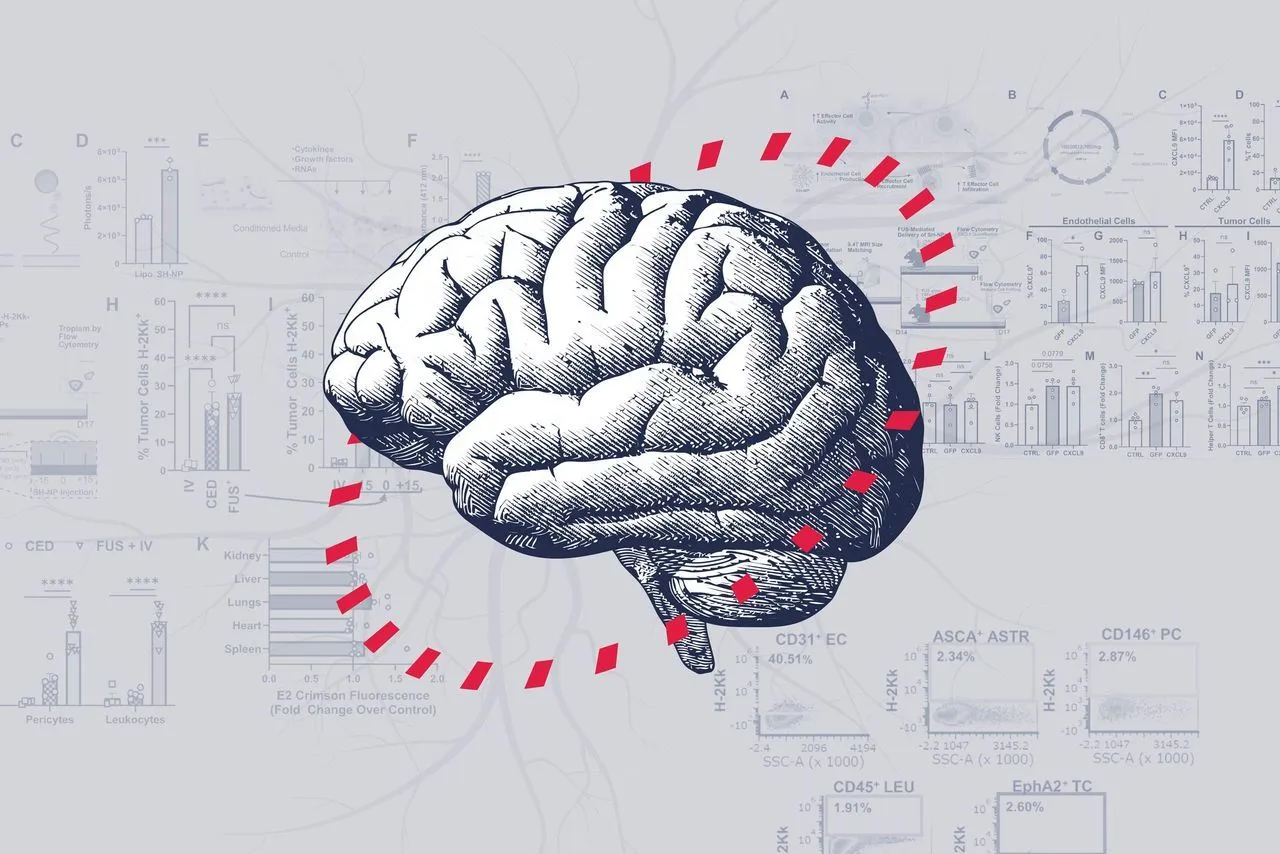
A. In that particular paper, we used focused ultrasound to deliver a gene therapy to treat brain tumors. The therapy we’re delivering is actually in a nanoparticle specifically designed to go into cells that lie in the blood vessels of the tumor, called endothelial cells.
We think those particular cells are a great potential target for treatment because they sit at the interface between the bloodstream and the tumor itself. They’re really responsible for doing things like recruiting beneficial immune cells into the tumor. Of the many types of immune cells that exist, you want to have T-cells and natural killer cells in the tumor because some of them are capable of recognizing and killing the tumor.
So, in our Advanced Science paper, we took this special nanoparticle formulation, targeted it to the brain tumor endothelial cells with focused ultrasound, and had it express a molecule that recruits beneficial immune cells from the bloodstream into the tumor. After we did that, we were able to show that we could inhibit growth of the tumor. So it’s basically an entirely new strategy to treat tumors with the immune system, and it involves using focused ultrasound as the tool that gets the gene therapy where we want it to go.
Q. You are speaking at the upcoming Focused Ultrasound Foundation’s anniversary event, Nov. 11-13. What can people expect at the event?
A. I’m presenting on the third day of the event. It’s a celebration of the 20th anniversary of the Focused Ultrasound Foundation, which is located here in Charlottesville. It was founded by a former UVA neurosurgeon, Dr. Neal Kassell, who had the foresight at that time to see that focused ultrasound could be a real game-changer in treating many conditions. So, he established this philanthropic organization and began to raise money with the goal of supporting focused ultrasound research and clinical translation worldwide. This month, they’re bringing people from all around the world who work on focused ultrasound to highlight the progress that’s been made.
Q. It sounds like UVA has been a key place for focused ultrasound.
A. Yes, focused ultrasound has been in the news a lot here at UVA. Back in June, we held the Focused Ultrasound Innovation Summit. It was a full-day program of University of Virginia investigators, ranging from those who do preclinical research to those who do clinical research, and it was just a tremendous event. It showed how far the University of Virginia has come in focused ultrasound.
We’re unique in that we have a real critical mass of people doing preclinical studies as well as clinical studies, and we also have all the really nice technology here. We’re almost unique in the world with respect to the different clinical devices that we have to treat patients, and we have more on the way. So, it’s a super exciting time. I am hopeful UVA will continue to invest more in building focused ultrasound. It’s a distinguishing strength of the University and there is still so much more impact we can make in the future.