Market Mastery
Webinar by Vishal Malkan
Find the weak links
in your portfolio by Vishal Malkan
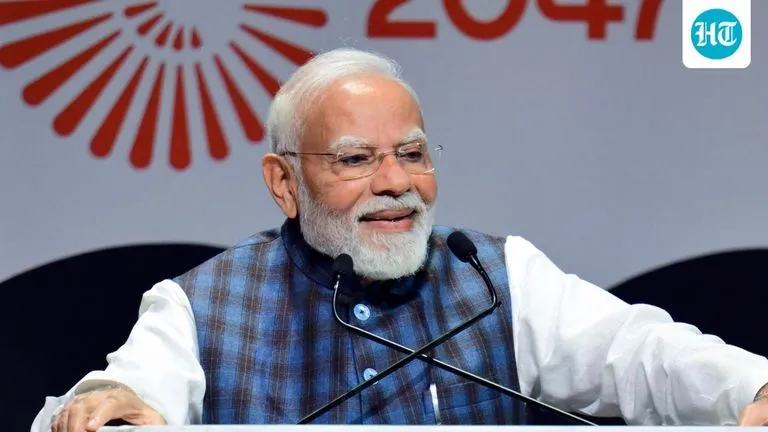
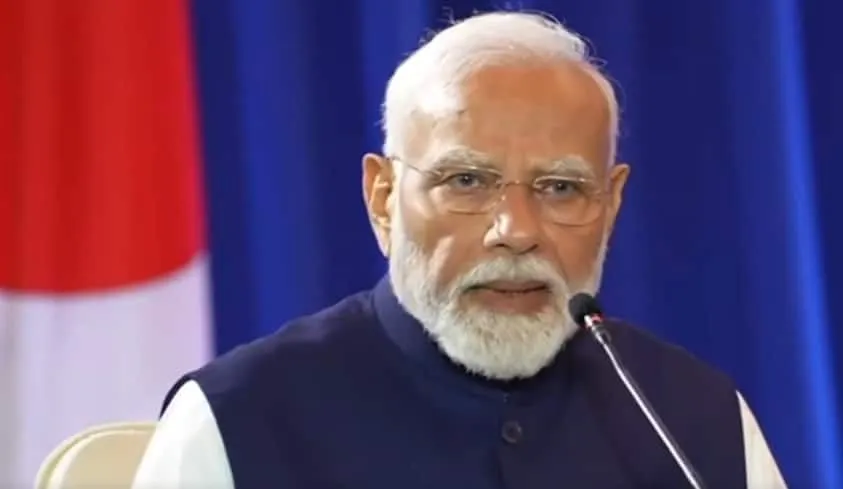
Prime Minister Narendra Modi on November 19 questioned whether Indian companies had done enough to increase employment and employee incomes following corporate tax reductions and other government reforms, urging industry to take greater responsibility for India's economic transformation.
Addressing the FICCI Annual General Meeting and Annual Convention in New Delhi, Modi said the government had reduced corporate tax rates, provided income tax relief, simplified compliance and signed trade agreements to improve opportunities for Indian businesses. However, industry also needed to demonstrate what it had done with these benefits.
He questioned whether companies had raised employee incomes and expanded employment, suggesting that businesses could not expect the government alone to drive the country's development.
Modi also asked industry to develop concrete strategies to take advantage of India's expanding network of free trade agreements, rather than relying on the government to identify opportunities.
The Prime Minister warned that India's large domestic consumer base should not become a comfort zone for businesses, stressing that Indian consumers deserved the same quality of products that companies offered in overseas markets.
"My countrymen deserve quality goods," Modi said, questioning the practice of marketing products as being of export quality and suggesting that domestic consumers should not be treated as a captive market.
Focus on import substitution
Modi also called for greater investment in domestic manufacturing capabilities, particularly in sectors where India remains dependent on imports despite having a strong manufacturing or raw material base.
He pointed to pharmaceuticals, where India is regarded as the pharmacy of the world but continues to import billions of dollars worth of active pharmaceutical ingredients (APIs), bulk drugs and intermediates.
The Prime Minister urged companies to identify ingredients that could be manufactured competitively in India and invest in the technologies needed to reduce this dependence.
He also cited aluminium and steel, noting that India possessed substantial raw material resources but continued to depend on imports for certain specialised products.
Agriculture and food processing were another area of concern. Modi said India's share of global agricultural exports remained around 2–2.5 percent despite its large agricultural production base.
He urged businesses to invest in food processing and value addition, particularly products designed for overseas demand, rather than concentrating only on domestic consumption.
Engineering goods, hand tools, power tools, packaging equipment and irrigation machinery were among the other sectors identified as potential opportunities, particularly in developing economies and the Global South.
India's growth outlook
The Prime Minister's remarks came against the backdrop of improving growth projections for the Indian economy and strong merchandise export performance.
Modi said international organisations were increasingly expecting India to grow at 7 percent or more, pointing to upward revisions by institutions such as the Asian Development Bank and Moody's.
India's merchandise exports reached a record $49.47 billion in October, rising 45.1 percent from a year earlier.
However, Modi said established industries could not rely solely on sectors that provided immediate returns. Businesses needed to anticipate changes in domestic and global demand over the next two decades as India pursued its Viksit Bharat ambition.
Against a backdrop of increasing weaponisation of resources globally, he urged industry to adopt an India-first approach that would strengthen self-reliance while opening new avenues for growth.
Modi also assured businesses that the government remained open to further reforms and invited suggestions on areas where policy changes could improve competitiveness.
He urged companies to think beyond the next few years and identify what they could deliver over the next decade, emphasising that achieving a developed India would require a shared commitment from government and industry.