Market Mastery
Webinar by Vishal Malkan
Find the weak links
in your portfolio by Vishal Malkan
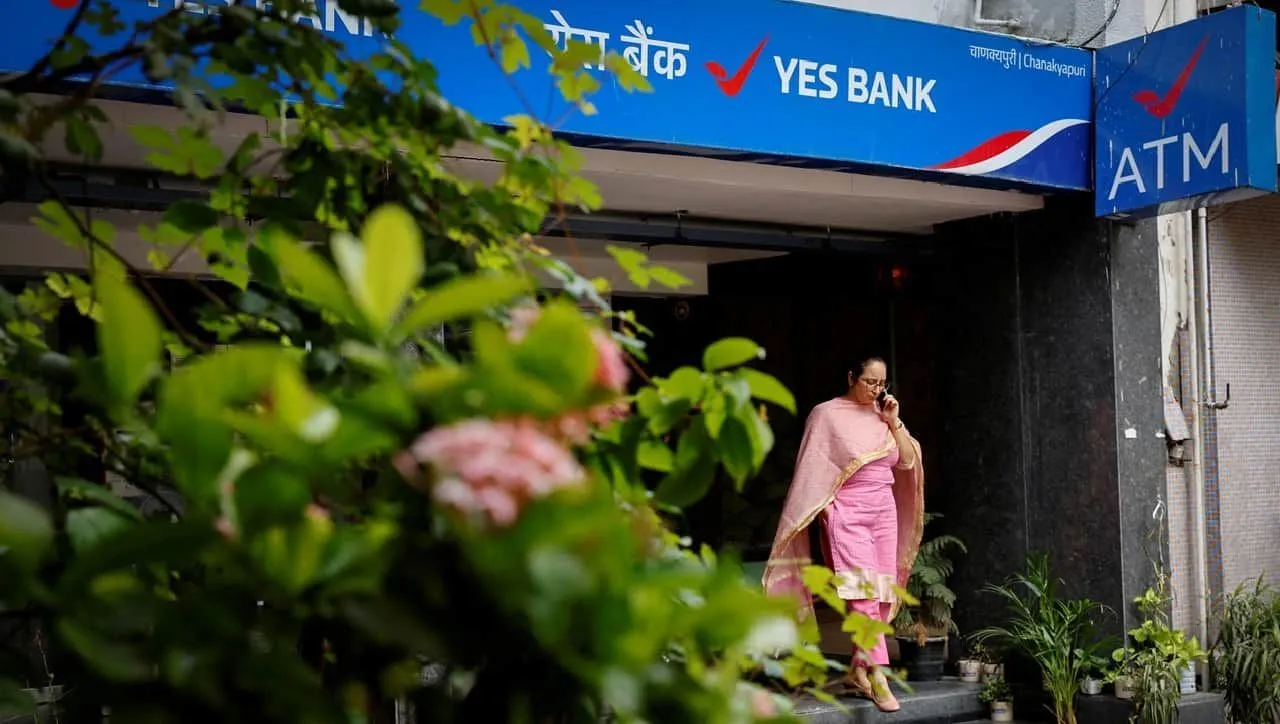
Japan’s Sumitomo Mitsui Banking Corporation (SMBC) has indicated to the Reserve Bank of India (RBI) that it plans to consolidate all its India businesses under Yes Bank by the end of FY29.
According to people aware of recent discussions between SMBC and RBI officials in the context of the October Supreme Court verdict on the Yes Bank AT-1 bonds case, senior SMBC officials have informed the central bank that the lender has fast-tracked its consolidation plans in India.
It is learnt that senior SMBC officials, including Rajeev Kannan, head of the India Division for SMBC and its parent Sumitomo Mitsui Financial Group (SMFG), met RBI officials a few days ago and presented a roadmap for integrating the group’s various India operations under a single banking entity.
"The group has given an assurance to the RBI that all its India holdings will eventually be consolidated under Yes Bank by the end of FY29," one of the sources cited above said.
The consolidation is likely to follow a three-stage approach.
Three-stage transition
In the first stage, SMBC will focus on operationalising its wholly owned banking subsidiary (WOS) in India by the end of FY27.
SMBC received the RBI’s in-principle approval in January 2026 to establish a wholly owned subsidiary in India by converting its existing branches into a locally incorporated banking entity. The lender is currently in the process of converting its branches into the WOS structure, with the exercise fast-tracked for completion by March 2027.
Once SMBC’s Indian banking subsidiary becomes operational, the second stage will involve merging SMFG India Credit, the non-banking business that SMFG acquired from Fullerton in 2021, with SMBC’s WOS.
If executed as planned, this stage is expected to be completed by the end of FY28 or in the upcoming fiscal year.
The third stage will involve merging SMBC’s wholly owned banking subsidiary with Yes Bank by the end of FY29.
“Once the NBFC is merged with SMBC’s WOS, SMBC cannot hold two banking licenses in India and one of the entities needs to be merged with another. With Yes Bank being the larger unit, it is most likely to be the acquirer in the process,” said an investment banker who did not wish to be named.
However, the banker added that it would be premature to discuss the final contours of the merger, including valuations, at this stage.
Emails sent to SMBC, Yes Bank and SMFG India Credit remained unanswered at the time of publication.
Why the consolidation has been fast-tracked
The proposed consolidation has been fast-tracked at a time when Yes Bank is facing fresh uncertainty over its capital structure following the Supreme Court’s recent ruling on its Rs 8,415-crore Additional Tier-1 (AT-1) bonds.
According to the sources cited above, SMBC had earlier planned to consolidate its India financial operations in FY30 or FY31.
On October 15, the Supreme Court upheld the Bombay High Court’s decision to set aside Yes Bank’s March 2020 write-off of the bonds, dismissing appeals filed by the bank, the Reserve Bank of India and the Union government.
The court held that the administrator appointed during the bank’s reconstruction did not have the authority to write down the bonds under the final reconstruction scheme.
The ruling implies the restoration of bondholders’ claims against Yes Bank. According to the bank’s pro forma financials for Q2FY27, this could result in a 230-250 basis point reduction in its Common Equity Tier-1 (CET1) capital ratio, bringing it down to 11.4 percent from 13.7 percent in Q2FY27.
The court also clarified that annual coupon payments on the bonds would remain unaffected and must be made in accordance with the terms of the information memoranda.
Capital infusion likely
The proposed restructuring may also involve an infusion of fresh primary capital by SMBC into Yes Bank. However, the contours and quantum of any such investment are not immediately clear.
“Clarity will emerge only by mid-FY28,” said another investment banker. “Much of it will depend on what valuations each of the entities command at that point in time,” he added.
The banker said that strong growth in SMFG India Credit and Yes Bank over the next year could reduce the amount of capital SMBC may need to infuse.
Moneycontrol had reported earlier that SMBC was aware of the impending risks associated with Yes Bank’s AT-1 bonds litigation and had factored them into its valuation calculations before making the investment in May 2025.
SMBC is currently Yes Bank’s largest shareholder, with a stake of around 24.99 percent, acquired through a transaction with State Bank of India and other investors in 2025.
The Japanese lender’s investment marked a significant entry by a leading foreign bank into India’s private banking sector.