
The Association of Southeast Asian Nations (ASEAN) and Pakistan held talks Thursday on expanding trade and investment, addressing "non-traditional" security challenges and strengthening regional connectivity.
Delegation-level talks between visiting ASEAN Secretary-General Kao Kim Hourn and Pakistani Foreign Minister Ishaq Dar took place in Islamabad, according to an official statement.
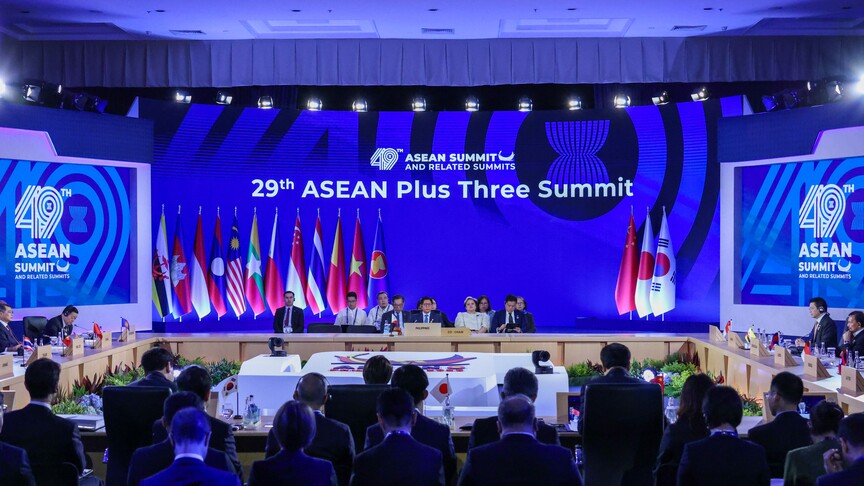
The meeting came days after the 11-member bloc held its 49th Leaders' Summit in the Philippine capital, Manila, earlier this week.
The two sides reviewed progress under the Pakistan-ASEAN Sectoral Dialogue Partnership, reaffirming the importance of dialogue, diplomacy, respect for international law and adherence to the UN Charter in addressing challenges, Pakistan's Foreign Ministry said.
They also explored opportunities for cooperation on climate resilience, disaster preparedness and digital innovation.
Speaking at a joint news conference afterward, Dar said the two sides had agreed to strengthen cooperation in addressing non-traditional security challenges, including climate change, food insecurity, energy supply disruptions and cyber threats.
"We also discussed regional and international security,and stressed the importance of secure sea routes and uninterrupted supply chains for economies and livelihoods," Dar added.
He expressed concern over the continued expansion of illegal Israeli settlements in the occupied West Bank, called for unhindered humanitarian aid deliveries to Gaza and reiterated Pakistan's support for an independent Palestinian state with East Jerusalem as its capital.
On South Asia, Dar briefed Hourn on the importance of “a just, durable and peaceful settlement of the longstanding Jammu and Kashmir dispute in accordance with relevant UN Security Council resolutions”, while expressing concern over India's unilateral decision to hold the Indus Waters Treaty in abeyance.
He also highlighted Pakistan's concerns over the "continued use of Afghan soil for carrying out terrorist attacks."
There was no immediate reaction from New Delhi or Kabul to Dar's remarks.
Hourn welcomed Pakistan's "constructive" role in facilitating negotiations between the US and Iran, which resulted in the signing of the Islamabad Memorandum of Understanding in June, and acknowledged Islamabad's efforts to promote dialogue and de-escalation.
He also called for closer cooperation in renewable energy and efforts to address shared international challenges, including terrorism, violent extremism, human trafficking and transnational crime.