Market Mastery
Webinar by Vishal Malkan
Find the weak links
in your portfolio by Vishal Malkan
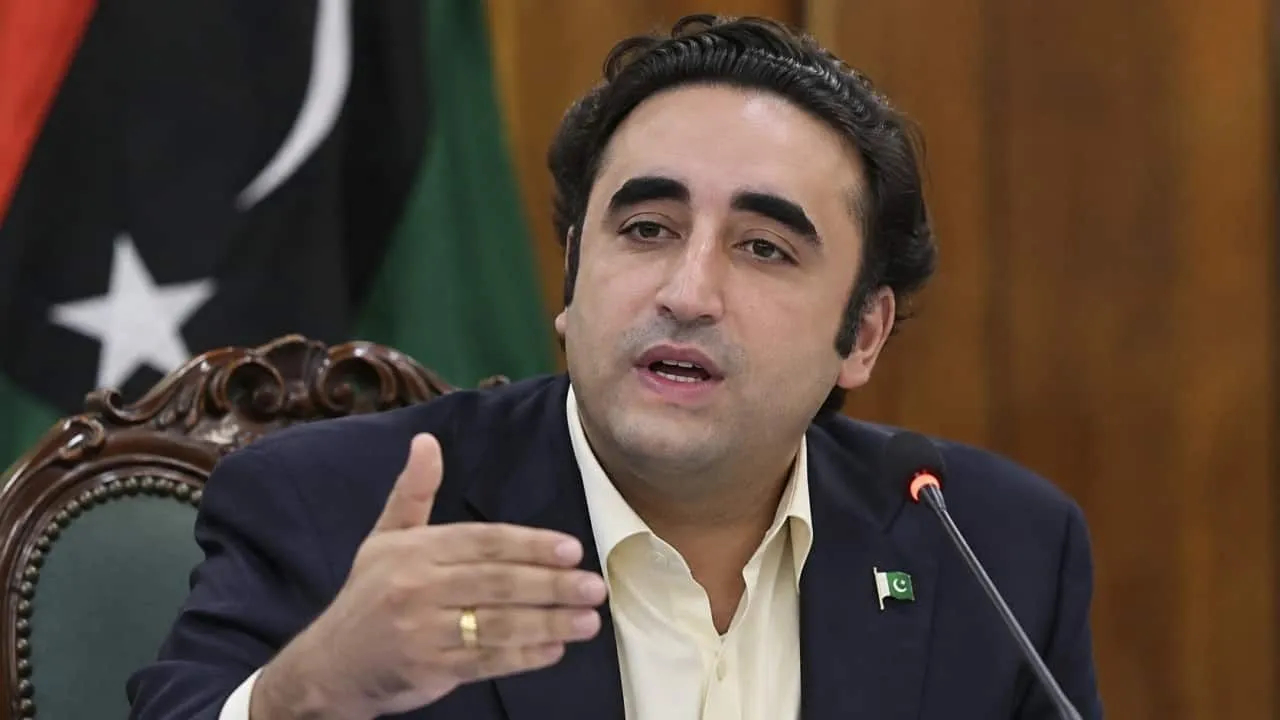
Pakistan's proposal to redraw its provincial boundaries has opened a fresh political confrontation within the ruling coalition, with Pakistan Peoples Party (PPP) chairman Bilawal Bhutto-Zardari warning that forcibly dividing Sindh could trigger violence on the streets of Karachi.
The warning is directed at the government of Prime Minister Shehbaz Sharif, whose Interior Minister Mohsin Naqvi has floated the idea of creating additional provinces through a referendum. The proposal has alarmed the PPP, which has governed Sindh since 2008 and considers the province, particularly Karachi, central to its political and economic influence.
"If Sindh is forcibly divided, questions will be asked about the blood that will flow on the streets of Karachi. If the provinces are forcibly divided, there will be division in society and this division may lead to hostility," Bilawal warned. "I don't want to see that bloodshed."
The political significance of the confrontation is heightened by the fact that the PPP remains a key partner in the PML-N-led coalition government. With 74 members in the National Assembly, the party has supported Sharif's government even as Bilawal has questioned the intentions behind Naqvi's proposal and criticised the lack of consultation with his party.
Why Karachi is at the centre of the dispute
The opposition to dividing Sindh is closely linked to Karachi's economic and political importance. Pakistan's largest city is also its financial capital and principal commercial hub. Figures cited in an India Today graphic, drawing on official tax and port data, show that Karachi accounted for PKR 2.52 trillion in federal tax collections in 2023-24, ahead of Lahore's PKR 1.40 trillion and Islamabad's PKR 1.16 trillion.
The city is estimated to contribute around 20% of Pakistan's GDP and nearly 30% of value added in large-scale manufacturing. Around 54% of the country's trade is handled through Karachi Port and Port Qasim.
Separating Karachi from Sindh or creating a new province around it could therefore alter the province's political and economic balance. The PPP's concern is not limited to administrative boundaries. Control over Sindh also gives the party influence over the resources, revenues and political institutions of a province that has remained its traditional stronghold.
Bilawal has said the PPP is not opposed to the creation of new provinces in principle. However, he insists that any such move must have public support, involve consultations with political stakeholders and follow constitutional procedures.
He has also questioned why the proposal was being discussed without formally consulting the PPP or his father, President Asif Ali Zardari. According to Dawn, Zardari and Sharif had discussed the issue and agreed that any decision on new provinces must follow constitutional procedures.
What is Mohsin Naqvi proposing?
Naqvi first questioned Pakistan's existing administrative structure in July, arguing that it had "collapsed" and required an overhaul. On November 12, he proposed a referendum to establish whether people wanted additional provinces.
The debate gathered momentum after Planning Minister Ahsan Iqbal said he had heard of a proposal to divide Pakistan's four provinces into 14. Under the reported plan, Punjab and Sindh would each have four provinces, while Khyber Pakhtunkhwa and Balochistan would have three each. Islamabad could also be given separate provincial status.
However, a referendum alone cannot replace the constitutional process required to alter provincial boundaries. BBC Urdu reported that constitutional experts had cautioned against treating a public vote as a substitute for a constitutional amendment.
The proposal has also exposed differences within the ruling coalition. Bilawal has questioned whether Sharif has sufficient authority over his ministers, saying the prime minister should have "enough authority to control his ministers".
A sensitive issue rooted in Pakistan's history
Pakistan's history makes the prospect of dividing Sindh particularly contentious. Karachi was separated from Sindh in 1947 to serve as the country's federal capital. In 1955, the One Unit scheme merged West Pakistan's territories into a single province, provoking opposition among Sindhis, Pashtuns and Baloch who viewed it as an erosion of their provincial identities. The arrangement was abolished in 1970, restoring the western provinces.
The separation of East Pakistan in 1971, which led to the creation of Bangladesh, remains another defining episode in the country's history of territorial division.
The current proposal has also revived ethnic and political sensitivities in Karachi. While the PPP opposes dividing Sindh, the Muttahida Qaumi Movement-Pakistan (MQM-P), which draws support from Urdu-speaking communities, has backed the creation of new provinces. Karachi is also home to large Pashtun, Punjabi and Baloch populations, making the debate more complex than a contest between two communities.
The PPP has repeatedly defended Sindh's territorial integrity through resolutions in the provincial assembly, including one passed in September 2026. It has also supported the creation of a separate province in southern Punjab, highlighting the political differences surrounding the proposal.
For now, the dispute has put the Sharif coalition under pressure. The question is not simply whether Pakistan should have more provinces, but whether its political leadership can agree on redrawing boundaries without reopening long-standing disputes over identity, representation and control of resources.