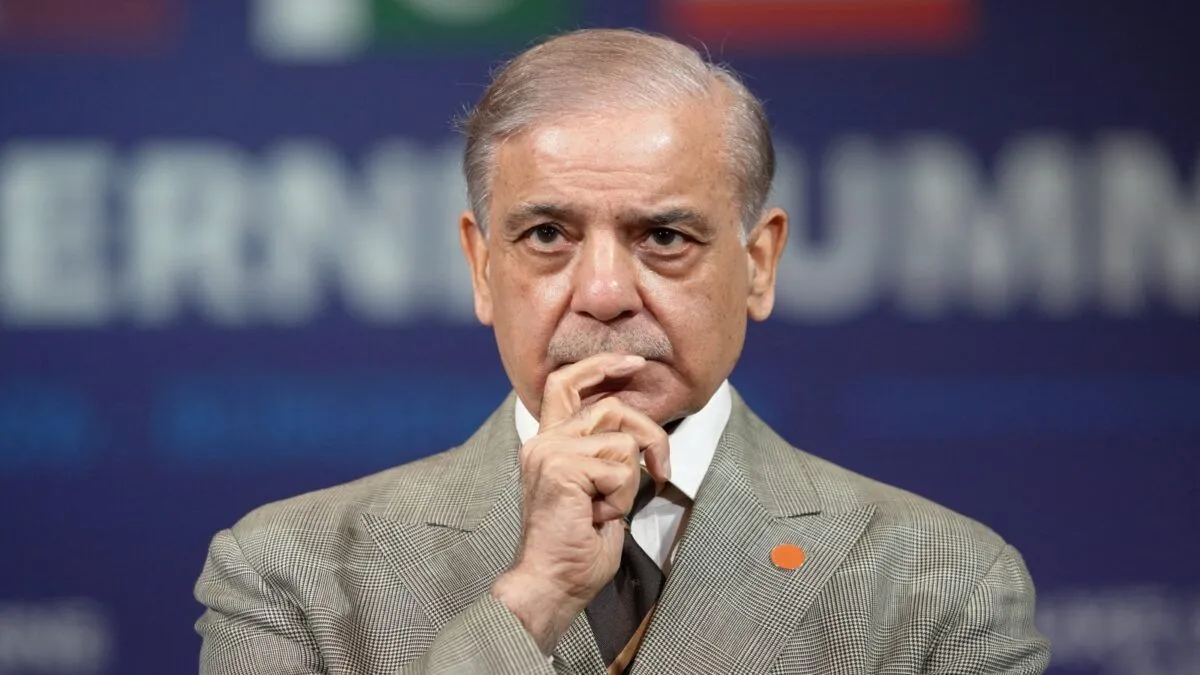
Addressing the Pakistan Minerals Investment Forum 2026 in Islamabad on Friday, Sharif suggested that the milestone could be achieved much earlier, by 2050 instead of 2075.
Pakistan Prime Minister Shehbaz Sharif has claimed that Goldman Sachs has projected the South Asian nation to become the world’s sixth-largest economy by 2075.
Addressing the Pakistan Minerals Investment Forum 2026 in Islamabad on Friday, the Pakistani leader suggested that the milestone could be achieved much earlier, by 2050 instead of 2075.
“By Goldman Sachs’ assessment, by 2075, Pakistan will be the sixth-largest economy in the world," Shehbaz Sharif said. “I would like to make a small amendment here — instead of 2075, it will be earlier than 2050," he added.
Sharif’s remarks came at a time when Pakistan’s economy is showing signs of recovery but remains financially vulnerable. The country continues to rely heavily on external loans and IMF-backed reforms. Pakistan’s public debt is estimated at PKR 86.72 trillion, or nearly $290 billion, with its debt-to-GDP ratio hovering between 68.3% and 70.2% as of late 2026, according to The Print.
What Goldman Sachs’ 2075 Projection Says About Pakistan
The projection Sharif referred to comes from Goldman Sachs’ December 2022 report, ‘The Path to 2075 — Slower Global Growth, But Convergence Remains Intact’, authored by economists Kevin Daly and Tadas Gedminas.
According to the study, Pakistan could become the world’s sixth-largest economy by 2075 in terms of real GDP measured in US dollars. It is projected to have a GDP of $12.7 trillion and a per capita GDP of $27,100 by that year. However, even then, Pakistan, Indonesia and Nigeria are expected to remain considerably smaller economies than China, India and the United States.
Why Pakistan’s Sixth-Largest Economy Target Remains Uncertain
The report’s authors clarified that their projections should not be treated as definite predictions but rather as a way to understand long-term global economic trends. They also stressed that Pakistan’s potential growth would depend on the adoption of “the appropriate policies and institutions". Population expansion is identified as a major factor behind its projected rise in the global rankings.
The study also cautions that challenges such as climate change and rising protectionism could affect these projections, particularly in developing economies vulnerable to environmental disruptions.
Notably, Pakistan does not feature among the world’s five largest economies in the report’s 2050 rankings. The top five are projected to be China, the United States, India, Indonesia and Germany.