.
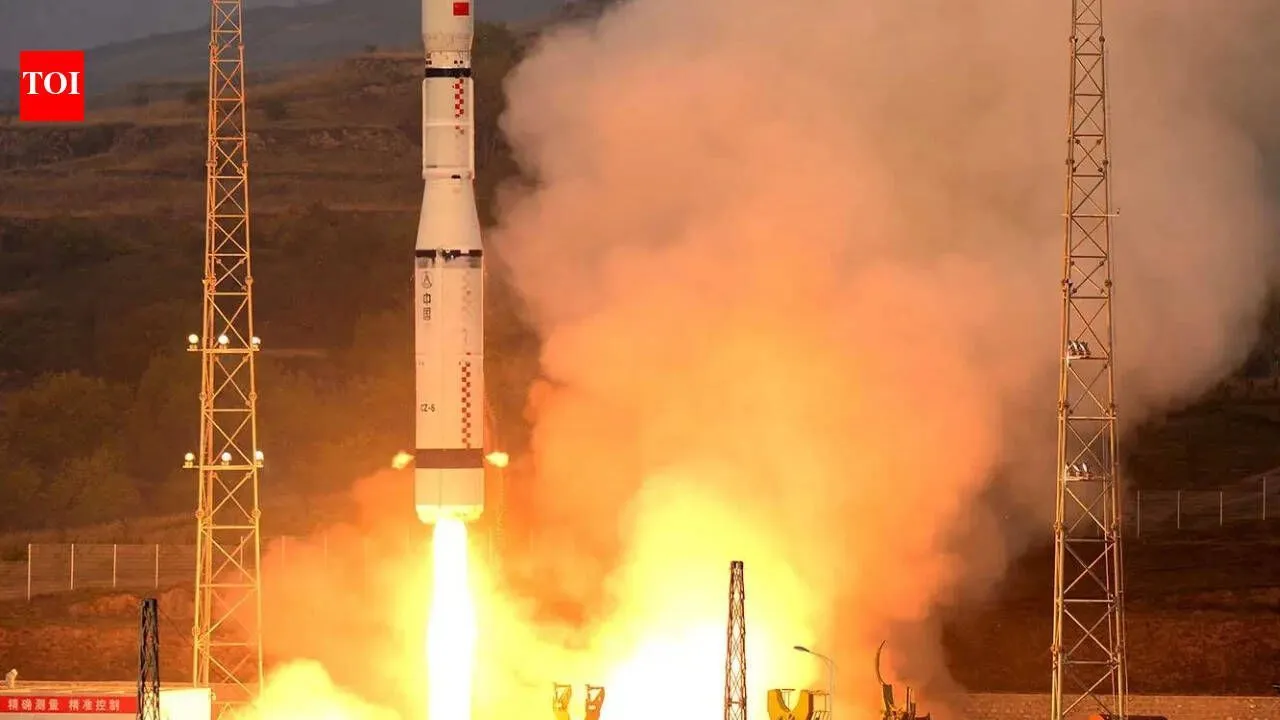
BENGALURU: China has confirmed that a Pakistani astronaut will become the first foreign national to board its Tiangong space station, joining the Shenzhou-24 crewed mission as a payload specialist. The astronaut will be selected from two Pakistani candidates, Muhammad Zeeshan Ali and Khurram Daud, who have undergone months of training in China. The China Manned Space Agency (CMSA), which announced the decision on Nov 7, has not named the candidate or specified a launch date. The mission will mark the first joint crewed flight involving Chinese and foreign astronauts in the history of China’s human spaceflight programme. TOI has been tracking the developments for several weeks. Both the Chinese and Pakistani agencies did not respond to multiple queries sent since late Sept. As per official Chinese media, after a short stay aboard Tiangong, the Pakistani astronaut will return to Earth aboard Shenzhou-23, which docked with the station in May 2026. The agreement between China and Pakistan was signed in Feb 2025, covering astronaut selection, training and participation in Chinese space-station missions. Following a three-stage assessment, Ali and Daud were shortlisted and sent to China for training alongside Chinese counterparts. One will fly while the other remains a backup. For Pakistan, the mission represents its entry into human spaceflight. For China, it is an opportunity to demonstrate that Tiangong can serve as an international platform for crewed missions as the International Space Station (ISS) approaches retirement. China completed its space station in 2022, having developed an independent human spaceflight programme after being excluded from the ISS partnership. Now, Beijing is looking to extend Tiangong's reach through international partnerships. The Pakistan mission is an early demonstration of that approach. China has also been working with other countries on space exploration, including lunar missions, and offering opportunities for international participation. The timing matters. The ISS, the world’s only mature, multilateral space station, is approaching the end of its operational life. Tiangong could increasingly become an alternative for countries seeking access to human spaceflight, scientific experiments and operational experience in orbit. The emerging competition, therefore, is not simply about who can build a station or send astronauts into space. It is also about who can attract partners and shape the frameworks for future exploration. For India, the development adds a geopolitical dimension to its human spaceflight ambitions. Group Captain Shubhanshu Shukla’s Axiom-4 mission to the ISS last year gave India its first human spaceflight experience since Rakesh Sharma (1984). But its next steps remain centred on indigenous capability through Gaganyaan, followed by the Bhartiya Antriksh Station (BAS), and a crewed Moon landing. India signed the US-led Artemis Accords in June 2023, while China and Russia are pursuing the International Lunar Research Station (ILRS) framework. These competing initiatives could influence technological standards, resource-use principles and the governance of activities beyond Earth. India’s challenge is to work with different space powers without becoming confined to their geopolitical choices. The Pakistani mission also raises a question for New Delhi: whether building indigenous infrastructure alone will be sufficient, or whether India must simultaneously seek greater access to international experience and partnerships. A few days aboard Tiangong will not give Pakistan an independent human spaceflight capability. But it will give the country a place in China’s crewed space programme and Beijing another partner as it expands its international ambitions. For India, the message is not that it must follow Pakistan’s route or choose between Washington and Beijing. The next space race will be shaped as much by partnerships and influence as by rockets and spacecraft. India’s ability to safeguard its strategic autonomy will depend on ensuring it has a voice in shaping that future.
End of Article