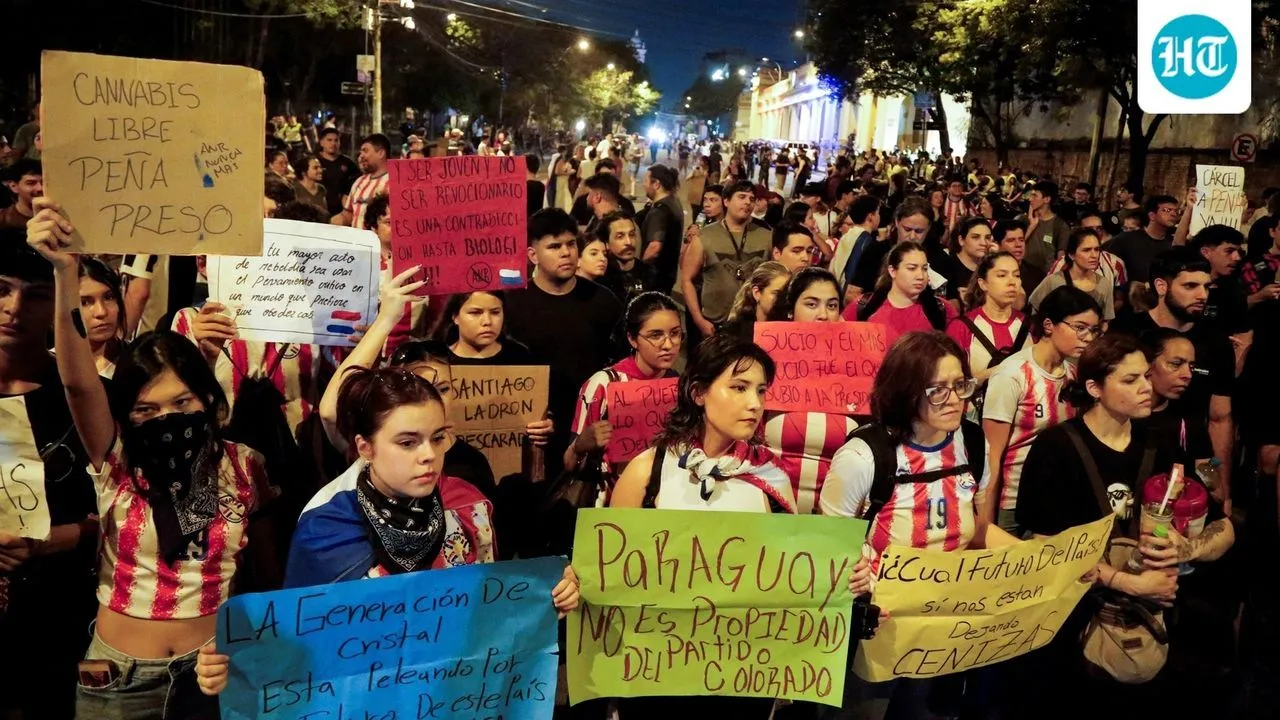
The central bank seized Ueno before dawn on Tuesday, November 3, after finding it short of capital. On Thursday, Peña offered to resign; Congress declined to accept the offer, and the lower house voted 78-0 to impeach him.
On Friday, all 44 senators present voted to remove him for misconduct in office, with the 45th abstaining. Peña stayed away from the trial and sent his lawyers. Vice-president Pedro Alliana was sworn in as president the same day.
Peña must remain at one of his homes in Asunción until he appears before prosecutors on Saturday morning. He is under investigation on suspicion of breach of trust, influence peddling and using public office for personal gain, the most serious of which carry up to 10 years in prison. Lawmakers have accused him of using his political influence to steer hundreds of millions of dollars in public funds into Ueno. Peña has denied wrongdoing.
He is the second Paraguayan president removed by impeachment since the end of General Alfredo Stroessner’s 35-year dictatorship in 1989.
Public money fuelled this expansion. In October, Ueno reported holding roughly $800 million in public deposits, about a quarter of its total, including money from the state pension and health fund and from the operators of Paraguay’s hydroelectric dams.
The central bank warned Ueno in June that it was lending too much to companies tied to its owners, and Fitch Ratings moved its outlook on the bank to negative in October, citing rapid growth in its balance sheet and a high level of intangible assets.
Regulators investigating Ueno’s loans to companies linked to its owners found poorly documented lending, the central bank said, as well as expenses the bank had wrongly counted as assets.
Once those were corrected, Ueno’s capital fell below half the legal minimum. The central bank’s board voted late on Monday, November 2, to put Ueno into resolution, a process in which the regulator takes over a failing bank and transfers its deposits and recoverable assets to other lenders.
By Tuesday morning the bank’s app, cards and transfers had stopped working and its branches were shut. Even players on the national football team said they were not able to access their money.
The central bank has said Carvallo recused himself from decisions involving Ueno.
The impeachment charges cite both links. Lawmakers also accuse Peña of letting the state pension fund deposit $355 million at the bank, beyond legal limits, and have questioned whether there was an institutional cover-up of Ueno’s troubles. Opposition politicians accused Peña’s government of failing to supervise the bank properly and allowing public money to be exposed to excessive risk.
Peña defended the bank until weeks before it failed. In October, he told reporters that a regulatory inquiry did not mean Ueno would close, and accused the media of frightening the public. He has since said he will cooperate with investigators.
The process can move within days. In June 2012 the Senate removed Fernando Lugo, a left-wing former Catholic bishop, after a one-day trial. Lugo was the first president ousted this way since the dictatorship ended.
Had Congress accepted Peña’s resignation offer, he would have taken up the Senate seat reserved for former presidents, and with it legal protection from prosecution. A joint session called to consider the offer lost its quorum after lawmakers from Peña’s Colorado party walked out, and the impeachment went ahead.
Peña owed his rise to Horacio Cartes, a tobacco magnate who was president from 2013 to 2018 and now leads the Colorado party, which has governed Paraguay for all but five years since 1947. Cartes, once sanctioned by the US Treasury over alleged corruption, made Peña finance minister and twice backed him for the presidency.
In office, Peña was seen as a key ally of US President Donald Trump in South America, and met US treasury secretary Scott Bessent in late October.
Closer to home, senators loyal to Cartes questioned the central bank in September about Ueno’s risky lending to related companies.
After the collapse, Cartes withdrew his support, and both of the party’s main factions in the lower house backed impeachment. “We will not side with the theft of public, private and pension funds,” Cartes wrote in a statement on social media.
But the fallout spread beyond savers. A ride-hailing app that relied on Ueno shut down, leaving 3,000 drivers without work. The state power company says $21 million in loans from the Inter-American Development Bank and Taiwan, earmarked for public works, is trapped at the bank. Paraguay’s bonds posted some of the worst losses in emerging markets this week, and the guaraní slid against the US dollar.
The central bank calls the collapse an isolated case and says the wider financial system is safe.
Prosecutors on Friday also issued an arrest warrant for Carvallo, who stepped down as central bank chief this week at Peña’s request. It was not immediately clear whether he was in custody.
Peña will remain under house arrest while prosecutors determine the final charges against him.