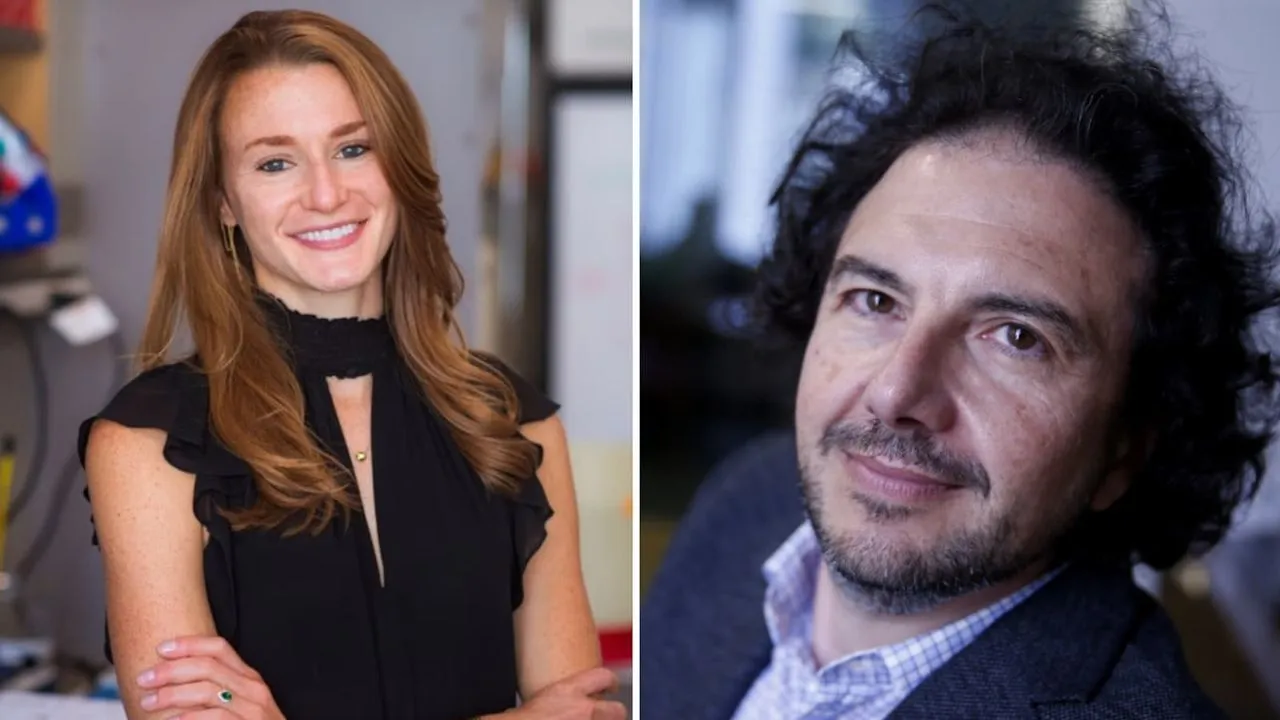
David Sabatini, biologist and one of the leading scientists at Massachusetts Institute of Technology (MIT), had everything: A successful career, a laboratory at Whitehouse in Cambridge to pursue his research and a path to the prestigious Nobel Prize. But five years ago, everything unravelled after a younger colleague named Kristin Knouse accused him of sexual misconduct and harassment. The long legal battle that Sabatini fought to prove himself innocent cost the scientist his career, reputation and, by his own account, nearly his life. He won a defamation case against his accuser last month, along with a $6 million award.
But now, Daily Mail has reported about a set of text messages attributed to Knouse, 38, in which she said, "I can't wait to wake up tomorrow and feel like I've been gang raped."
The message was read out by Sabatini's lawyer, Lisa Arrowood, during a video deposition, according to the outlet, adding another dimension to the case.
Arrowood asked Knouse if she "would tell Dr Sabatini" that she "really liked sex to be hard", based on her text messages. Knouse initially avoided the answer the question, but conceded when pushed by the lawyer saying, "I imagine I would say that I was open to more, rougher, sex."
Sabatini, 58, a celebrated molecular biologist and former MIT professor, had spent more than two decades building a distinguished scientific career. His research into mTOR, a protein that regulates cell growth, had generated significant interest in the scientific community, including speculation about a possible Nobel Prize.
But his relationship with Knouse, which began in 2018 and ended a year later, proved to be detrimental for his career. Denying any wrongdoing, Sabatini said that the relationship was consensual and that Knouse's allegations emerged after he rejected her proposal for a more committed relationship.
Knouse, however, claimed that the relationship was coercive. She argued that Sabatini's position as her mentor and the influence he wielded over her career made it difficult for her to end the relationship. She also accused him of creating a sexually hostile workplace.
An independent investigation by the Whitehead Institute concluded that Sabatini had violated its workplace policies, including those concerning sexual harassment. He resigned from the institute in 2021 and subsequently left his tenured position at MIT.
The consequences extended well beyond his departure. His professional associations were disrupted, consulting opportunities disappeared and a potential appointment at New York University fell through following protests by students, faculty and alumni in 2022.
The Boston Globe reported that Sabatini's career suffered a dramatic reversal and that he struggled with depression, eventually attempting suicide, according to testimony presented during the trial.
Sabatini has described the period as the most difficult of his life. In an interview after the verdict, he said: "I lost everything. There was nothing left of my normal life."
The $6 Million Verdict
The legal battle reached a significant turning point on October 16, 2026, when a Suffolk County jury awarded Sabatini $6 million in damages.
The jury found Knouse liable for defamation and interfering with his contractual and prospective professional relationships. It also rejected her counterclaims against him, including allegations of sexual harassment and retaliation.