Market Mastery
Webinar by Vishal Malkan
Find the weak links
in your portfolio by Vishal Malkan
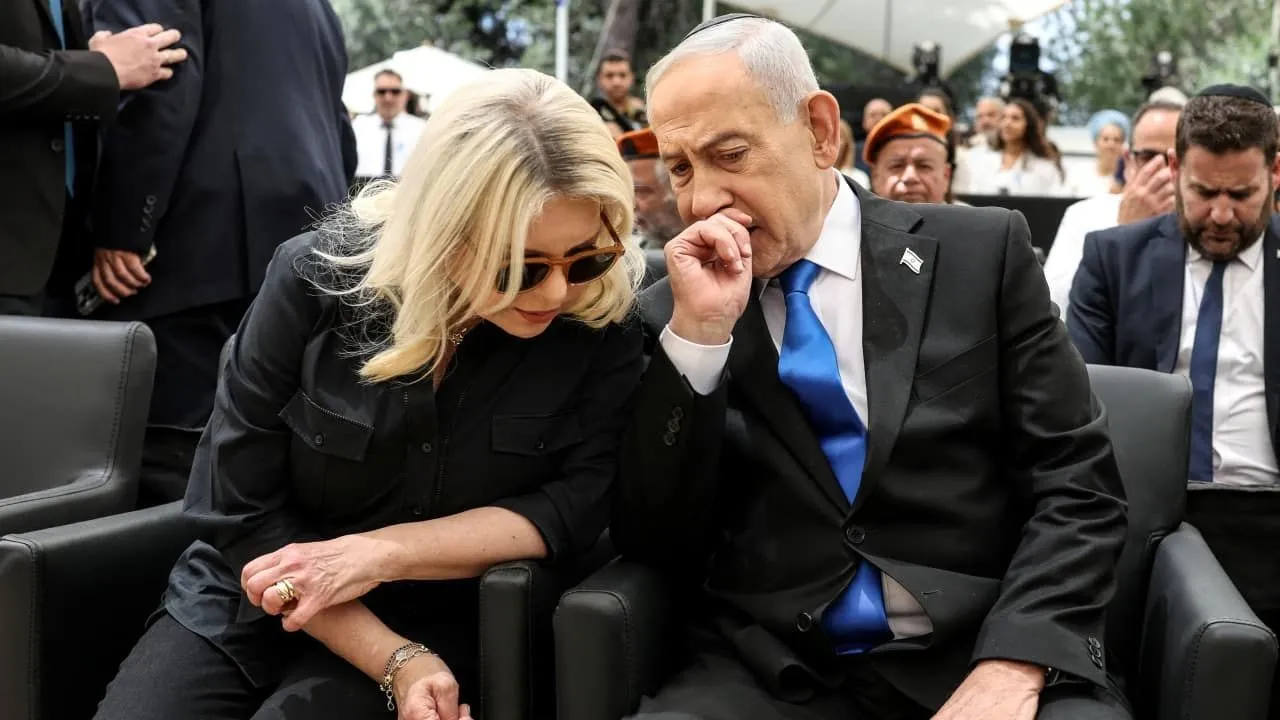
A heated confrontation broke out in Israel's parliament after Sara Netanyahu, wife of caretaker Prime Minister Benjamin Netanyahu, reportedly confronted opposition leader and former prime minister Naftali Bennett during a speech by her husband in the Knesset.
The exchange unfolded on Tuesday as newly elected lawmakers were sworn in, with tensions rising after Bennett interrupted Benjamin Netanyahu's address and questioned his government's handling of the October 7, 2023, Hamas attack and its alleged links with Qatar.
Bennett challenged Netanyahu over his remarks on Qatar's alleged spending to increase Arab voter turnout in the October elections. Referring to allegations that two of the prime minister's advisers had promoted Qatari interests while working in his office, Bennett questioned why Netanyahu had not declared Qatar an enemy state.
"What about a State Commission of Inquiry (into October 7)? Why don't you declare Qatar an enemy state? What about your Qatari advisers?" Bennett was quoted as saying.
His intervention triggered an angry exchange involving Sara Netanyahu, who was seen arguing with Bennett over his association with Arab political parties. Far-right National Security Minister Itamar Ben-Gvir and Likud faction chairman Ofir Katz also joined the confrontation, according to The Times of Israel.
Netanyahu paused his speech briefly as the altercation unfolded before resuming his address.
What triggered the confrontation?
The confrontation came after Benjamin Netanyahu launched a sharp attack on Arab political parties, including the Joint List and Ra'am, accusing them of posing a threat to Israel's security.
The caretaker prime minister criticised opposition lawmakers who were considering forming a coalition with the Arab-majority parties to remove him from power.
"To those who are thinking of establishing a government with these people, I say: Are you prepared to be dependent on those whose purpose is the destruction of the Jewish state?" he was quoted as saying by The Washington Post.
He described the prospect of such a government as "shameful" and "forbidden", and accused the parties of supporting terrorism.
Netanyahu also called for an investigation into allegations that Qatar had spent substantial sums to increase Arab voter participation in the October elections.
Bennett's interruption came in response to these remarks, with the opposition leader turning the focus towards Netanyahu's own alleged connections with Qatar and the need for an independent inquiry into the October 7 attack.
Eisenkot calls Netanyahu's speech 'shameful'
The confrontation drew further criticism from retired general Gadi Eisenkot, a key opposition figure seeking to replace Netanyahu.
Eisenkot described the prime minister's speech as "shameful" and "hate-filled", saying he believed Netanyahu was unfit to remain in office. He also cancelled a scheduled meeting with the Likud Party following the address.
Eisenkot has pledged to reverse several policies of the outgoing government, including controversial legislation that curtailed the powers of the judiciary.
He has also introduced bills seeking greater scrutiny of Netanyahu's handling of events surrounding the October 7 Hamas attack and its aftermath.
His Yashar Party has secured the signatures required to seek a vote on replacing Netanyahu-backed Knesset Speaker Amir Ohana.
The confrontation was part of a wider day of acrimony in the Israeli parliament, particularly during the swearing-in of lawmakers from Arab-led parties.
Ben-Gvir interrupted the oath-taking of Joint List leader Yousef Jabareen by questioning whether he was pledging allegiance to Hamas. The remark drew a sharp response from Yair Golan, an ally of Eisenkot.
Later, when lawmakers from Arab-led parties walked out of the Knesset ahead of Netanyahu's speech, several Likud members heckled them, asking, "Why did the Arabs leave?"
The exchanges underline the political divisions surrounding efforts to form Israel's next government, particularly the question of whether Arab-majority parties could support an opposition coalition.
Eisenkot has six weeks to assemble a coalition and form the next government after securing the support of 67 lawmakers, according to the reports.
If he fails to form a government within the stipulated period, President Isaac Herzog is expected to give Netanyahu another opportunity to secure the numbers needed to remain in power.
Until a new government is formed, Netanyahu will continue as caretaker prime minister. His position also allows him to continue handling government appointments and oppose legislative proposals brought forward by his rivals.