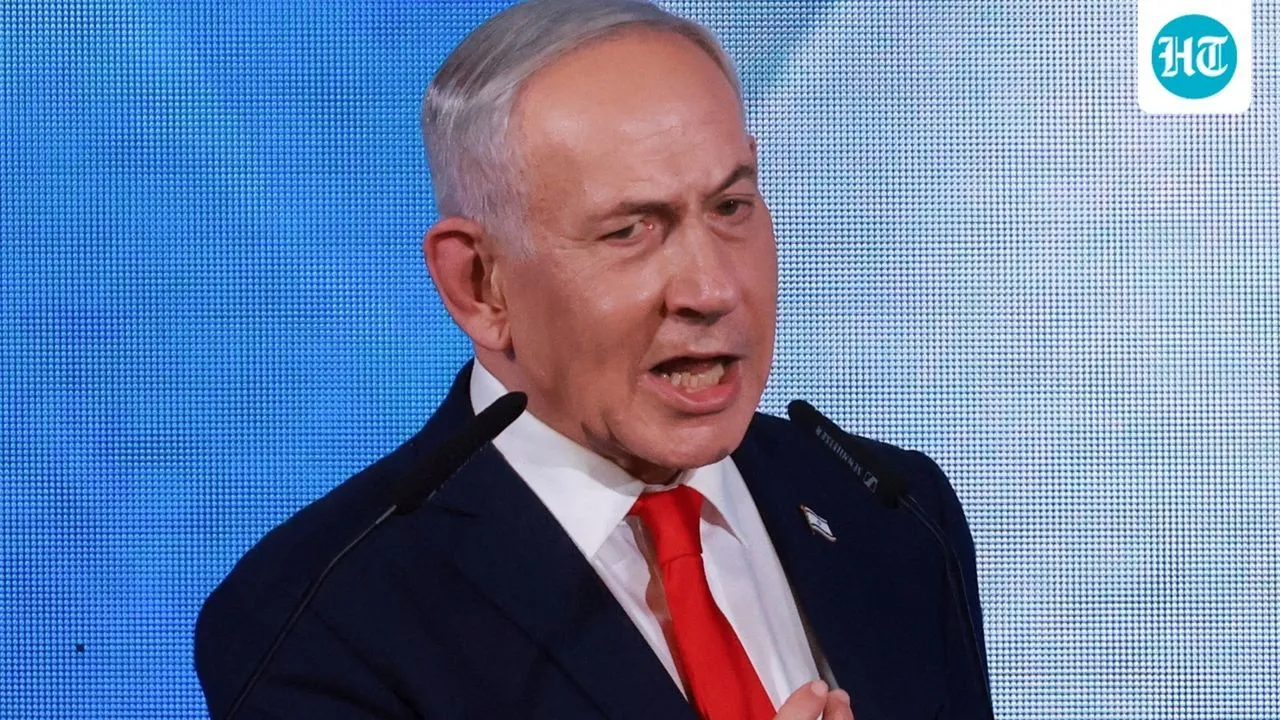
Israeli Prime Minister Benjamin Netanyahu on Wednesday said that the formation of a national unity government was still possible, a day after accusing Arab lawmakers of supporting "terrorism" and seeking Israel's "destruction" in a speech in the Knesset, The Times of Israel reported.
Speaking to reporters in the Knesset premises, Netanyahu struck a different tone from his remarks a day earlier, reiterating his call for political unity amid the ongoing government-formation process.
"Yesterday I said why a national unity government is necessary. Today I want to say why it's possible," Netanyahu told reporters.
He said Israel had demonstrated its ability to unite during critical moments, adding that the country was once again facing such a situation.
"It is possible because this nation knows how to come together at moments of truth," he said, describing national unity as "the call of the hour" and the will of the majority.
Netanyahu cited the Knesset's swearing-in ceremony and the past three years of war as examples of people from different political and ideological backgrounds coming together.
"Religious and secular, left and right, simply stood and fought together shoulder to shoulder," he said.
The Israeli prime minister also said he would continue reaching out to potential coalition partners, adding that the country faced significant challenges as well as opportunities.
Also Read | Netanyahu’s wife gets into shouting match with former PM Bennett during Knesset speech
"I can't tell you everything that I know, but there are enough people who know what massive challenges and what massive opportunities we have," he said.
Netanyahu's national unity government pitch
Netanyahu's latest remarks came four days after he called on parties belonging to the so-called change bloc to join a national unity government alongside parties from his outgoing coalition.
According to The Times of Israel, Netanyahu had warned against forming a government with Arab parties, which he has described as supporters of terrorism, arguing that such an arrangement would threaten Israel's future.
However, his proposal for a unity government would also reportedly require the inclusion of all his previous coalition allies, including the ultranationalist Religious Zionism and Otzma Yehudit factions, as well as the ultra-Orthodox parties and his Likud party.
Netanyahu has not specified who should lead the proposed national unity government.
Israel government formation deadlock
The political developments come amid a deadlock following Israel's October 27 parliamentary elections, which resulted in a hung Knesset, with neither major political bloc securing the 61 seats required for a majority in the 120-member legislature.
President Isaac Herzog has reportedly given Netanyahu's political rival, Gadi Eisenkot, the mandate to form the next government.