Last Updated:November 17, 2026, 08:35 IST
Maritime security, critical minerals, supply-chain diversification and emerging technologies are expected to feature prominently in the discussions
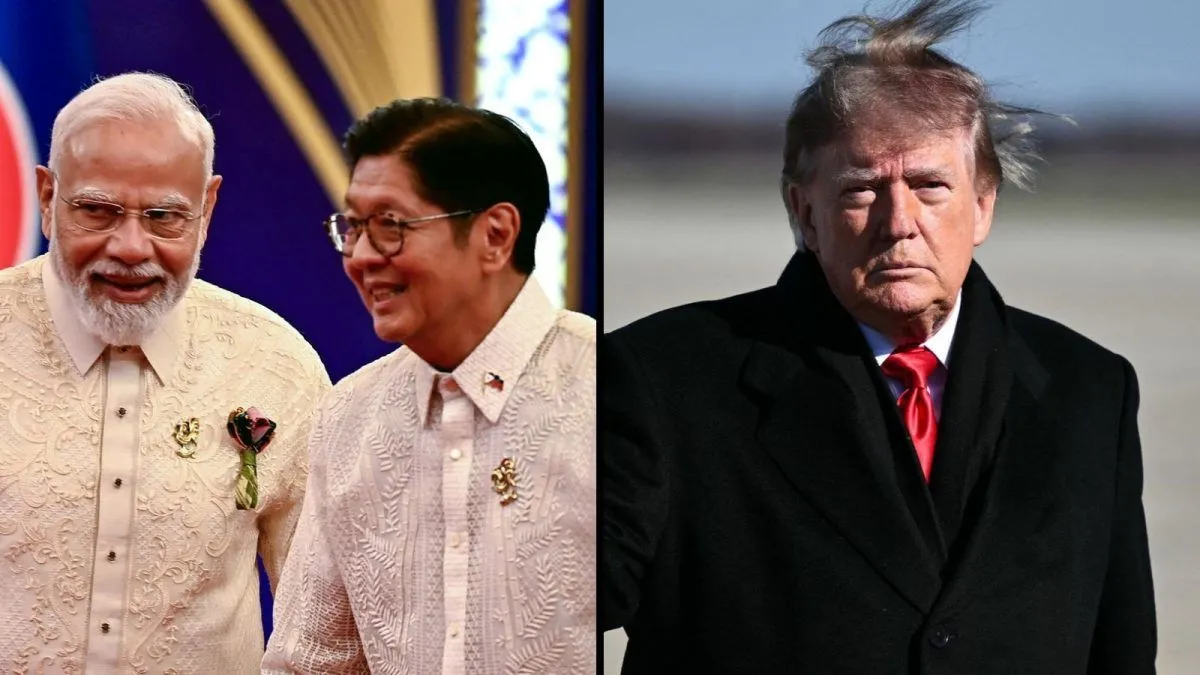
The leaders of the Quad grouping—Prime Minister Narendra Modi, US President Donald Trump, Japanese Prime Minister Sanae Takaichi and Australian Prime Minister Anthony Albanese—are set to meet in Manila on Tuesday, in a significant diplomatic engagement coming just ahead of Trump’s proposed meeting with Chinese President Xi Jinping and Russian President Vladimir Putin in Shenzhen.
The meeting, scheduled on the sidelines of the ASEAN and East Asia summits, will be Trump’s first Quad leaders’ engagement since beginning his second term in January 2025. It will also be the first meeting of the four leaders in more than two years, with their last summit taking place in September 2024 in Wilmington, Delaware, hosted by then US President Joe Biden.
The timing of the Manila meeting is significant as it is expected to underline the importance of the Quad at a time when Washington is preparing for high-stakes talks with Beijing. Sources told The Indian Express that the gathering is intended to demonstrate the relevance of the grouping, which China has consistently opposed.
ALSO READ | After Midterm Rout, Trump’s Asia Test Begins: What ASEAN And Quad Summits Could Reveal
It also comes against the backdrop of concerns among Quad members over China’s increasingly assertive behaviour in the Indo-Pacific, particularly its implications for maritime security and regional stability.
QUAD MEETING AHEAD OF TRUMP-XI TALKS
Trump, who revived the Quad in 2017 during his first presidency, has sent mixed signals on China during his second term. The US administration’s National Security Strategy under Trump 2.0 has been viewed by some as relatively soft towards Beijing, although Washington has rejected that assessment.
The Manila meeting is expected to give the other three Quad leaders an opportunity to brief Trump on China’s activities in the Indo-Pacific before he meets Xi in Shenzhen on November 19 on the sidelines of the Asia-Pacific Economic Cooperation (APEC) summit.
The proposed trilateral engagement involving Trump, Xi and Putin is also significant as it brings together the leaders of three major powers at a time of heightened geopolitical uncertainty.
According to sources cited by The Indian Express, the Quad meeting could be followed by a “fact-sheet" outlining some of the outcomes and deliverables.
White House Assistant Press Secretary Olivia Wales confirmed Trump’s participation in the meeting, saying, “On Tuesday evening in Manila, the President will participate in a multilateral meeting with Quad leaders to discuss shared interests of peace, prosperity and security in the Indo-Pacific region."
ALSO READ | Quad’s New Warning: Is China Becoming The Central Challenge For Indo-Pacific Supply Chains?
She said that under Trump’s leadership, the Quad had demonstrated that it was a partnership of action, tackling the region’s toughest challenges and driving opportunities to ensure a free and open Indo-Pacific.
WHY THE MANILA MEETING MATTERS
The meeting assumes importance given the gap since the last leaders’ summit and the diplomatic strains that had affected the grouping.
India was originally scheduled to host the Quad leaders’ summit in 2025. However, tensions between New Delhi and Washington over tariffs, visa restrictions and deportations, as well as US proximity to Pakistan, had cast a shadow over the proposed meeting.
The situation has improved somewhat this year, with Quad foreign ministers meeting three times, including in New Delhi in May. The foreign ministers had also met twice in 2025. India is now expected to host the next leaders’ summit in 2027, although the possibility of another member taking over the hosting responsibility remains open.
The Manila gathering is also notable because it will be the first time the four leaders meet in a country that is not part of the Quad since the grouping was elevated to the leaders’ level in 2021.
WHAT IS ON THE QUAD AGENDA?
Maritime security, critical minerals, supply-chain diversification and emerging technologies are expected to feature prominently in the discussions.
“The leaders are likely to take up the issue of free and unimpeded commercial shipping lanes in order to secure energy supplies from across the world," a source familiar with the preparations told Reuters.
The issue of attacks on commercial ships is also likely to come up during the discussions. Critical minerals and the need to diversify supply chains are other key priorities, particularly amid concerns over China’s dominance in several strategic sectors.
The Quad, comprising India, the US, Japan and Australia, was revived in 2017 as a platform for cooperation among four Indo-Pacific democracies. While China has viewed the grouping as an attempt to contain its influence, its members have maintained that it is not directed against any particular country.
MODI’S ASEAN ENGAGEMENT
PM Modi arrived in the Philippines on Monday to participate in the 23rd ASEAN-India Summit and the 21st East Asia Summit, alongside his engagements with other regional leaders.
The Ministry of External Affairs (MEA) said the visit reaffirmed India’s partnership with ASEAN as a cornerstone of its Act East Policy and Indo-Pacific Vision.
India’s relationship with ASEAN countries is central to its Act East Policy and occupies an important place in its MAHASAGAR vision, Modi said on Monday. MAHASAGAR stands for Mutual and Holistic Advancement for Security and Growth Across Regions and represents India’s expanded maritime outlook.
In his departure statement, the prime minister said he looked forward to working with “fellow leaders to build on the progress of our Comprehensive Strategic Partnership and give further momentum to our shared aspirations for growth, connectivity and prosperity".
He also described the East Asia Summit as “an important platform for dialogue on regional and global challenges", adding that he looked forward to exchanging views on strengthening peace, stability and cooperation in the Indo-Pacific.
Founded in 1967, ASEAN has 11 members: Brunei, Cambodia, Indonesia, Laos, Malaysia, Myanmar, the Philippines, Singapore, Thailand, Timor-Leste and Vietnam. India, along with the US, China, Japan and Australia, is among its dialogue partners.