
Donald Trump, Vladimir Putin, and Xi Jinping met in Shenzhen on November 19. Meanwhile, U.S. envoys headed to Berlin to discuss Ukraine’s postwar security guarantees with Ukrainian and European negotiators.
Russia has demanded that NATO abandon military activity across Central Asia as part of negotiations over Ukraine, without consulting the five countries whose security relationships could be affected.
A Russian paper dated November 10 was circulated during U.S.-mediated negotiations in Abu Dhabi. The New York Times reported that the proposal would rule out NATO expansion and “any military activity” in Ukraine, Eastern Europe, the South Caucasus, and Central Asia. It also demands a rollback of NATO forces and bases to the alliance’s 1997 positions.
The wording is not new. Moscow proposed nearly identical restrictions in December 2021, shortly before its full-scale invasion of Ukraine. Article 7 of its draft Russia-NATO agreement called for NATO members to avoid military activity in Ukraine and other states in “Eastern Europe, in the South Caucasus and in Central Asia.”
A separate 2021 draft treaty with Washington went further. Its Article 4 sought to prevent the United States from establishing military bases, using military infrastructure, or developing “bilateral military cooperation” with former Soviet republics outside NATO. That demand would have covered Kazakhstan, Kyrgyzstan, Tajikistan, Turkmenistan, and Uzbekistan.
The November proposal revives that NATO restriction, though the available reporting does not establish that Moscow has also renewed its separate demand to end bilateral American military cooperation.
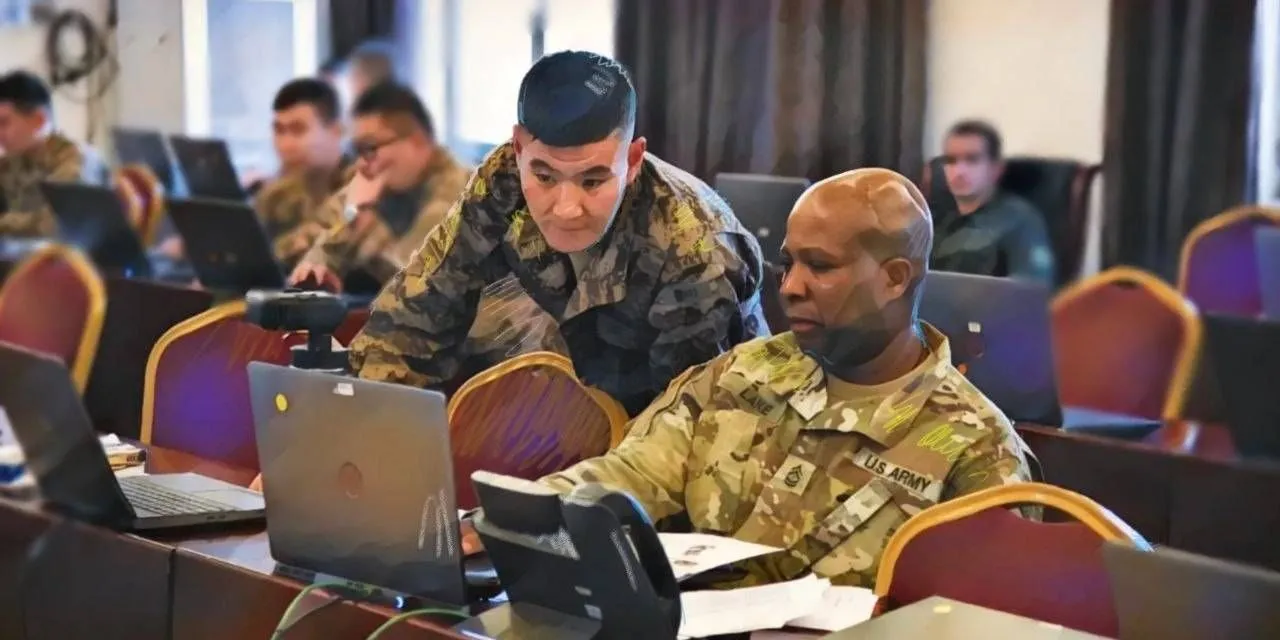
All five countries are NATO partners through the Partnership for Peace program, with each government setting its own priorities. Kazakhstan has hosted the multinational Steppe Eagle peacekeeping exercises and works with NATO on military education and defense reform. Its partnership program also covers interoperability and training. Kazakhstan also deployed military engineers to Iraq as part of the U.S.-led multinational force between 2003 and 2008. Kazakhstan’s Foreign Ministry explicitly identifies preparing troops for UN peacekeeping as a principal objective of its NATO partnership.
Uzbekistan participates in NATO defense education and has conducted counterterrorism training. Tashkent hosted the alliance’s Central Asia liaison office from 2013 to 2017. Tajikistan has engaged with NATO on border security and counterterrorism. Kyrgyzstan cooperates on military education and UN peacekeeping preparation, and despite its permanent neutrality, even Turkmenistan works with NATO on border security and disaster preparedness, although it does not contribute troops to NATO operations.
A blanket ban on NATO military activity could therefore affect programs that regional governments have chosen to pursue.
Russia describes its wider proposals as security guarantees intended to limit NATO’s military reach. The 2021 documents invoked the principle of “equal and indivisible security,” arguing that one party should not strengthen its security at another’s expense. Moscow’s proposed restrictions would nevertheless limit security cooperation undertaken by governments that are not parties to the negotiations.
Russia already has its own security arrangements in the region. Kazakhstan, Kyrgyzstan, and Tajikistan belong to the Russia-led Collective Security Treaty Organization. Kyrgyzstan hosted the U.S. military at Manas from 2001 until 2014, when the base closed after years of Russian pressure. Moscow established its own air base at nearby Kant in 2003, which remains operational.
Uzbekistan withdrew from the CSTO in 2012, opposing Russian-led efforts to expand the alliance’s powers over military intervention and foreign bases. Turkmenistan follows a policy of permanent neutrality, but has maintained military ties with Washington. U.S. Secretary of the Army Daniel Driscoll met Turkmen defense officials during a visit in early 2026. Moscow nevertheless wants the same NATO restriction applied across all five countries as part of negotiations over Ukraine.
Kazakh analyst Nurbolat Nyshanbayev told AnewZ that the countries “should be able to make their own decisions, protect their independence, and maintain good relations with all sides.” He also cautioned against turning the region into an arena for competition between major powers.
None of the five Central Asian governments have publicly responded to the reported demand, but the proposal serves to illustrate that Moscow continues to treat NATO’s role in Central Asia as a matter to negotiate with Western powers rather than with the countries concerned.