

Editor's Note: This is a developing story and is being updated.
After a day of striking government buildings and cathedrals in central Kyiv, Russia launched a mass missile attack targeting the capital and regions across Ukraine overnight on Nov. 20.
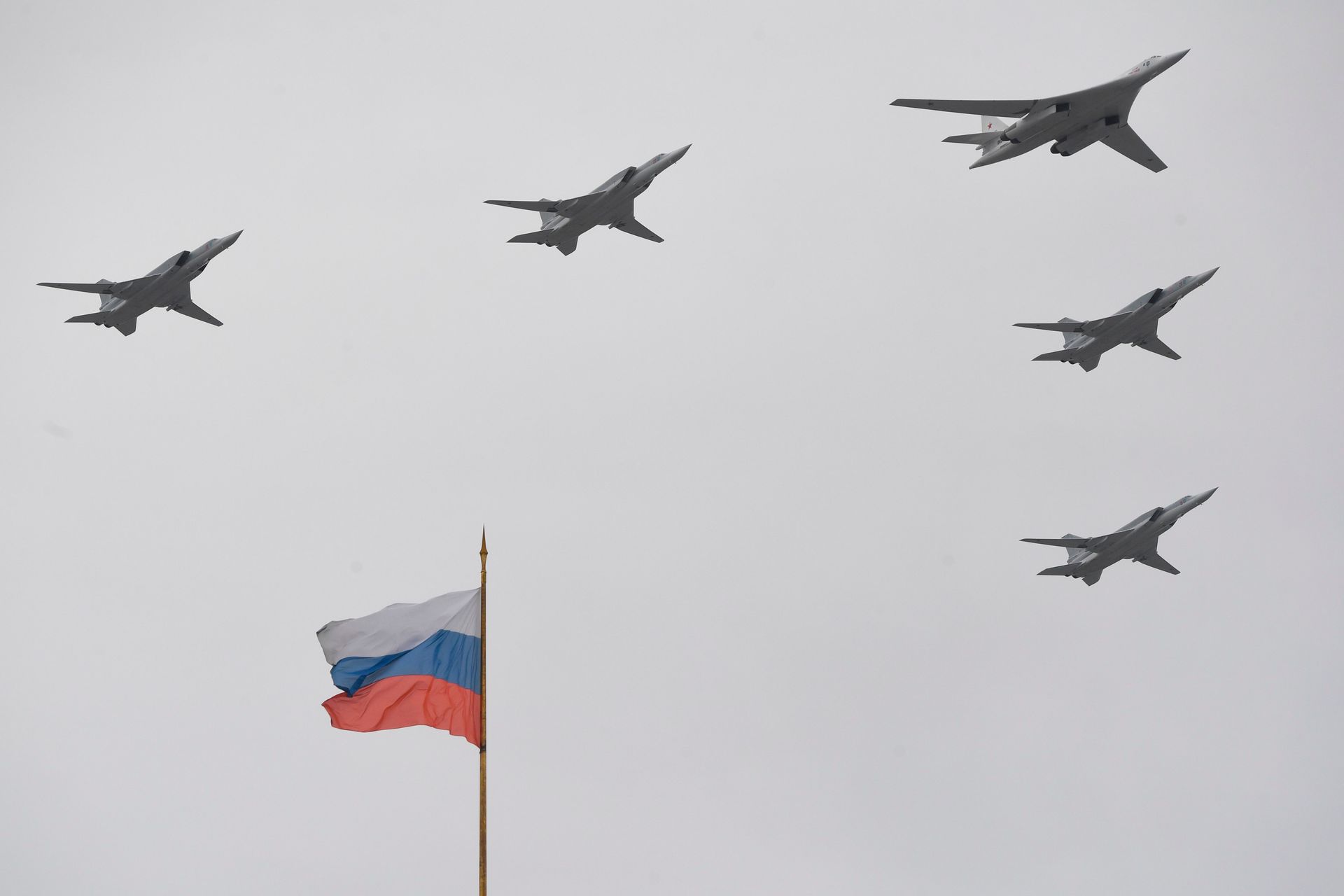
Monitoring channels reported that Russia had launched Tu-160 strategic bombers from the Ukrainka Air Base in the country's Far East. The supersonic Tu-160 military aircraft are among the largest warplanes in operation and are capable of carrying conventional and nuclear weaponry.
With the launch of heavy bombers, all regions of Ukraine are potentially at risk, even those far from the front lines.
But thus far, Kyiv has been hit hardest.
Russia renews assault on Kyiv at night
Explosions rocked Kyiv beginning at around 1:25 a.m. local time on Nov. 20, according to Kyiv Independent journalists on the ground. The blasts hit the capital minutes after Ukraine's Air Force warned that Russian ballistic missiles were flying towards the city.
No casualties have yet been reported, and the full extent of the damage is not yet clear. Intermittent waves of missiles and drones have been attacking the city throughout the night.
Shortly before 2 a.m. local time, the Air Force warned that "all ballistic missiles are heading towards Kyiv." Kyiv Independent journalists in the city then reported another wave of "very loud" and "crazy loud" explosions in the central districts.
Additional explosions were later heard between 3 and 3:30 a.m. local time amid reports of incoming missiles.
The Kyiv City Military Administration reported fires to residential buildings in the capital's Obolonskyi and Podilskyi districts.
Another round of explosions struck about 40 minutes later. Kyiv Mayor Vitali Klitshcko reported that an infrastructure facility in the Holosiivskyi district was hit by a strike.
"Preliminary reports indicate that an office building on the premises is on fire," the mayor said.
Klitschko later announced that nonresidential buildings in the Podilskyi district also caught fire and that a strike hit an "open area" near one of the city's bridges. He did not specify which bridge was struck.
Beyond the capital
Ballistic missile warnings have also been issued for Sumy and Poltava oblasts, while drone alerts have been announced in multiple regions.
Air defense systems have even been deployed in the western city of Lviv, far from the Russian border. Governor Maksym Kozytskyi warned that a Russian drone was circling the city.
In the southern city of Kryvyi Rih, a "massive enemy drone attack" hit a major infrastructure facility, according to Oleksandr Vilkul, head of the Kryvyi Rih Defense Council.
Closer to the front line, Kharkiv Mayor Ihor Terekhov reported that a Russian attack struck a medical facility in the city's Shevchenkivskyi district. Initial reporting indicates casualties were sustained in the strike.
Putin rejects peace
The day before the latest overnight attack, Russian President Vladimir Putin threatened Ukraine with retaliation for its strike on the Crimean Bridge.
"Our retaliatory actions... will be far more painful than what (Ukraine) did to the bridge... With today's precision weapons, it's not that difficult to do," Putin said.
The Crimean Bridge, built after Russia's occupation of the peninsula in 2014, serves as a critical supply and transport route for Russian forces in occupied Ukrainian territories. A section of its roadway collapsed following a Ukrainian Flamingo missile strike overnight on Nov. 17.
Despite launching an unprovoked war in Ukraine in February 2022, Putin has regularly used retaliatory rhetoric following Ukrainian attacks on military targets within Russia.
Russia's overnight assault followed a day-long drone attack on Kyiv that struck the heart of the city, damaging two European embassies, St. Volodymyr's Cathedral, and residential buildings. A 26-year-old man was killed in the strike, while five others were injured.
The constant attacks took place as Russia and Ukraine's leaders held talks with their respective strategic partners. Putin met his U.S. and Chinese counterparts, Donald Trump and Xi Jinping, in Shenzhen, China, where the three heads of state signed a "declaration of peace."
President Volodymyr Zelensky, meanwhile, met with Coalition of the Willing leaders in Berlin to prepare for the next round of negotiations between Kyiv and Moscow.
Following the summit, Zelensky and the European leaders issued a joint statement calling on Russia to accept a ceasefire on energy infrastructure and Black Sea shipping corridors. But as part of his promise to retaliate against Kyiv, Putin also said he would not negotiate any ceasefires on energy or maritime trade.