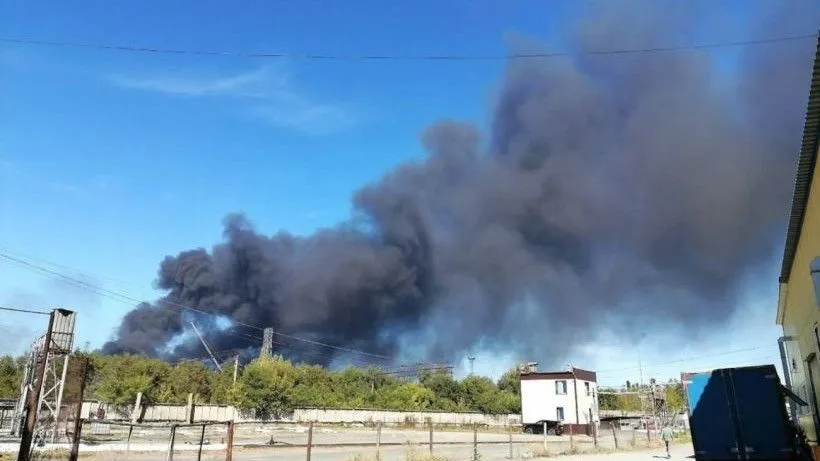
Ukrainian drone strikes have disrupted refineries representing roughly 30% of Russia's total oil-processing capacity since late October, dealing another blow to Moscow's fuel supplies just as it attempts to increase diesel exports under a controversial agreement with Washington.
Nine of Russia's 35 major refineries experienced disruptions over the past week, Reuters reported Tuesday, citing industry sources and officials.
The affected facilities have a combined nameplate capacity of approximately 2.2 million barrels per day, compared with Russia's total primary refining capacity of roughly 6.8 million bpd.
The actual reduction in crude processing could reach 200,000 metric tons daily, equivalent to approximately 1.5 million bpd, according to industry estimates—a substantial hit for a refining industry already struggling to meet domestic fuel demand.
ADVERTISEMENT
Russian refineries were processing approximately 5 million bpd at the end of October, following a partial recovery from earlier Ukrainian attacks.
The latest strikes have affected facilities in Ryazan, Yaroslavl and the Volga region. On Monday, a Ukrainian drone attack set fire to the Kirishi refinery, Russia's second-largest, according to the regional governor.
Russia recently agreed to supply diesel to the United States and international markets under an arrangement announced by President Donald Trump in October. The initial agreement covered 300,000 metric tons, followed by additional scheduled shipments.
Russian Foreign Minister Sergei Lavrov said Tuesday that the arrangement was already helping lower fuel prices, but domestic shortages have reportedly returned to several Russian regions.
The disruptions complicate an already strained global diesel market. Middle Eastern refinery outages stemming from the Iran war have sharply restricted refined-product supplies, and Russian export disruptions have only added to the tightness, keeping global diesel prices above comfortable levels.
Meanwhile, U.S.-brokered peace talks between Russia and Ukraine are scheduled for November 10–11 in Abu Dhabi, although the countries remain divided over key territorial demands.
By Julianne Geiger for Oilprice.com
More Top Reads From Oilprice.com
China Is Buying Oil Again After Months of Living Off Its Stockpiles
U.S. Traders Weigh the Cost of Taking Trump’s Russian Diesel
Iran War Set to Drive A Drop in Global Fossil Fuel Emissions in 2026