Market Mastery
Webinar by Vishal Malkan
Find the weak links
in your portfolio by Vishal Malkan
Iran's extensive network of dams, pipelines and water-transfer projects is under renewed scrutiny following US and Israeli airstrikes on suspected missile facilities near several of these installations. Water and military experts are examining whether some of the infrastructure was built, at least partly, to provide underground military complexes with independent supplies of water and electricity.
The possibility has emerged from a comparison of the locations of Iran's dams with sites targeted in recent strikes. However, experts have cautioned that no direct link has been established between the country's decades-old water infrastructure programme and its underground missile network.
A report by The New York Times said environmentalists had questioned the purpose of several large dam and water-transfer projects for years, particularly in regions where the need for such infrastructure was unclear. The recent military campaign has prompted a closer examination of whether strategic military requirements may also have influenced their construction.
Iran's dams and the missile strike map
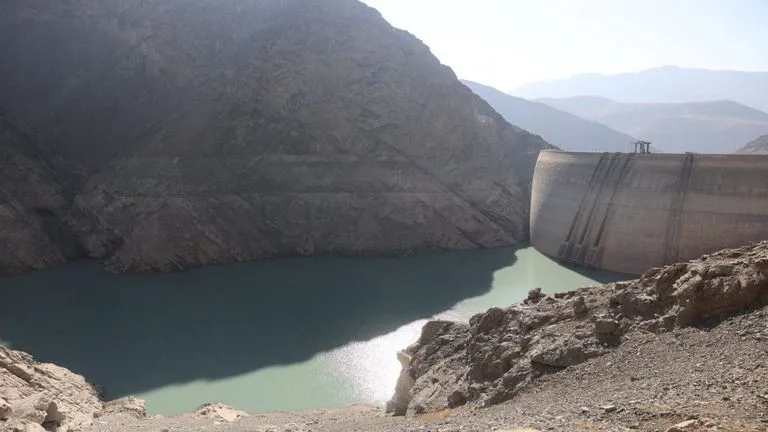
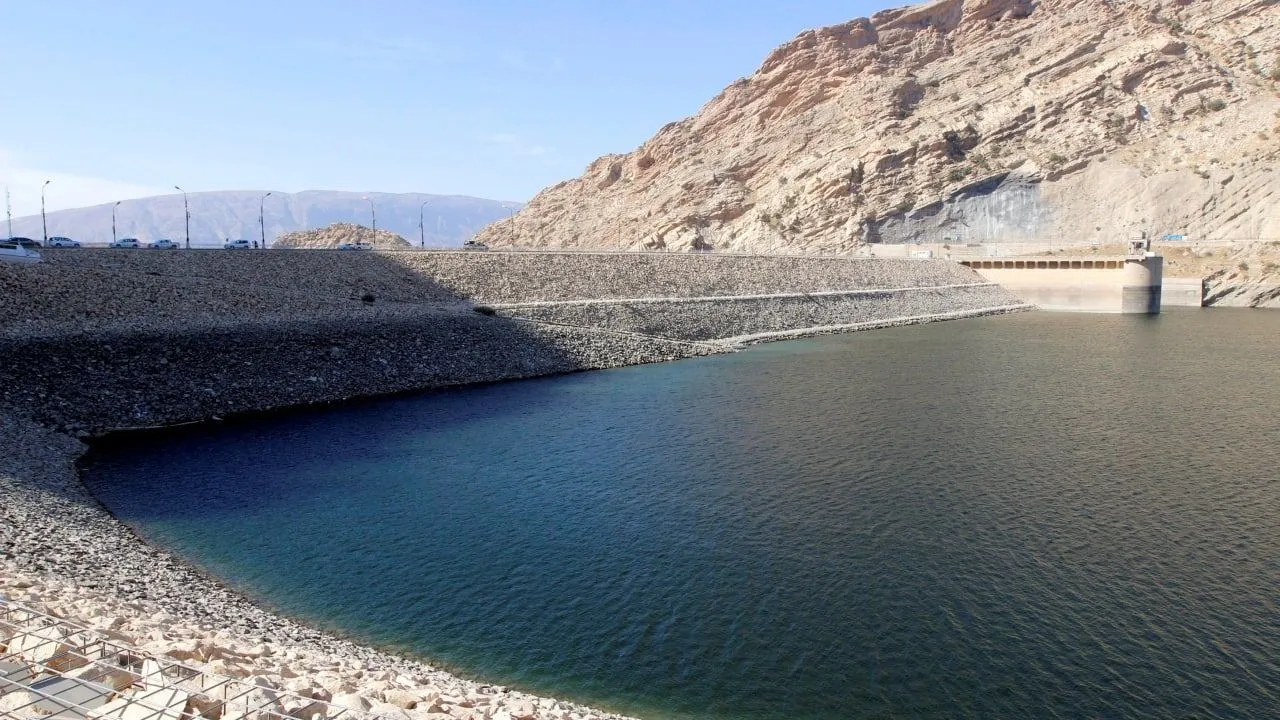
Nima Shokri, a water security expert at Germany's Hamburg University of Technology, and his team have studied at least 533 dams across Iran, placing the country among those with the largest dam networks in the Middle East.
Shokri told The New York Times that he had long been puzzled by the scale of dam construction. His research took a new direction this spring when he compared a map of US and Israeli strikes on suspected missile facilities with his own database of dam locations.
He found that several locations appeared to follow a similar pattern, forming a semicircle stretching from northern to southern Iran.
“Why does it seem that wherever we have dams, there is a missile strike close by?" he asked.
Seven water and military experts interviewed by the newspaper said military installations located near dams could benefit from reliable access to water and electricity. Such arrangements could help ensure that underground facilities continue operating even if the wider civilian infrastructure is disrupted.
Danny Citrinowicz, a former Iran analyst with Israel's military intelligence agency, said the arrangement could provide Tehran with “operational continuity". He said Iran had strong incentives to keep its missile facilities independent of the country's wider infrastructure, potentially through dedicated or backup supplies.
Iran's Foreign Affairs and Energy ministries and the Islamic Revolutionary Guards Corps (IRGC), which is also involved in dam construction, did not respond to requests for comment, according to the report.
Inside Iran's underground 'missile cities'
Iran calls its underground military complexes “missile cities". The facilities consist of heavily fortified tunnels and chambers built deep beneath mountains, where ballistic missiles and drones can be stored, deployed and manufactured.
Farzin Nadimi, a senior fellow at the Washington Institute and an expert on Iran's military, estimates that the country has at least 30 such sites. He told The New York Times that few countries have built an underground military network of comparable scale, with North Korea being one exception.
The possibility that these facilities require independent supplies of essential resources has become a focus of attention as experts examine the relationship between Iran's military installations and nearby civilian infrastructure.
Why the 2018 arrests of Iranian conservationists have resurfaced
The scrutiny has also revived questions about the arrest of a group of Iranian wildlife conservationists in 2018.
The IRGC's intelligence wing detained members of the Persian Wildlife Heritage Foundation on espionage charges, accusing them of using cameras installed to monitor endangered animals, including Asiatic cheetahs, to gather intelligence for the United States and Israel.
Kavous Seyed-Emami, one of the foundation's founders, died in state custody. Other members who spent years in prison later alleged that they had been tortured and sexually harassed. Senior Iranian officials said at the time that they were unaware of the alleged mistreatment and would examine the claims.
Morad Tahbaz, another founder of the foundation who spent more than five years in prison, recalled interrogators accusing him of training lizards to spy on military installations.
Some environmentalists now suspect that conservationists may have inadvertently encountered sensitive military locations while conducting fieldwork. Nik Kowsar, an Iranian environmental and water analyst based in Washington, said the Guards may have considered people working near such sites a security risk.
There was, however, another political explanation for the arrests. Some analysts suspected that the IRGC was seeking to weaken Iran's reformist government, which had been pursuing greater foreign investment and international expertise, including in environmental projects.
Kaveh Madani, who was deputy head of Iran's Department of Environment when he was arrested, said conservation groups did not enter wilderness areas without permission from government and intelligence authorities.
Yazd and Hormozgan: Projects and military sites under scrutiny
Two regions have drawn particular attention following the recent strikes: central Iran's Yazd province and the southern province of Hormozgan.
Amir Aghakouchak, a water expert at the University of California, Irvine, had questioned the need for a major project designed to transfer water from the Zagros Mountains to central Yazd.
After airstrikes in the region in March, reports, including one by The Financial Times, highlighted the presence of a major missile facility nearby. Aghakouchak said the water-transfer project “may have been influenced, at least in part, by military considerations."
Hormozgan has also become part of the investigation into the possible overlap between conservation work and sensitive military locations.
Tahbaz recalled that his interrogators had shown unusual interest in his team's work to protect the rare Laristan wild sheep in the province.
On July 14, US airstrikes hit the Tarom Protected Area in Hormozgan, killing the family of a local wildlife ranger. The US military said it was targeting military infrastructure and coastal defences.
Nadimi said the protected area was close to a location where military analysts believe Iran had built an underground missile base.
For wildlife conservationists, however, the area was associated with efforts to protect endangered animals. Kowsar recalled that a storage shed in the area contained hay meant for Laristan wild sheep.
The proximity of some water projects, conservation sites and suspected military facilities has prompted experts to revisit questions about Iran's infrastructure and security planning. But the available evidence has not established that the country's dam-building programme was designed to serve its underground missile network.