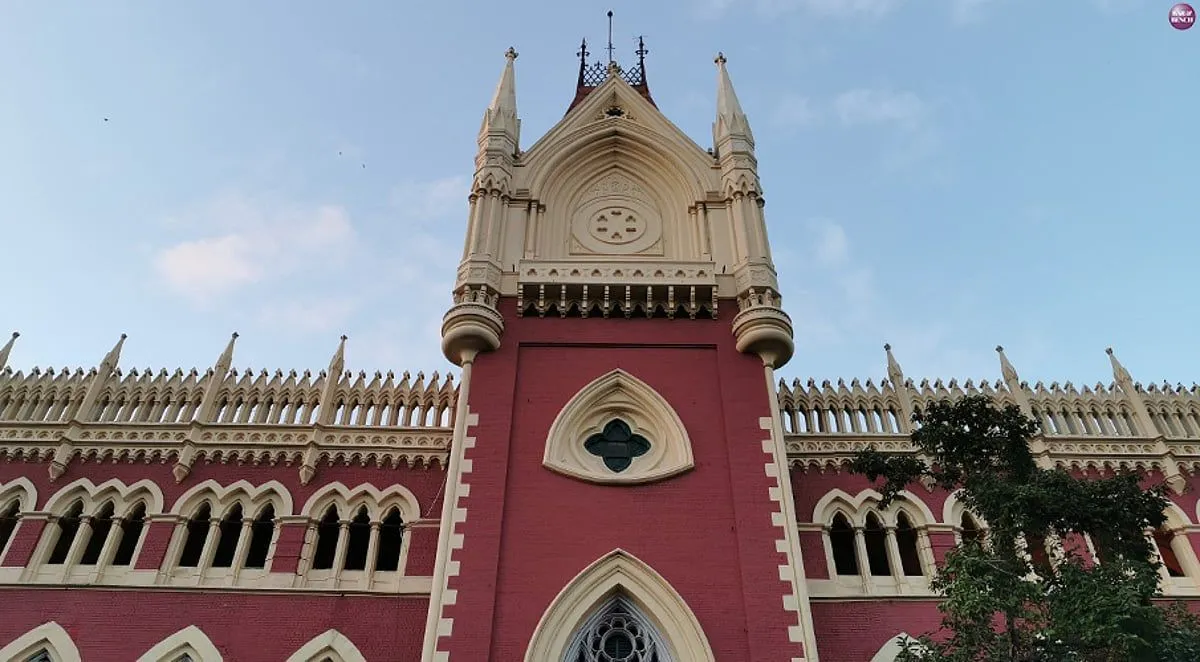
A Bench of Justices Arijit Banerjee and Apurba Sinha Ray observed that the decision to backtrack from the sale agreement appeared to be a case of "regime revenge" by the Mizo government that took charge in December 2023.
"It does appear to us that this is a case of ‘regime revenge’. The Government cannot renege on a promise made and acted upon by a citizen to his detriment, only because there is a change in regime," the Court said.
Finding no justification for cancelling the sale, the Court ordered the government of Mizoram to execute the sale of a plot of land that previously housed a government guesthouse and offices (Mizoram House) within eight weeks.
The Court passed the ruling on an appeal preferred by the Mizoram government against an order passed by a single judge Bench of the High Court in 2024, which had directed them to effectuate the land sale within six weeks.
The case concerned a plot of land at 24, Ashutosh Chowdhury Avenue in Kolkata, which the Mizoram government had purchased in 1973 and used for its guest house and offices.
In May 2023, the government floated an e-tender-cum-e-auction to sell the property. Excel Vincom Private Limited emerged as the highest bidder and an agreement for sale was executed on October 6, 2023.
However, the sale agreement caused an upheaval amongst the Mizo population in the State, and the new regime cancelled the tender process on the ground that it was opposed to public interest.
The cancellation followed representations from Kolkata Mizo Students and the Calcutta Mizo Welfare Association, which highlighted the property's historical and heritage significance and its role as a refuge for Mizo students and professionals living in Kolkata.
Mizoram's Advocate General Biswajit Deb also highlighted this before the High Court, contending that the reason for shelving the sale was not because of a regime change but the sentiments of the close-knit Mizo community in Kolkata. The entire money paid by Excel Vincom was refunded, he added.
He argued that since a transfer of ownership would only commence upon the complete execution of the sale deed, which was never done, the Mizoram government reserved the right to cancel the tender at any moment.
Senior Advocate SN Mookherjee, representing Excel Vincom, countered that correspondence between the parties clearly showed that the stage of cancellation of the tender was long gone with the only thing remaining being the execution of the sale deed. He stressed that it was a change in government that prompted an abrupt halt to completing the sale.
The Court found that the Mizoram government had not only received the entire sale amount but also accepted penalty money (interest for delayed payment of an installment of the sale consideration) to effectuate the transfer of the land.
The Court noted that the sale agreement was worked out only after sufficient deliberation between the parties, with the Mizo government saying that steps towards finalising the sale deed would be taken following the completion of the State's General Elections in 2023.
However, the elections saw a new regime coming into power in Mizoram and changed the dynamic of the sale deliberations. The Court noted that the new regime unilaterally cancelled the sale, without even entering into a dialogue with Excel Vincom.
The Court found no justification for the cancellation of the sale, terming it unjust, arbitrary, violative of Article 14 (right to equality and non-discrimination) of the Constitution and a case of "regime revenge."
"The appellants (Mizoram Government) have not been able to demonstrate any public interest, far less overwhelming public interest, which could justify cancellation of the tender process. The decision of the Government to cancel the entire process appears to us to be a clear case of regime revenge," the Court ruled.
The Court added that once the State is a party to a contract, it has an obligation in law to act fairly, justly and reasonably. It proceeded to dismiss the Mizoram government's appeal on finding that there was no proper ground for the cancellation of the tender when great lengths were covered to finalise the sale deal.