Sonia Gandhi’s account
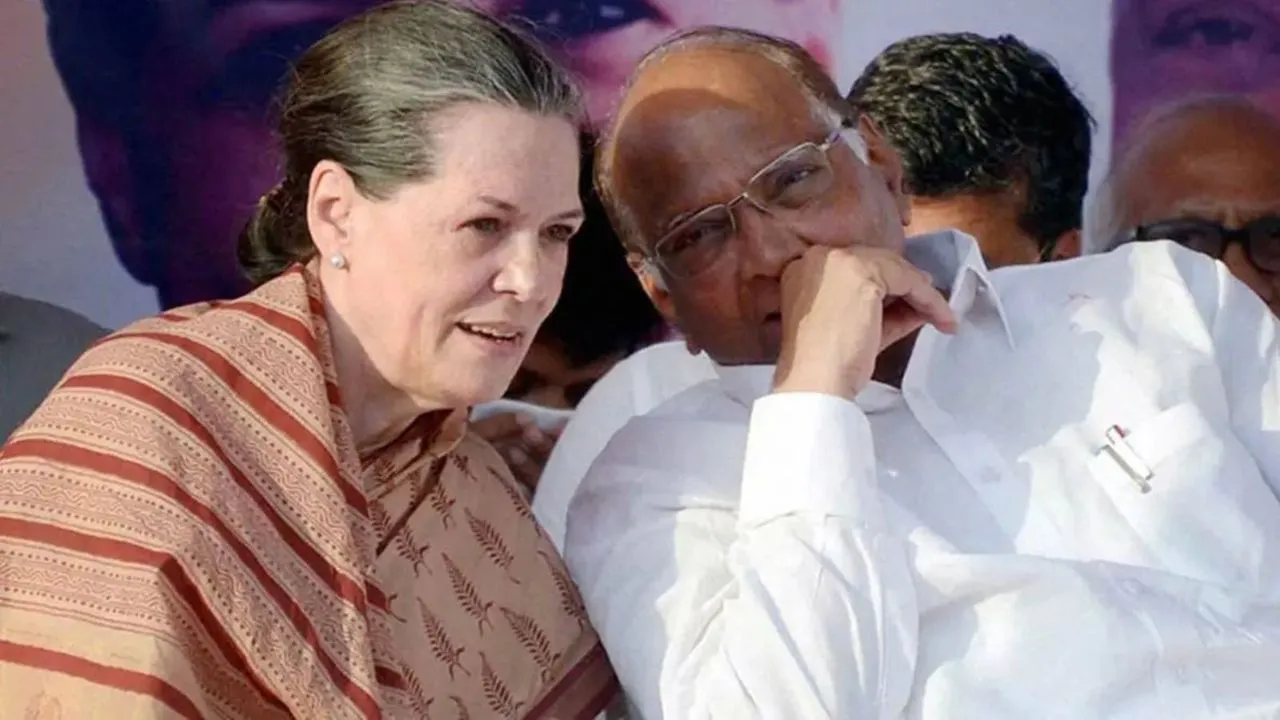
Gandhi writes that in May 1999, she received a letter jointly signed by three of her colleagues in the Congress Working Committee (CWC), Pawar most prominent among them. The letter declared that because she was foreign-born, she could not hold high office in India. The issue was also raised at a CWC meeting.
“I felt tears welling up and walked out of the meeting. I hadn’t entered politics to grab position and power. It was some of these colleagues who had urged me to join politics, and now they were turning on me… It wasn’t the issue of holding office that hurt me; it was that my loyalty to India was being questioned,” she writes.
Gandhi then wrote a resignation letter to the CWC which, she writes, “caused a stir”. “Party workers came thronging in from different parts of the country and besieged my house, pleading with me to withdraw my resignation. Some wept, some created embarrassing scenes. That pressure, and the urging of the whole CWC, brought me to some soul-searching: What about the responsibility I had taken on? Were my injured feelings more important than my commitment to the party? I agreed to continue.”
The CWC, she writes, then held a full session of the All India Congress Committee and suspended the three leaders, including Pawar. The other two were PA Sangma and Tariq Anwar. He then broke away to form the Nationalist Congress Party. “During the assembly elections in Maharashtra, we fought separately against each other, but the results demonstrated that if we were to defeat our common opponents, we would have to join hands and work together as allies. It was at that time a bitter pill to swallow, but together we were able to form a coalition government in Maharashtra, and since then our alliance has endured,” she writes.
Sharad Pawar’s account
Pawar’s political autobiography, Lok Maze Sangati, was published in 2015 and written in Marathi. Underlining his key role in persuading Gandhi to enter politics, Pawar writes that he, A K Antony and Ghulam Nabi Azad visited her 10 Janpath home to urge her to take over the Congress’s leadership when the party was struggling under Sitaram Kesri. P C Alexander, he says, also argued that the Gandhi family was the force holding the Congress together and that bringing a member of the family to the forefront was necessary to keep the party united.
Gandhi announced her entry into politics on December 27, 1997. Following Kesri’s removal on March 14, 1998, she became Congress president. Pawar says her entry brought enthusiasm back among party workers and helped restore the confidence of sections of Muslim and Dalit voters who had drifted away from the Congress. The party’s Lok Sabha tally, however, increased only marginally, from 140 in 1996 to 141 in the 1998 polls.
Pawar writes that his relationship with Gandhi was initially cordial, but differences started emerging after she took charge. He alleges that she increasingly relied on a small group of advisers who were uncomfortable with his standing in the party and reminded her of his earlier differences with the Gandhi family.
He cites two instances in which he felt his authority as Leader of the Opposition in the Lok Sabha was undermined. The first was the amendment to the Congress Parliamentary Party constitution that enabled a person who was not a member of either House to become its leader. Pawar says the amendment was made to facilitate Gandhi’s appointment. He also recounts a dispute over parliamentary committee nominations in which, after he had submitted a list approved by Gandhi, the party’s chief whip sent a second list with different names. When Pawar asked Gandhi to have the second list withdrawn, he says she told him to withdraw his own.
The differences came to a head at the May 15, 1999 CWC meeting. Pawar says Gandhi took out a piece of paper and read aloud: “I was born in a foreign country. If this becomes an issue during the election campaign, we must collectively consider what impact it could have on the party’s performance.”
Pawar recalls that Arjun Singh, A K Antony, Ghulam Nabi Azad and Ambika Soni defended Gandhi. PA Sangma, however, warned that the BJP would raise the issue during the election campaign and that the Congress needed a response. Tariq Anwar agreed with him.
Pawar writes that he acknowledged the Gandhi family’s contribution to the Congress but agreed with Sangma that political opponents would certainly raise the foreign-origin issue. He cited an interaction at Mumbai University in which a young woman student had asked him: “In a country with a population of 100 crore, can the Congress not find even one leader who was born in India?” Pawar said the question showed the issue had entered public consciousness.
Pawar also reproduces the letter he, Sangma and Anwar sent to Gandhi. The letter praised her role in reviving the Congress, acknowledged that she had adopted India as her home and said that she had become one of its own. But it argued that the foreign-origin issue was not merely a BJP campaign and proposed that the Congress promise a constitutional amendment restricting the offices of President, Vice-President and Prime Minister to people born in India.
The letter was signed by P A Sangma, Tariq Anwar and Sharad Pawar. The Congress thereafter expelled the three leaders for six years. Pawar’s account alleges that Arjun Singh orchestrated their suspension because of the growing influence he had acquired in the party. He subsequently formed the NCP with Sangma and Anwar on June 10, 1999.
The many ups and downs
Situations and necessities dictate decisions in politics. Just months after Pawar parted ways with the Congress, the NCP he founded joined hands with the Grand Old Party to form a coalition government after the 1999 Assembly election.
In 2004, the two parties joined hands nationally: the NCP became part of the Congress-led United Progressive Alliance, and Pawar served as Union Agriculture Minister in the Manmohan Singh government. Following the NDA’s ascent to power, the Congress and the NCP joined forces under the INDIA bloc, before the NCP split following a rebellion by Ajit Pawar. Following the split, the Sharad Pawar-led faction continues to be a Congress ally, while the rebel faction has joined NDA ranks and is a part of the Maharashtra government.