Synopsis
On Wednesday, the Union Cabinet approved significant proposals for infrastructure and business support across India. The government will allocate ₹3,230 crores for the Yuge Yugeen Bharat Museum in New Delhi. A metro rail project linking Noida and Greater Noida will receive ₹2,390 crores for development. Additionally, ₹62,370 crores will be set aside for NBS rates on fertilizers for the Rabi 2026-27 season.
Listen to this article in summarized format
Loading...
×
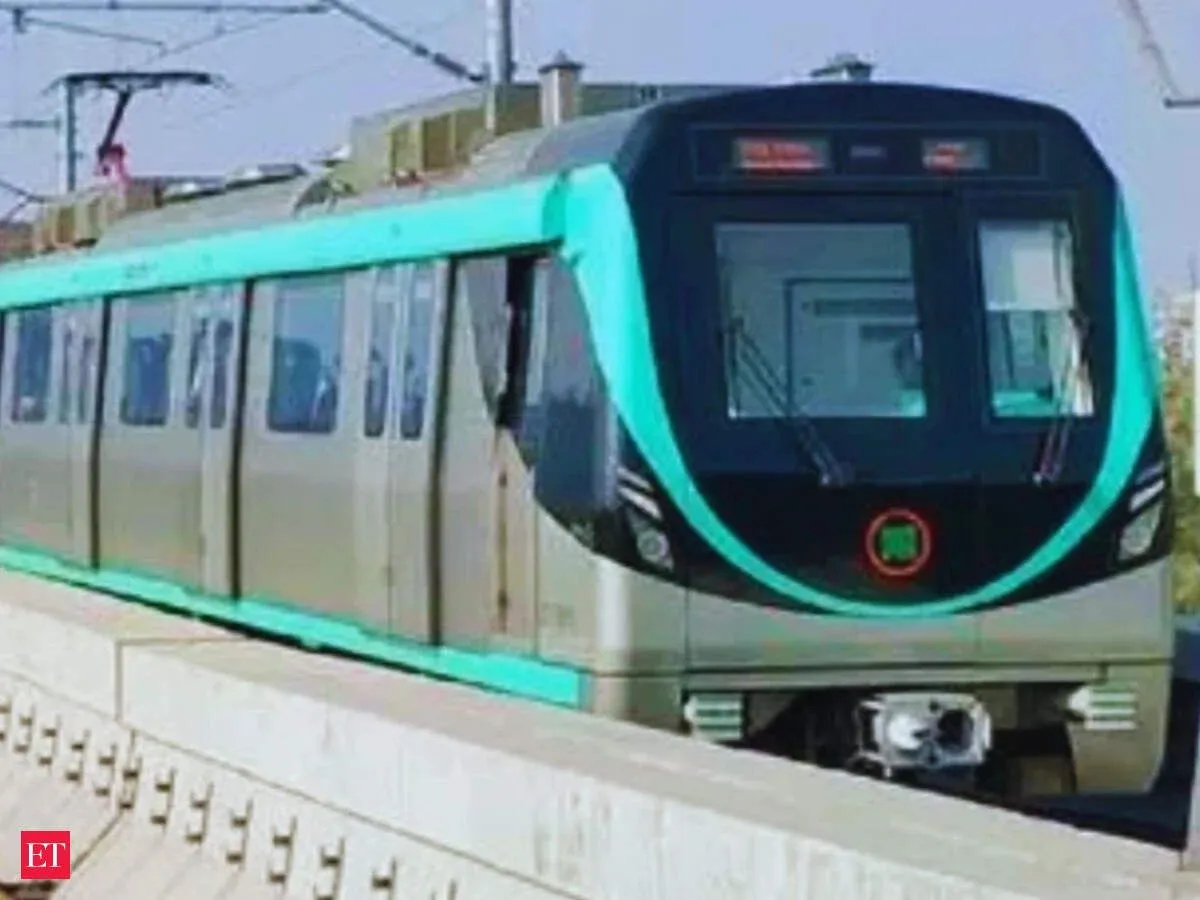
The Union Cabinet on Wednesday approved a package of projects and schemes involving an estimated Rs 77,101 crore, including an 8.45-km extension of the Noida-Greater Noida Metro's Aqua Line, a Rs 62,370-crore fertiliser subsidy provision for the Rabi 2026-27 season and the continuation of two credit guarantee schemes for another five years.
The approvals also include the development of the Yuge Yugeen Bharat Museum at the North and South Block complex in New Delhi at a cost of Rs 3,230 crore, and the continuation of the Stand-Up India scheme until March 31, 2031.
Also Read: Noida to Greater Noida West Metro gets Rs 2,390 crore boost: 8.5-km Aqua Line extension to have five new stations; check route, interchange & completion timeline
The metro extension, estimated to cost Rs 2,390 crore, will connect Noida Sector 51 with Greater Noida Sector 4 through an 8.449-km elevated corridor with five stations. The fertiliser subsidy provision of Rs 62,370.02 crore is around Rs 24,417.73 crore higher than the budgetary requirement for the Rabi 2025-26 season.
The Cabinet also approved the continuation of the Credit Guarantee Fund for Micro Units (CGFMU), with a corpus of Rs 5,000 crore, and the Stand-Up India scheme, which is intended to extend financial assistance to an additional 2.5 lakh entrepreneurs over five years.
Live Events
Noida-Greater Noida Metro to get 8.45-km extension
The Cabinet approved the extension of the Aqua Line Metro corridor from Noida Sector 51 to Greater Noida Sector 4, involving an estimated cost of Rs 2,390 crore.
The proposed 8.449-km elevated corridor will have five stations and is expected to improve connectivity between residential areas, commercial centres, office hubs, educational institutions and healthcare facilities across Noida and Greater Noida.
Once operational, the extension will take the combined active Metro Rail network in Noida and Greater Noida to 71.878 km. The project is also expected to provide an interchange with the Delhi Metro's Blue Line at Noida Sector 61, improving access to the wider Delhi-NCR transport network.
The corridor is expected to connect key commercial and retail destinations, including Gaur City Mall, H&S Mall and office space, Blue Sapphire Mall and commercial developments in Greater Noida Sector 4, IKEA at Noida Sector 51 and Anthurium Mall at Noida Sector 73.
It will also improve access to office and IT hubs, including Tech Mahindra's office and TCL Tech's office in Sector 60, the Oil Industry Development Board in Sector 73 and Golden I's office and commercial space in Greater Noida Sector 4.
Among the residential areas expected to benefit are Gaur City 1 and 2 in Greater Noida Sector 4 and Cleo County in Noida Sector 122. The corridor will also improve connectivity to educational institutions such as Delhi Public School in Sector 122 and healthcare facilities including Kailash Hospital, Rama Hospital, Cloud9 Hospital and other medical centres in the adjoining sectors.
The project is expected to reduce dependence on road transport, ease traffic congestion and cut travel times for commuters. The government has also cited potential environmental benefits from a shift towards metro-based public transport, including lower carbon emissions compared with conventional fossil-fuel-based transport.
Improved connectivity is expected to support commercial activity around the new stations and make workplaces, educational institutions and other essential services more accessible to residents.
Rabi fertiliser subsidy provision raised to Rs 62,370 crore
The Cabinet approved the Nutrient Based Subsidy (NBS) rates for phosphatic and potassic (P&K) fertilisers for the Rabi 2026-27 season, covering the period from October 1, 2026, to March 31, 2027.
The tentative budgetary requirement for the season has been pegged at Rs 62,370.02 crore, around Rs 24,417.73 crore higher than the Rs 37,952.29 crore required for the Rabi 2025-26 season.
The subsidy will cover P&K fertilisers, including di-ammonium phosphate (DAP) and NPKS grades. Fertiliser companies will receive the subsidy according to the approved and notified rates, with the stated objective of ensuring that these products remain available to farmers at affordable prices.
The government said the rates had been approved in view of recent trends in international prices of fertilisers and key inputs, including urea, DAP, muriate of potash (MOP) and sulphur. The revised rates are intended to rationalise the subsidy in response to movements in global input costs while ensuring the availability of fertilisers to farmers.
Under the NBS scheme, which has been in force since April 1, 2010, the government makes 28 grades of P&K fertilisers, including DAP, available to farmers at subsidised prices through fertiliser manufacturers and importers.
The government said the approval would help ensure the smooth availability of these fertilisers during the Rabi season and protect farmers from the full impact of changes in international prices.
Credit Guarantee Fund for Micro Units extended for five years
The Cabinet approved the continuation of the Credit Guarantee Fund for Micro Units (CGFMU) until March 31, 2031, with a corpus of Rs 5,000 crore.
The fund provides credit guarantee coverage to lending institutions through the National Credit Guarantee Trustee Company Limited (NCGTC) against the risk of defaults on eligible loans. It supports lending under the Pradhan Mantri Mudra Yojana (PMMY), which provides collateral-free credit to micro enterprises.
The fund's coverage includes loans of up to Rs 20 lakh extended to eligible micro enterprises under PMMY, overdrafts of up to Rs 10,000 provided by banks to beneficiaries of Pradhan Mantri Jan Dhan Yojana accounts, and loans to self-help groups with a portfolio size of Rs 10 lakh to Rs 20 lakh.
The guarantee coverage will be linked to the disbursement amount for working capital limits and the outstanding amount for term loans, reflecting the actual risk exposure of lending institutions.
The Cabinet has also approved a reduction in the guarantee fee for eligible PMMY loans from 1% per annum to 0.75% per annum. The fee structure for self-help groups will remain unchanged at 0.25% in the first year and 0.50% in subsequent years.
The scheme will apply to loans extended under PMMY during the 16th Finance Commission cycle, covering the financial years 2026-27 to 2030-31.
As of September 2026, more than 60.36 crore loans amounting to Rs 43.34 lakh crore had been sanctioned by lending institutions since the launch of the Mudra scheme. The CGFMU, launched in January 2016, has supported the expansion of credit under the programme.
The government said the continuation of the scheme would facilitate PMMY loans amounting to Rs 12.6 lakh crore over the next five years. The fund is intended to encourage lending to micro enterprises that may otherwise struggle to access credit from the formal banking system.
Stand-Up India scheme extended until March 2031
The Cabinet also approved the continuation of the Stand-Up India scheme for five years until March 31, 2031. The scheme aims to promote entrepreneurship among women and members of Scheduled Castes and Scheduled Tribes by providing financial assistance to an additional 2.5 lakh entrepreneurs over the next five years.
Launched in April 2016, the scheme has facilitated loans to more than 2.75 lakh women, SC and ST entrepreneurs, according to the government.
Eligible borrowers can access loans for setting up new, or greenfield, enterprises in manufacturing, services, trading and allied agricultural activities. The loans can be in the form of a composite facility combining working capital and a term loan, or a term loan, for amounts above Rs 10 lakh and up to Rs 1 crore.
The loan can cover up to 85% of the project cost. The scheme provides credit guarantee coverage of 85% of the loan amount, with a standard guarantee fee of 0.50%.
The extension is aimed at widening access to formal credit for entrepreneurs from communities that have historically faced barriers to finance. The government said the scheme would support enterprise creation and strengthen entrepreneurship among women and SC and ST communities, contributing to more inclusive economic growth.
Yuge Yugeen Bharat Museum to come up at North and South Block
The Cabinet Committee on Economic Affairs approved the development of the Yuge Yugeen Bharat Museum at the historic North and South Block complex in New Delhi, at an estimated cost of Rs 3,230 crore.
The museum is envisaged as a major cultural institution showcasing India's civilisational heritage through an integrated presentation of its tangible and intangible cultural traditions. It will be developed through the adaptive reuse of the two historic government buildings, with the government saying their architectural character and heritage significance will be preserved.
The proposed museum will cover a built-up area of around 1,78,509 square metres and integrate contemporary museum practices, immersive technologies and visitor-centric interpretation. According to the government, it is being planned with the largest display area in the world, benchmarked against major international museums.
The project will include galleries, collection storage and conservation facilities, visitor amenities, technology-led experiences, landscaping and associated infrastructure. Its galleries will trace India's civilisational journey through themes covering cultural traditions, knowledge systems, artistic practices and heritage.
The project will be implemented in phases between financial years 2026-27 and 2030-31. The first gallery, themed 'Adornment', is expected to open to the public in the North Block in the latter part of 2027.
Around 1.8 million objects have been identified for possible display from the National Museum and other museums under the Ministry of Culture, 52 Archaeological Survey of India site museums, state museums and private collections. Other galleries are being developed around themes such as architecture and cityscapes, mathematics and astronomy, languages and scripts, faith and spirituality, and 'Bharat Connects - Trade and Ideas'.
The government expects the museum to become a major cultural and tourism destination, attracting domestic and international visitors and strengthening India's global cultural presence. It is also expected to provide opportunities for research, education and public engagement with India's diverse cultural traditions.
The project is expected to generate direct and indirect employment during construction and operations, including opportunities for artisans, craftspeople, researchers, museologists, designers, performers and other creative professionals. It is also expected to support businesses in hospitality and tourism and encourage domestic manufacturing of museum materials and products through vendor development initiatives.
The museum is being designed to handle an annual visitor flow of up to one crore people. The government expects it to generate recurring revenue through ticket sales, food and beverage facilities, events, venue rentals, digital experiences, guided tours and retail outlets.
The museum's establishment was announced by the Prime Minister on May 18, 2023. The proposal was appraised by the Public Investment Board on July 27, 2026, and the Ministry of Culture has concurred with its recommendations.
(You can now subscribe to our Economic Times WhatsApp channel)
Business of Odd Things: The farm that needs no land, freshwater, or fertiliser
KYC and KYB: Inside Pidilite, the company that turned Fevicol into a word for a strong bond – Part 1 of 3
Seoul halts trading, Nifty has its best week since 2021: Money leaving the AI trade – will it land in India?
Junk bonds are cracking at the bottom. Will the noise get loud enough to make ‘junk bond’ a household term again?
PNG connections rise half a million, but how many use piped gas for cooking?
Some elections matter more than you know: No crop changed in the fields, yet sugar, coffee and soya got cheaper in a day
1
2
3