New Delhi:
Changes in weather conditions immediately after Diwali do mitigate pollution levels, but one day of incessant smoke inhalation does lasting damage to the health of people, especially children and the elderly, said experts.
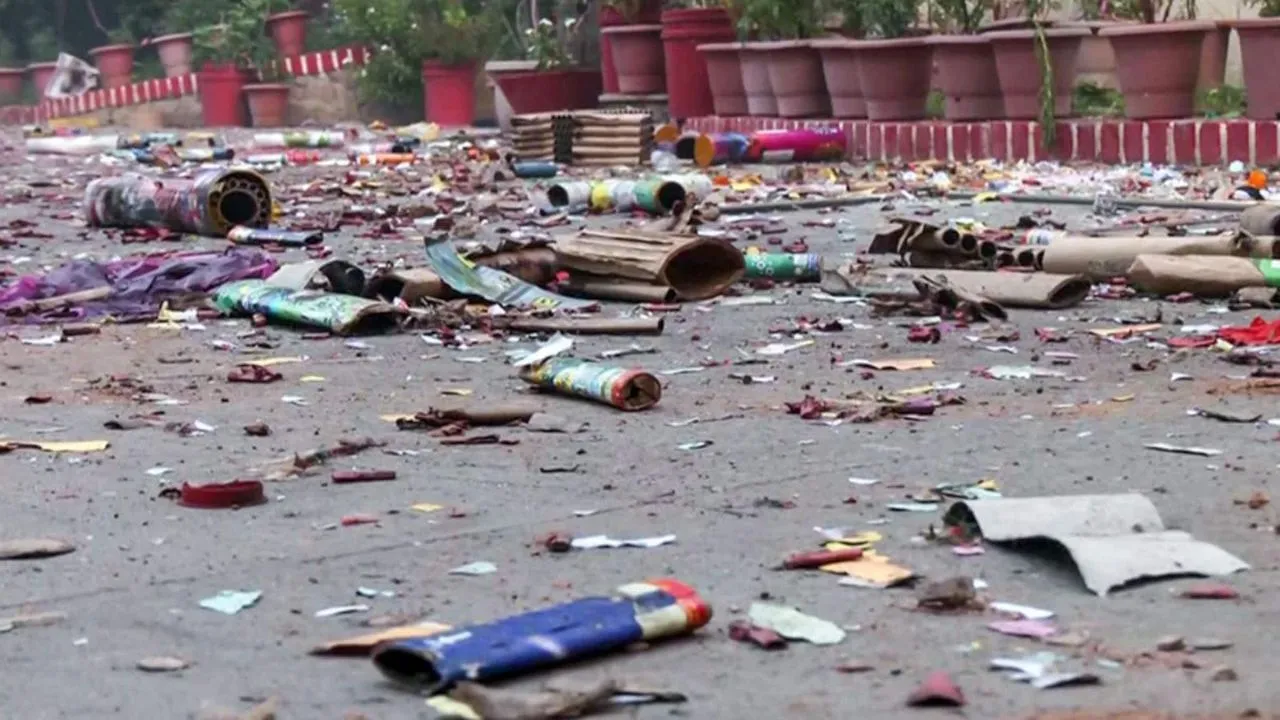
A day after the nation burst firecrackers to celebrate Diwali, symbolising the victory of virtue over evil, the air quality in Delhi and surrounding cities plummeted to dangerous levels. Like every year, this issue has sparked a major debate.
Bursting firecrackers exposes people in the vicinity to high levels of the most lethal PM2.5, which can have serious health consequences, both short-term and long-term.
According to Anumita Roychowdhury, Executive Director of the Centre for Science and Environment (CSE), changes in atmospheric conditions during the days following Diwali do remove the highly dangerous and harmful pollutants accumulated in the air due to millions of firecrackers. In the short term, however, the crackers impact the health of the most vulnerable sections of society -- the elderly and children.
With age, elderly people's physical endurance naturally decreases, while children are more vulnerable because their biological systems and coping abilities are still developing. Therefore, increased exposure to the toxic smoke from firecrackers can have short-term and long-term effects on their health. It can also prove extremely dangerous for those suffering from lung diseases and heart conditions.
During Diwali in India, cases of wheezing, respiratory infections, exacerbations of bronchial asthma, and chronic obstructive pulmonary disease (COPD) often increase. In both rural and urban areas, the number of patients hospitalised for respiratory problems after Diwali increases significantly compared to that before Diwali.
But Why Are Firecrackers So Harmful?
All types of firecrackers contain two main chemical elements: (a) the material used to ignite the firecrackers, such as charcoal, sulfur, potassium nitrate, chlorate, perchlorate, and manganese; and (b) metal salts added to produce different colours.
For example, strontium carbonate and lithium carbonate are used for red, calcium chloride for orange, sodium chloride for yellow, barium compounds for green, copper compounds for blue, and a mixture of strontium and copper compounds for violet.
Furthermore, burning iron produces a golden colour, while burning magnesium or aluminium barium oxide produces a white light. Burning aluminium, titanium, or magnesium powder produces a silvery colour.
According to experts, firecrackers emit a variety of particles of varying sizes, including PM10, fine particles (PM2.5), ultrafine particles, and nanoparticles. PM2.5 particles are considered especially harmful and can cause many short-term and long-term respiratory health problems. Therefore, their effects are more likely to affect the elderly and children with weaker health.
Additionally, how quickly the pollution from firecrackers will subside on Diwali depends on how quickly favourable atmospheric conditions develop. Winter inversion (air stagnation) is expected to worsen, leading to colder and calmer weather. This traps pollutants in the air and increases their concentration, potentially worsening air pollution.
The scale of local sources of pollution is significant. Therefore, to effectively address the pollution crisis, it is crucial that large-scale and rapid action to control these sources be continued throughout the year.