PC: AI Generated
A dinosaur fossil discovered at a Surrey clay works in 2001 has been identified as a new genus and species, more than 25 years after it was excavated. The newly named dinosaur, Paludohadros proudlovii, was a four-legged herbivore that lived around 125 million years ago during the Early Cretaceous Period. The fossil was discovered at Wienerberger’s Ewhurst brick and roof tile works before being donated to the Natural History Museum in London, where it is now preserved. According to the Natural History Museum, the species name honours Will Proudlove, the former manager of the works, who died shortly before the fossil was excavated. The dinosaur was around five metres long and weighed between 1.5 and 2 tonnes, although its bones suggest it was still young.
How a 2001 fossil discovery led to the identification of a dinosaur
Paludohadros proudlovii was identified from fossils held in the Natural History Museum’s collections. The specimen was discovered at Wienerberger’s Ewhurst brick and roof tile works in Surrey in 2001, then donated to the museum. It belonged to the iguanodontians, a group of dinosaurs known for their distinctive thumb-spikes. For many years, iguanodontians found in southern England were classified as either Iguanodon or its smaller relative Mantellisaurus. A detailed redescription of Mantellisaurus by museum scientists in 2023 helped researchers recognise important anatomical differences between the groups. This has led to several iguanodontians being named in recent years, including Brighstoneus, Comptonatus, Istiorachis and now Paludohadros. Its discovery has added another named dinosaur to the region’s fossil record and its history of discovery.
New dinosaur species named after former works manager Will Proudlove
The species name proudlovii honours Will Proudlove, a former Ewhurst Works employee who became its manager. He died aged 35 shortly before the dinosaur was excavated, leaving his wife Rachael and their young children, Ellie and Matt. Rachael said, “Will always had an interest in dinosaur fossils and was fascinated about what, if anything, would be uncovered each time a layer of clay was removed from the quarry. Sadly, this dinosaur was only discovered the year after he died, but its story has become a part of our lives since then. ” The family was invited to watch the fossil being excavated in 2001. Rachael said they were overjoyed and honoured that Will’s name and legacy would live on through the dinosaur, which has now been recognised as a new genus as well as a new species.
The five-metre herbivore lived around 125 million years ago
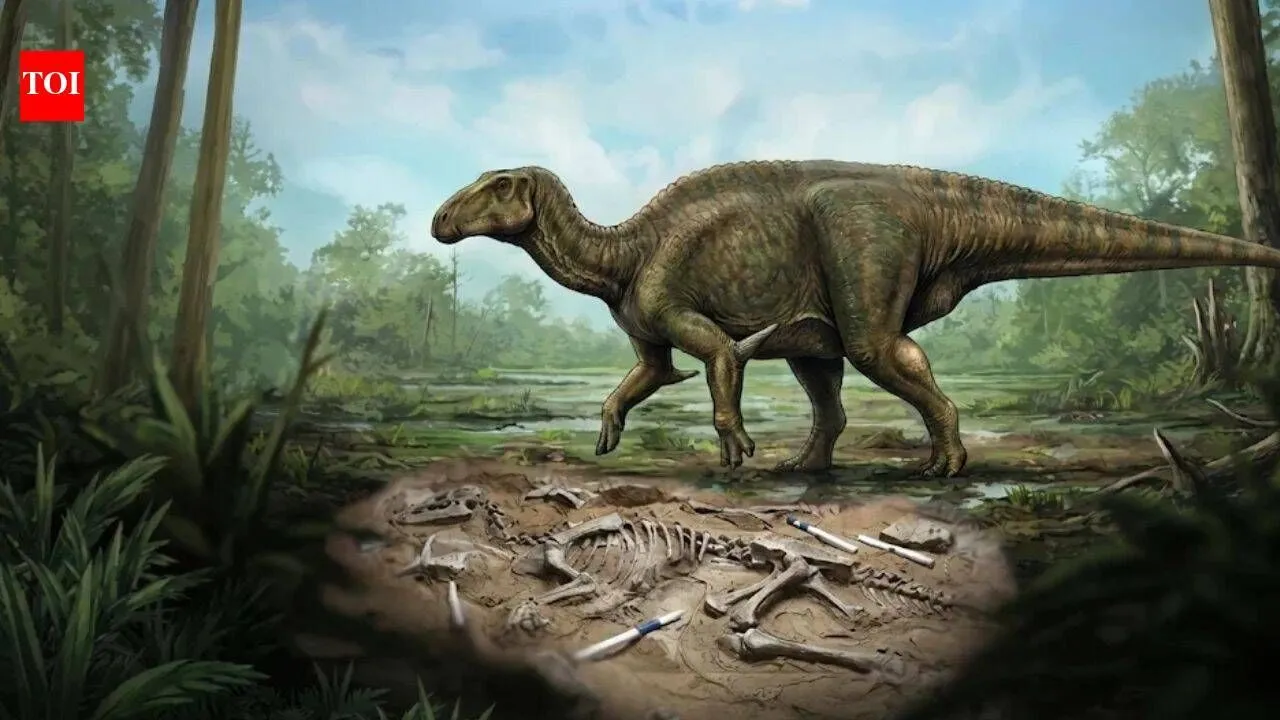
The dinosaur lived about 125 million years ago, during the Early Cretaceous Period, when iguanodontians were becoming widespread around the world in the Early Cretaceous. Southern England was then covered in muddy wetlands. The environment also inspired the dinosaur’s name, with ‘palus’ meaning ‘swamp’ in Latin. The animal was a four-legged herbivore, measuring around 5 metres long and weighing between 1.5 and 2 tonnes. That made it similar in size to a rhinoceros. However, its bones do not appear to have been fully developed, suggesting the individual was still a juvenile. The museum said it could potentially have grown twice as large.
What do two nearby dinosaur discoveries reveal about ancient life
Paludohadros was found about 100 metres from the site where Baryonyx was discovered in 1983. A two-legged carnivore known for eating fish as well as young iguanodontians. Professor Susannah Maidment, senior author of the research, said, “Paludohadros was found just 100 metres away from Baryonyx, whose fossils we also look after at the Natural History Museum. While Baryonyx is best known for eating fish, this dinosaur’s last meal also included a baby iguanodontian.
Join conversation
Share your thoughts in the comments
Be respectful · TOI community guidelines
” “We can’t tell for certain which species this came from, so it’s possible that Baryonyx could have been scavenging on the remains of young Paludohadros or even hunting them when it had the opportunity.” The naming of Paludohadros and other iguanodontians has prompted palaeontologists to re-examine fossils in the museum’s care. Several other Paludohadros specimens have already been identified among fossils collected in the 1950s, and further discoveries may follow as researchers continue.
End of Article