“The fact that many regions of the Earth remain unexplored offers hope for valuable new discoveries,” Neubauer said in a press release.
Mapping gaps in the fossil record
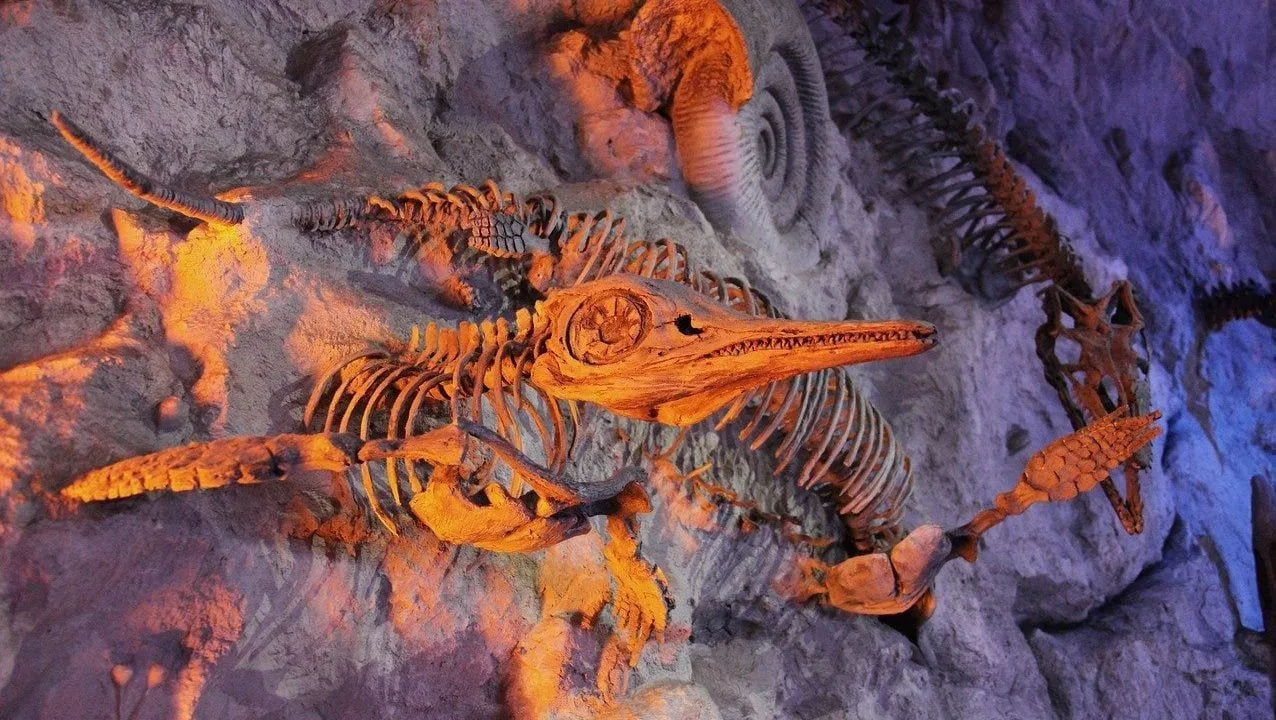
Fossils provide valuable information about prehistoric animals, plants and ecosystems. However, fossilisation is rare, and only a fraction of the organisms that once inhabited Earth have been preserved.
Even when fossils survive, the rock formations containing them must be accessible for scientists to discover them.
To identify gaps in existing knowledge, researchers analysed records from the Paleobiology Database, a major international repository of published fossil discoveries.
They mapped the distribution of fossils from shallow-water marine environments across different geological periods and examined how frequently researchers had uncovered new information in those regions.
The findings were then compared with geological information from the Macrostrat database, a geological map of Earth covering several eras, to identify areas where potentially fossil-bearing rock formations remain accessible.
Where are the new fossils hidden?
The researchers found that the Palaeozoic Era, spanning approximately 539 to 252 million years ago, covering the evolution of marine life, and the Mesozoic Era, the Age of Dinosaurs, spanning 252 to 66 million years ago, have been extensively studied. Their analysis radically suggests that new discoveries from these periods are unlikely to substantially expand the existing fossil record in the near future.
However, the Cenozoic Era, Earth’s current geological era and one colloquially known as the Age of Mammals, which began 66 million years ago, still offers considerable opportunities for new discoveries.
Despite the large number of fossils already documented from this period, many shallow-water marine deposits remain relatively unexplored, where the researchers identified regions where previously undocumented fossil information may exist and where suitable geological formations can still be accessed.
Also read: 2 common ‘forever chemicals’ can increase risk of aggressive breast cancer, US study finds
Making fossil searches more effective
The findings could help researchers prioritise excavation sites, particularly because fossil expeditions require considerable time and funding.
Neubauer explained that the research could help scientists concentrate on unexplored areas and better plan future excavation campaigns “because expanding the fossil record is quite challenging and progresses only slowly, our work can help researchers worldwide to focus their research specifically on these still largely unexplored areas.”
“The same applies to the examination of existing museum collections awaiting scientific analysis,” he added.
The researchers also suggested that their approach could help improve existing fossil databases by identifying gaps in their geographical and historical coverage.
“Through sensible prioritization, we can fill gaps in the fossil record strategically,” Neubauer said.
However, the study focused specifically on shallow-water marine animals. Its findings, therefore, cannot be directly applied to terrestrial fossils or other environments without further research.
(Edited by Aamaan Alam Khan)