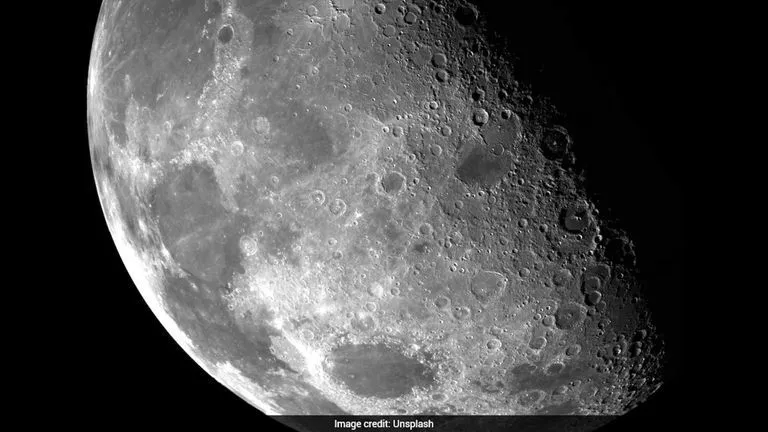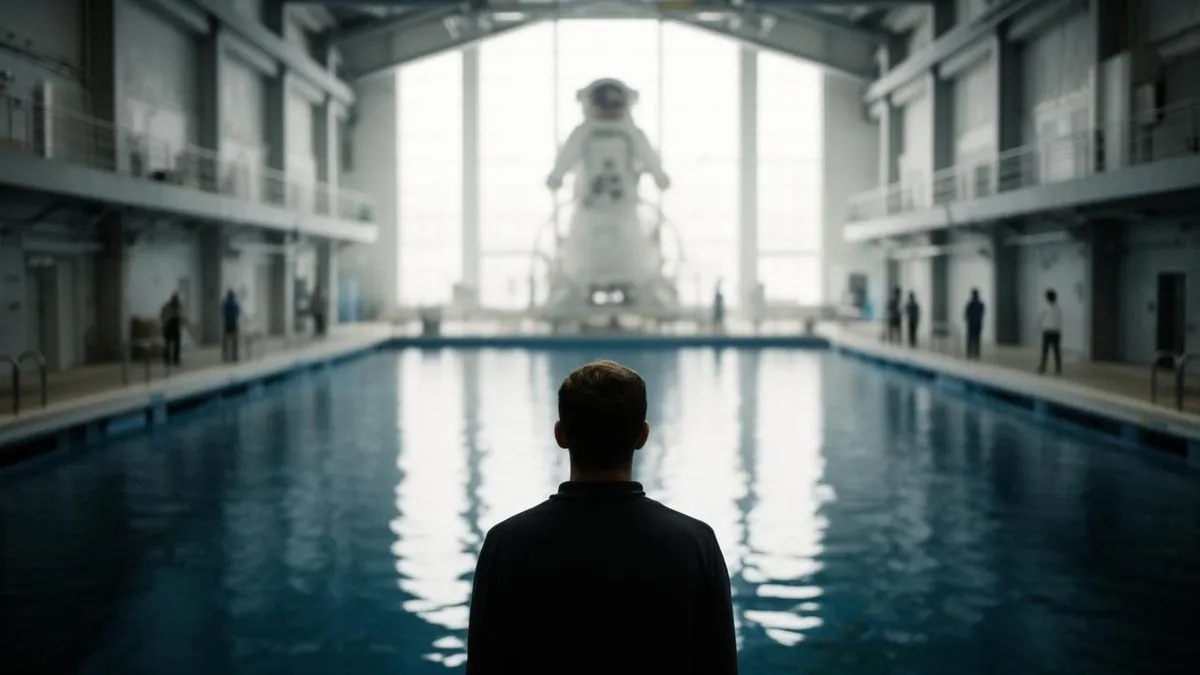
NASA has launched an open recruitment drive for the next generation of astronauts who will lead crewed lunar exploration and crewed Mars missions. It is the agency's first new hiring round in about two years since 2024, and in the previous selection more than 8,000 applicants competed for just 10 spots—an acceptance rate of roughly 800 to 1.
NASA announced on the 7th (local time) that it has begun recruiting astronaut candidates who will be deployed on crewed exploration of the lunar surface, construction of a lunar base, and future crewed Mars missions. Those selected will be assigned to Artemis—the United States' crewed lunar exploration program—as well as missions to low-Earth orbit space stations. NASA Administrator Jared Isaacman said the astronauts chosen this time could walk on the lunar surface, live at a lunar base, and ultimately pioneer the technologies that will send humanity to Mars.
Eligibility is limited to U.S. citizens. Applicants must hold a master's degree or higher in a science, technology, engineering, or mathematics (STEM) field such as engineering, biology, physics, computer science, or mathematics. The educational requirement is also met by those who have completed at least two years of a doctoral program in a relevant field, hold a professional degree such as in medicine or nursing, or have completed a nationally recognized test pilot training program. Physical fitness to withstand long-duration spaceflight and collaboration and communication skills are also required. There is no age limit, and applicants who have undergone vision-correction surgery may apply as long as vision is 20/20 or better in each eye.
The application deadline is 11:59 p.m. Eastern Time on December 3. NASA plans to conduct staged interviews and evaluations in spring and summer 2027 and announce final selections in fall 2027. The selected candidates will report to Johnson Space Center in Houston, Texas, between late 2027 and early 2028 for about two years of training in spacewalks, lunar geology, robotic arm operation, and high-performance aircraft operation before being assigned missions as full-fledged astronauts.
NASA has selected a total of 370 astronaut candidates from the 1960s to the present, and only 32 astronauts are currently active. In the 2024 recruitment, more than 8,000 people applied and 10 were ultimately selected in 2025—an acceptance rate of about 0.125%.
This recruitment is also significant in that it comes as NASA's crewed space development framework is being reorganized around the Moon and Mars ahead of the International Space Station's planned retirement in 2030. After the ISS is retired, commercial space stations built by private companies are expected to become the center of low-Earth orbit activity. However, being selected does not guarantee participation in lunar exploration missions or a landing on the lunar surface; additional training and waiting periods are required.
On the same day, NASA also unveiled plans to develop a nuclear-powered lunar rover called PROMISE that will survey ice and subsurface resources at the lunar south pole. Targeting a launch in late 2028, the rover will use a radioisotope thermoelectric generator to operate even in permanently shadowed regions of the lunar south pole where sunlight never reaches. It will carry out a mission of about 18 months at the lunar south pole, surveying candidate sites and surrounding conditions for a lunar base where future astronauts will live.
PROMISE is being developed by NASA's Jet Propulsion Laboratory (JPL). It will be built by combining a ground-test replica of the Mars rover Curiosity with spare parts and proven technologies used on Perseverance and other missions. The concept is to reduce the cost and time of designing a new rover from scratch by utilizing the already-developed rover's body, electronics, and mobility systems.
The rover will move across the lunar surface on six wheels, surveying surface and subsurface environments and confirming the distribution of resources such as ice. It will be equipped with a drill capable of extracting lunar regolith from up to about 1 meter below the surface, spectrometers to analyze chemical composition, temperature and radiation sensors, and visible-light cameras. It will also test a next-generation high-performance space computing system resistant to radiation and autonomous-driving sensors and algorithms, validating operating technologies for robots that will conduct long-duration activity on the lunar surface in the future.
The PROMISE transport mission will be handled by U.S. private space company Blue Origin. The rover will be delivered to the lunar surface using the Blue Moon Mark 1 lander. The base contract is worth $94 million (~130 billion won), with up to $140 million (~190 billion won) in additional payments possible depending on performance.
NASA plans to secure a crewed outpost at the lunar south pole in the 2030s and use the technologies accumulated in the process for future crewed Mars exploration. Both the astronaut recruitment and the lunar rover development are part of this long-term roadmap, proceeding in a direction that reduces costs and development timelines through collaboration with private space companies.
CategoryDetailsNumber of recruitsFinal selections announced in fall 2027Application deadlineDecember 3, 2026, 11:59 p.m. (U.S. Eastern Time)Training startLate 2027 to early 2028, for about two yearsPrevious competition ratioAbout 8,000 applicants, 10 selected (roughly 800 to 1)Active astronauts32PROMISE launchTargeted for late 2028PROMISE transport contractBase $94 million (~130 billion won), up to $140 million (~190 billion won)
Note: The PROMISE transport contract amount includes the maximum additional payment possible depending on performance.