Market Mastery
Webinar by Vishal Malkan
Find the weak links
in your portfolio by Vishal Malkan
NASA has invited student teams to develop technologies that could support a future human settlement on the Moon. The US space agency has announced a $1 million prize pool for its Moon Base Student Challenge 2026, encouraging young innovators to find solutions to some of the biggest challenges of living and working on the lunar surface.
Announced on November 8, 2026, the competition is open to eligible high school and post-secondary student teams in the United States. Participants will work on six technology categories, ranging from power generation to astronaut safety.
What is NASA's Moon Base Challenge 2026?
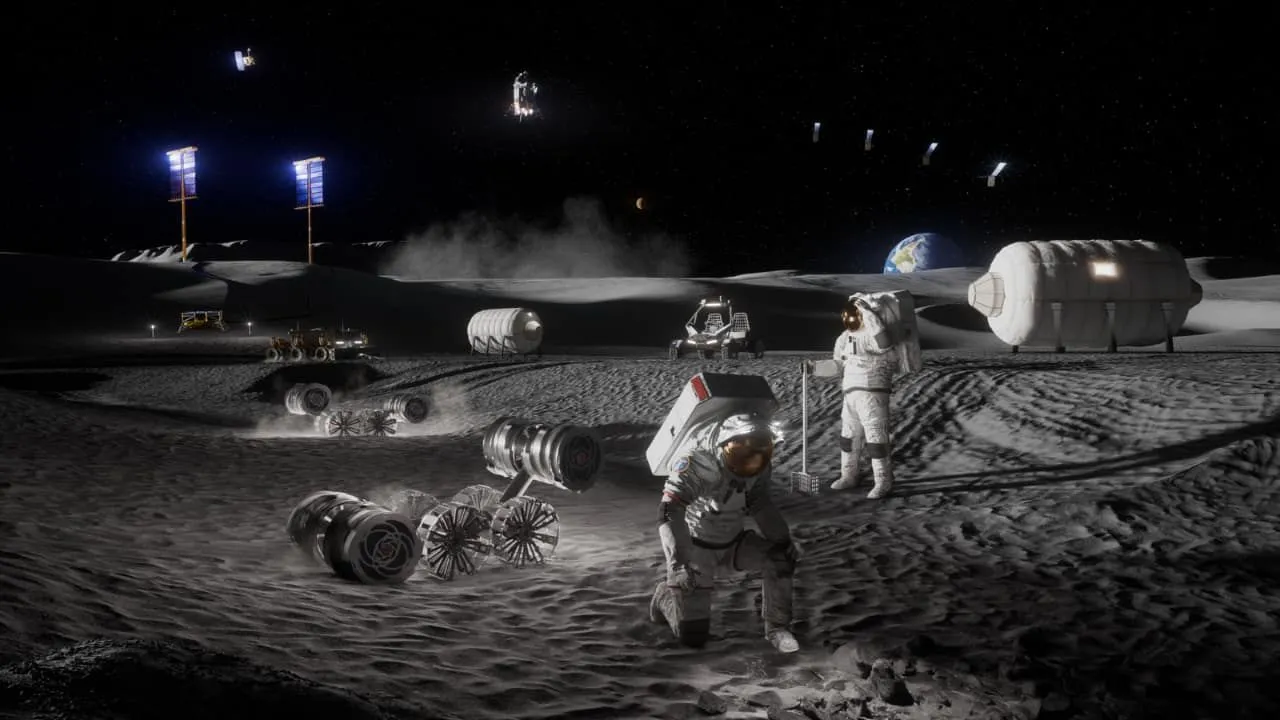
The multi-phase competition aims to encourage students to develop practical concepts for NASA's proposed Moon Base near the lunar South Pole. The initiative is part of the agency's broader efforts to establish a sustained human presence on the Moon and prepare for future crewed missions to Mars.
The competition has a total prize pool of $1 million. Students from different academic, technical and vocational backgrounds can participate.
What do students have to design? Check 6 Categories
NASA has identified six categories for the challenge:
Power Generation and Storage: Technologies to generate and store electricity for lunar operations.
Construction: Innovative methods to build habitats and infrastructure on the Moon.
Life-Support Systems: Solutions for oxygen, water, waste management and astronauts' living conditions.
Surface Mobility: Rovers and transportation systems to move people and equipment across the lunar surface.
Communications Networks: Systems to maintain reliable communication between astronauts, the Moon Base and other infrastructure.
Astronaut Safety: Technologies to protect crews from radiation, lunar dust and other environmental hazards.
Who can Participate in the Challenge?
The competition has two divisions: High School and Post-Secondary. Eligible students must be enrolled in qualifying US-based educational institutions. Teams must comprise two to five students and have a designated adult coach. NASA says participants do not need specialised engineering or technical experience to take part.
What is the Registration Deadline?
Registration opened on November 7, 2026, through NASA STEM Gateway. The last date to register is January 25, 2027. The initial project submission deadline is February 22, 2027. Finalists will be announced on March 11, followed by final submissions on April 19. Winners are scheduled to be announced on May 6, 2027.
Why does NASA want students to help?
Building a lunar settlement requires solutions to extreme temperatures, radiation exposure, low gravity and abrasive lunar dust. NASA hopes the competition will encourage fresh ideas and help prepare the next generation of innovators for future space exploration.