Market Mastery
Webinar by Vishal Malkan
Find the weak links
in your portfolio by Vishal Malkan
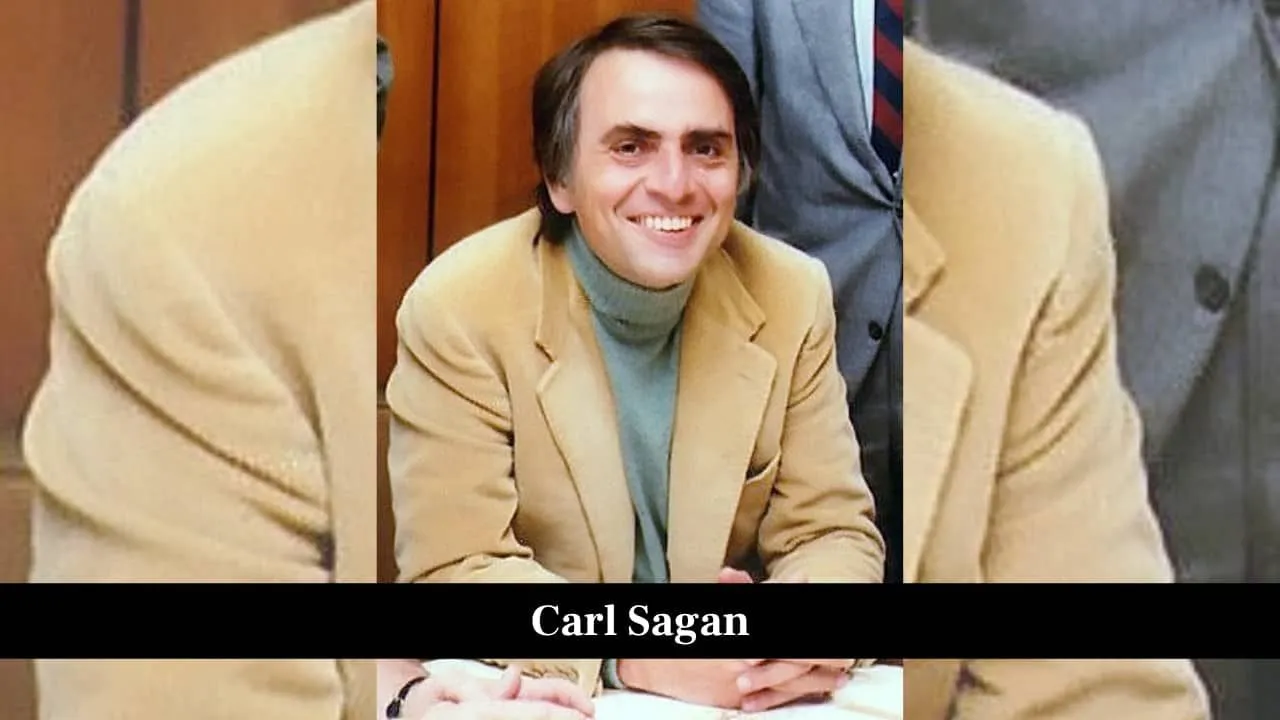
Human life often feels expansive when measured through personal experiences, relationships, ambitions and memories. Yet, against the vast timeline of the universe, even the longest human life occupies only a tiny moment. This contrast lies at the heart of a famous observation by American astronomer and science communicator Carl Sagan: “We are like butterflies who flutter for a day and think it is forever.”
The quote of the day invites us to look beyond the immediate concerns of everyday life and consider how brief our existence is in the larger story of the cosmos. It draws a comparison between the short lifespan of a butterfly and the human tendency to view our own time as something lasting, even though the universe has existed for billions of years.
The thought reflects one of the central ideas explored in Sagan’s 1980 book Cosmos: humanity must understand itself not in isolation, but as part of a much older and larger universe.
Quote of the day: What does Carl Sagan's butterfly quote mean?
The butterfly comparison offers a simple way to understand how perspective shapes our sense of time. A butterfly lives for a relatively short period, and that brief span represents its entire experience of life. Human beings, in much the same way, can become so absorbed in their daily routines, ambitions and problems that they rarely pause to consider how short their lives are in cosmic terms.
For an individual, decades may seem like a substantial stretch of time. But compared with the billions of years that have passed since the universe began, a human lifetime is remarkably brief. Sagan's observation encourages people to step outside this limited personal perspective. Events that seem permanent or all-consuming during our lives may represent only a fleeting moment in the history of the universe.
The quote is not simply about mortality or the inevitability of death. It also asks us to recognise the limits of our understanding and approach existence with humility. Human beings are part of a much larger cosmic story, and acknowledging that scale can change how we view our place in it.
Carl Sagan's Cosmos: Exploring the history of the universe
Published in 1980, Cosmos became one of Carl Sagan's most influential works. The book explored the history of scientific discovery, the development of life on Earth and the immense scale of space and time. It was accompanied by the television series Cosmos: A Personal Voyage, which introduced complex scientific ideas to a wide audience.
Sagan traced humanity's understanding of the universe through major discoveries in astronomy and other scientific fields. He explained how scientific thinking had gradually challenged older assumptions about Earth's position and importance in the cosmos.
The book also examined the evolution of life, from simple organisms to increasingly complex forms. Modern humans have existed for only a small fraction of Earth's long history, making our presence on the planet relatively recent. A recurring theme in Sagan's work was the need to move beyond an Earth-centred view of existence. He encouraged readers to recognise that our planet is one small part of an immense universe, while also exploring the possibility of life beyond Earth and the scientific questions surrounding extraterrestrial intelligence.
Who was Carl Sagan?
Carl Sagan was an American astronomer, astrophysicist and science communicator known for making complex ideas about space and science accessible to ordinary readers and viewers. Born on November 9, 1934, in Brooklyn, New York, Sagan developed an interest in astronomy at an early age. He went on to build a career in planetary science and spent much of his professional life at Cornell University.
His research and public work covered several areas, including planetary atmospheres, the possibility of extraterrestrial life and the search for intelligence beyond Earth. He also contributed to scientific discussions surrounding planetary exploration.
Sagan wrote several widely read books, including The Dragons of Eden, which won the Pulitzer Prize, and Contact, a science-fiction novel that explored humanity's search for intelligent life elsewhere in the universe. His television work, particularly Cosmos, helped bring astronomy and scientific inquiry into millions of homes. He died on December 20, 1996, but his books and scientific communication continue to influence how people think about space, life and humanity's place in the universe.
Why Carl Sagan's words remain relevant
Decades after Cosmos was published, Sagan's butterfly comparison continues to offer a meaningful way to think about human existence. Modern life often revolves around immediate responsibilities, deadlines, achievements and personal struggles. These concerns matter, but the quote reminds us that they form only a small part of a much wider reality.
Recognising the brevity of human life does not have to make existence seem insignificant. Instead, it can encourage curiosity, humility and a deeper appreciation of the time we have. It also offers a reason to look beyond individual concerns and remain open to the mysteries that science continues to explore.
Sagan's words ultimately invite us to see ourselves from a wider perspective: brief inhabitants of an ancient universe, still learning how it works and what our place within it might be.