Comeback trail
Akash Deep: The making of a second innings
by Aadya Sharma •
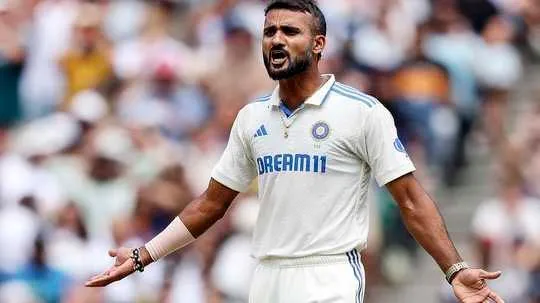
Nine months after a stress fracture halted his Test career, Akash Deep has fought his way back, wiser about his body and more certain about his bowling © AFP
Nine months after a stress fracture halted his Test career, Akash Deep has fought his way back, wiser about his body and more certain about his bowling © AFP
For Akash Deep, this might just be a second innings.
In a few weeks, he turns 30. For a late bloomer in the Indian setup, every missed chance can be a step backwards. Since his last Test in 2025, India have handed international debuts to six frontline quicks. But for the New Zealand Tests, a fit-again Akash reclaimed his spot in the squad, marking his third overseas visit.
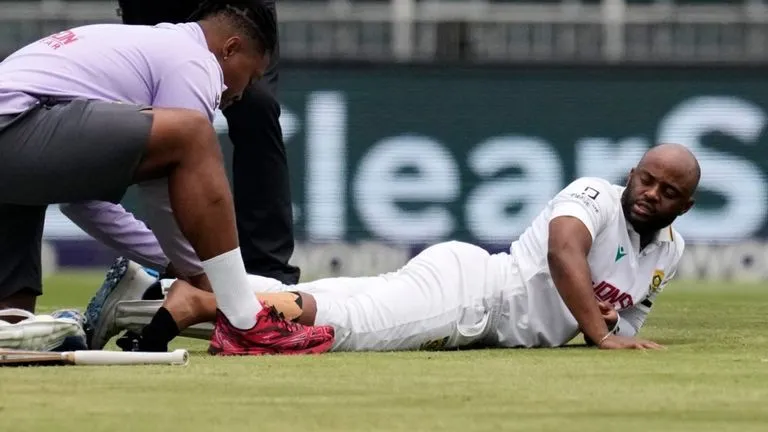
Nine months ago in Kalyani, a stress fracture to Akash’s back brought a sharp halt to a ten-Test career.
“It was a fight of day and night for nine months,” Laxmi Ratan Shukla, Bengal’s head coach, tells Cricbuzz.
“He would talk to me once or twice a week. I would repeat the same thing: ‘Brother, there’s nothing in our hands aside from getting fit. Everything else is in God’s hands. No point being upset or happy. Whatever has happened, has happened”.
At the BCCI Centre of Excellence, the hub for his recovery, Akash crossed paths with Saurashish Lahiri, then coaching the U23 setup. Akash has had a long collaboration with Lahiri – it was the former Bengal spinner who handpicked him for U23 trials several years ago.
Lahiri recalls that even then, Akash, a rookie with a heavy tennis-ball base, had suffered a similar stress fracture. Barely aware of the biomechanics of full-tilt red-ball bowling, he relied heavily on his whippy action and malleable wrist, habituated to hurling a much lighter tennis ball.
“His biggest strength is his arm speed,” Lahiri tells Cricbuzz. “To bowl fast with a lighter tennis ball, your arm speed has to be very quick.
“That’s how he has got a very natural, whippy arm action and a very flexible wrist behind it. He can flick the ball and the ball travels very quickly”.
Borrowing the DNA of his tennis-ball action, Akash only really learnt about the real demands of fast bowling as he progressed beyond the U23 setup. So, when the injury occurred this time, Akash had already gone through what Lahiri calls “tapasya”, the cyclic penance of fitness, diet and work ethic.
“It’s incredible how hard he has worked on himself night and day,” Shukla says. “Even after playing for India, he would stay in the Cricket Association of Bengal dormitory. Itna zordaar hai (He’s remarkable).”
“He is born to play. He does not have a luxurious lifestyle. He is a very hard-working boy”.
***
As he checked into the Centre of Excellence, he was assessed via pre-defined tests, and a return-to-play was set at the start of the domestic season.
Lahiri feels there’s undue anxiety from outside around a player’s return-to-play timeline, but Akash did not get sucked into it.
“I have seen many players in the CoE be very calm and composed (about their injury). But people outside get excited and anxious about why he is getting late, why he is not going to come back”.
For Akash to bounce back, Lahiri credits his “jovial” personality. “He was always thinking about how he’s going to bowl after coming back, instead of doubting himself”.
Lahiri recalls when Akash was first cleared to resume bowling, he had already excitedly chalked out plans in his head. ‘Sir, I am going to try this, do this in my action’. He used to make videos and send me (plans), saying ‘I am going to go for this’. He was very sure about his bowling”.
Lahiri’s only advice at that point was to not try rushing his recovery. “If you rush, you’ll play for one day, but if you get injured again, it’ll take even longer to come back”.
The recovery period gave an eager Akash time to better understand training processes, what to and not to eat, and even sleeping patterns.
By October, he had made a full-fledged return via the Irani Cup. Before the game in Srinagar, Lahiri called him and reminded him of his best hits to refresh his muscle memory.
“I always believe (he is bowling best) when he gets a right-hander out between his bat and pad, or he takes the nick off a right-hander, just behind the wicketkeeper or first slip. Same when he gets a left-hander caught behind.
“Because to get those wickets, the length he has bowled… he is at his best”.
“I still remember the ball that he got Rajat Patidar out in Indore in the Ranji (2022/23) semi-final, and he got Patidar out the same way in Mumbai (Thane) in one of the Vijay Hazare one-dayers (2023). He got inside the gap between his bat and pad, and in Mumbai (Thane) he got him out with the same ball, which went straight and got the nick”.
“I have seen him get Tilak Varma out in Bhubaneshwar (Kolkata, in SMAT 2021), just poking at him from around the wicket, the ball angling in and then going straight. That’s the time the backspin he gave and the length he found was at his best”.
“The speed of his run-up, the release and flick of his wrists are absolutely perfect. When he tried to emulate those deliveries, everything was falling in place”.
Akash took three wickets in each innings of the Irani Cup, where he also linked up again with Shukla. Through the layoff, Shukla kept repeating the simpler bits he had been telling him and Mukesh Kumar at Bengal for the past four years. “’Just bowl on and outside the off-stump. Catch hold of a line’. This boy listens, and only those who listen can go forward”.
After the Irani Cup, Akash returned to Kalyani, the ground where it had all stopped. Surendra Bhave, a long-time coach now with the CAB, watched Akash live for the very first time, and was impressed with how “rapid” he was: “He looked much sharper watching live than on television,” he tells Cricbuzz. “He looked in good shape, bowled pretty efficiently”.
Beyond Akash’s own comeback, Bhave says Akash’s inclusion “charged up” the younger members of the pace battery.
“People get motivated by stories like Akash Deep. It also helps youngsters understand their body. If one of your colleagues goes through injury and returns, it can be an educating factor”.
***
After an extended period of lull, things are moving quickly. In under a month, Akash went from Srinagar to Kalyani to Lincoln, opening the bowling alongside Anshul Kamboj on India A's tour to New Zealand. He took 2 for 57 and 1 for 25 in the first game, but wicketless from 23 overs in the second.
When Lahiri spoke to Akash again, he realised he was not picking the right lengths immediately.
“Whenever his length is little back…when a batter is playing him on the backfoot, the batter is more comfortable, and he has less chance to get him out. But he is at his best when he is bringing the batter forward”.
Even if he had not watched a game live, Lahiri would ask Akash to describe his bowling and derive the problem.
“When he was on the thigh pads, he got flicked. When someone punched him on the backfoot, I knew the length was not right. But he’s such a champion bowler. He made those adjustments quickly.
“He is a great listener, a very humble guy. No matter if he is playing at the highest level, he always has that openness in his mind to understand”.
In conversations around Akash Deep, those traits draw an immediate comparison with his celebrated fast-bowling senior, who also migrated eastwards from his birthplace, and found his cricketing home in Bengal.
“I always relate Akash's journey to Mohammed Shami’s journey because I have also seen his progress from day one,” Lahiri says.
“If you’re not mentally strong, your physical side cannot support you,” Shukla says. “Like Shami – Akash is mentally strong. Shami ko chhodo, woh toh jadugar hai (Shami’s a magician).
“He is also very fond of Mohammed Siraj,” Lahiri adds. “He’s got a good rapport; at RCB, he shared a lot of time with him. When I met him a couple of times in Bengaluru, he was with Siraj only”.
“He is a fantastic family man. He has taken care of his sister, mother, and his siblings-in-law. That’s added to his confidence and support,” Lahiri says, who was taken around Sasaram by Akash before the wedding. “He has seen a lot of life. You can say this is his second innings in the Indian team”.
Lahiri is hopeful that a longer return stint will propel him to the next level. “Once he’s into that environment, around Virat Kohli, or Rohit Sharma, or Shubman Gill. And Gautam Gambhir and Morne Morkel (and tell himself) ‘I am the best in the business’”.
“The atmosphere, the competition, the people around will always push him to strive better. I have seen the same thing happen with Shami.
“And I hope the same thing will happen to Akash Deep as well”.
© Cricbuzz