

The locals call it Basin Reserve Bingo: the sights and sounds that you will experience without fail during a day of Test cricket at the home of New Zealand cricket. It's quite the eclectic mix too. The ambulance siren, the traffic crawling outside the Mount Victoria tunnel and racing along Adelaide Road, the southerly breeze, and the Life Flight rescue helicopter landing on the hospital roof next door.
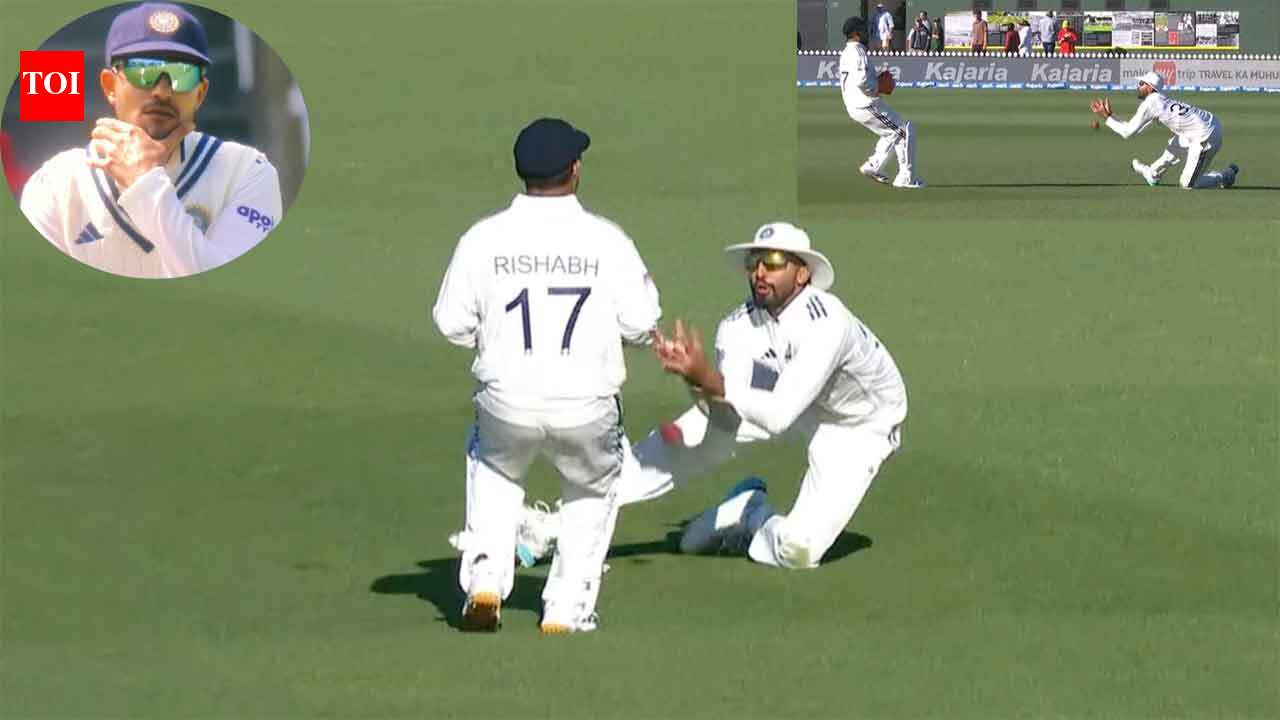
Well, for those playing at home, the dropped catch held out the longest, which was something of a mercy for India. Ideally, they’d have kept it off the card altogether. But then, off the third delivery of New Zealand's 74th over, Devdutt Padikkal and Rishabh Pant conjured up an embarrassing mix-up as they both went for a skier off Henry Nicholls' bat, before both ended up hesitating at the worst possible moment to see the ball finally fall in between the two through Padikkal's awkwardly outstretched hands.
The home team's No 3 by this point was on 102, already having helped salvage an extremely precarious position for his team. And the drop stung all the more because Prasidh Krishna had at last nailed his bouncer, getting the ball next to the batter's right ear to produce the top edge. It looked like Padikkal's catch all the way as he came in from backward square leg, a position placed for exactly that top edge, even if Prasidh had largely failed to execute the plan until then. But it was probably the one extra step from Pant, which put him in Padikkal's peripheral vision, that caused the costly error. Shubman Gill's high-pitched shriek from the covers said the rest.
It was an ordinary effort that summed up India's final session on the opening day of the two-match Test series, where they looked flat and at times bereft of ideas whenever Jasprit Bumrah didn't have the ball in his hands. The visitors had chosen to bowl, reduced New Zealand to 70/5 in the 29th over, and then let the game drift.
So, there you had it, the Bingo card was complete. Bumrah running through the top and middle order, followed by the big partnership between Nicholls and the ever-improving Glenn Phillips, which was still going strong at 173 when stumps were called.
Though not often mentioned as being part of the folklore of Test cricket at the Basin, the surface in Wellington also played true to its reputation. It had that trademark green tinge to it in the lead-up to the Test, and it did offer healthy seam movement to the Indian fast bowlers when the ball was new and hard. But as the fast bowlers tired, with Nicholls in particular showing some dogged defence along with his usual strokeplay square of the wicket, you could sense the tide turn as early as halfway through the second session.
It was in this period that India's bold decisions to leave out two mainstays, Mohammed Siraj and Ravindra Jadeja, came under most scrutiny. They had looked understandably smug about the call early on, as Anshul Kamboj and Akash Deep largely made the most of the conditions, even if Akash Deep's only wicket came via a loose shot from Rachin Ravindra. The seamer did at least give his captain much-needed control across all his spells, allowing Gill to set semi-defensive fields to try and rein in the free-scoring Phillips. But as the ball began to lose its firmness, you wondered if a bowler of Siraj's experience wouldn't have been a wiser pick, even if that might come across as an opinion steeped in hindsight.
Prasidh, though, was found wanting on that front, and the rationale of fitting him into the Ishant Sharma mould of tall, back-of-a-length enforcer didn't quite go to plan. He offered too many boundary opportunities on both sides of the wicket by being a bit too short and wayward, but also couldn't really deliver the bouncer plan to his captain's liking.
Washington Sundar got the nod to combat the slew of Kiwi left-handers with his off-spin and bowled a few quiet overs. He was, however, handled with ease by Nicholls and Phillips. Jadeja, with his experience alone, might have brought the stumps into play a lot more. But it's later in the Test, once the right-armers from both sides have roughed up the area outside the left-handers' off stump, that the veteran may be missed most.
For all of India's ponderings over what they could have done better, the credit must go to Nicholls and Phillips for orchestrating what is already a tremendous comeback from the brink.
It was a chanceless innings, until the late reprieve, from the seasoned 35-year-old who regained his place in the team after the retirement of Kane Williamson earlier this year. It was his 12th Test ton, which now remarkably puts him joint fifth alongside the likes of John Wright and Brendon McCullum for most centuries for the Black Caps in Tests.
And as he brought up his fifth century in Wellington, it's only fair that a Nicholls hundred goes on the Basin Reserve Bingo card. For he doesn't look like he's done yet.