New Zealand men's chief selector reflects on his career as a miserly medium-pacer, and discusses how he would have fared in today's game
Karthik Krishnaswamy
Published: Nov 16, 2026, 6:31 AM (4 hrs ago)
Of all bowlers who have bowled in at least 100 men's ODI innings since the start of the 1990s, only seven have economy rates below four an over. Six of them are among the greatest bowlers to have ever lived - Curtly Ambrose, Shaun Pollock, Courtney Walsh, Glenn McGrath, Wasim Akram and Muthiah Muralidaran.
If your cricketing consciousness developed in this millennium, the seventh bowler's name might be unfamiliar, but you'll have a fair idea of who he might be if you grew up in the 90s. He operated somewhere between medium and medium-fast, bowled predominantly in the middle overs, and attacked the top of the stumps with an accuracy bordering on pathological.
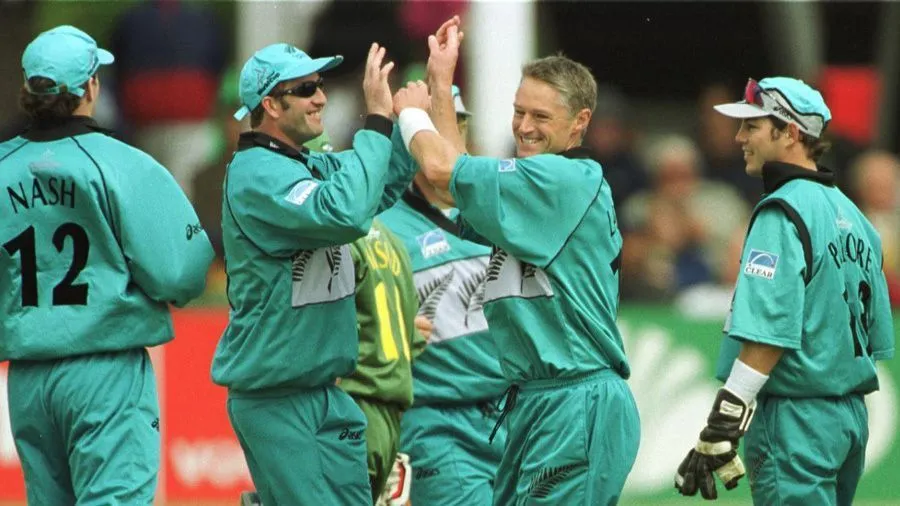
Gavin Larsen was the foremost practitioner of that lost art that New Zealand led the world at. He, Chris Harris, Willie Watson and Rod Latham were - in an order no one quite agrees on - the Dibbly, Dobbly, Wibbly and Wobbly of New Zealand's run to the semi-finals of the 1992 World Cup. Nathan Astle, Craig McMillan and Scott Styris took over the baton of medium-paced suffocation in later years, but eventually this mode of ODI bowling went the way of the Dibblosaurus.
Larsen is now New Zealand's chief men's selector, and he has a one-word answer when asked if he'd survive in ODIs as they are played today.
"No," he tells Cricinfo on the eve of the first New Zealand-India ODI at Eden Park. "Look, short answer - no. I mean, modern cricket, I love it."
Then he qualifies his answer.
"The question maybe could have been framed, would you have been able to adapt to modern-day cricket, and the answer would be yes."
What would he have done differently?
"Well, I think it's all about variations when you bowl at the sort of pace that I did, military medium," Larsen says. "You've got to have a box of tricks [now]. You've got to have the ability to bowl a number of slower balls, slow yorkers, wide hole, leg-stump yorkers, etc. etc. And now that's all, you know, saying the obvious, I think, and that's T20 cricket and ODI cricket [now].
"But look, cricket evolves, you move from era to era, and I was just lucky to play in an era where you could bowl back of a length, and my type of bowling was pretty consistently used around the world, wasn't it?"
Over the course of an ODI series that isn't quite modern cricket in the way Larsen means it, I ponder this conversation multiple times.
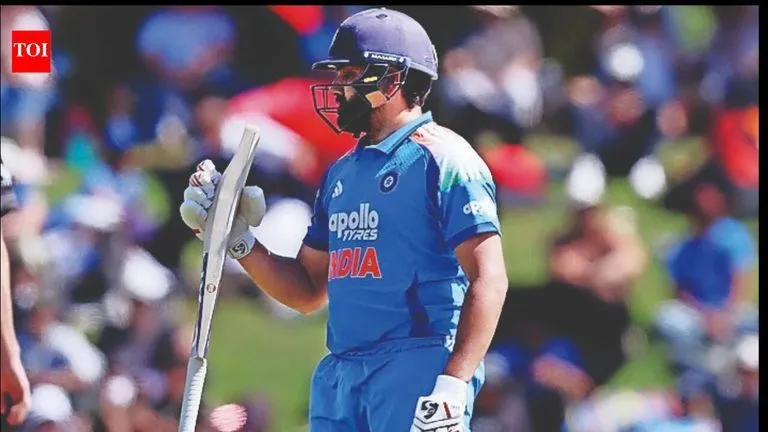
In an unusually wet early summer, the pitches offer seam movement, bounce, and often uncertain pace too. They're somewhat reminiscent of the pitches of Larsen's time. But this still isn't the ODI cricket of that era. Even when teams have lost early wickets, the batters constantly look to put pressure back on the bowlers, always aware of the dangers of letting them settle into a line and length. They leave the crease to the seamers, shuffle this way and that, and target the V behind the wicket.
And there are only four fielders allowed outside the 30-yard circle in the middle overs (11-40) rather than five, and this is a crucial difference. In Larsen's time, five outside the circle meant you could have sweepers back on both square boundaries almost by default.
"I found back in my time, you could probably bowl 90% of your deliveries as your stock delivery," he says. "You know, angling in[to the right-hander] and hitting top of off, set the fields right, have the sweepers in the right positions."
Larsen wasn't quick, but he was brisk enough that you couldn't easily step out and hit him over the top. With his stifling accuracy, he'd seldom give batters room to free their arms. And the pitches of his time, particularly in New Zealand, typically offered a little bit of nibble.
Bowling today, he'd probably have to contend with flatter pitches, and perhaps more pertinently batters with a wider repertoire of unorthodox shots and a greater sense of adventure.
"I would have used the slower ball, the offcutter, and maybe even the likes of a slow bouncer a lot more if I was bowling these days." Larsen says.
Perhaps the last Larsen-type bowler who enjoyed significant success at a high level of ODI cricket was Afghanistan's Mirwais Ashraf, who played the format from 2009 to 2016 and ended his career with an economy rate of 4.06. He played two matches of the 2015 World Cup, against Bangladesh and Sri Lanka, and finished with an economy rate of 3.66 across the two games.
"Yeah, I know who you mean," Larsen says when I bring up Ashraf's name. "Yeah, I agree. There's a number of bowlers around that have bowled like me, and I don't want to use the word boring, but that's pretty much what it was."
In a 103-match first-class career, Larsen was predominantly an outswing bowler, but opportunities at Test level were limited - he finished with 24 wickets in eight Tests at an average of 28.70, and - much as you'd expect - an economy rate of 2.10.
"It was sort of horses for courses, you know? When I got a red ball in my hand, I tried to take it away from the right handers. I'd never quite had the pace to be able to demand a spot in a top three, so I was always going to be a fourth seamer. So it didn't sort of pan out exactly how I'd [have planned it] over my career."
Larsen's words spark an intriguing thought - not when I speak to him, but weeks later, as the ODI series gives way to the Tests.
It's been noted elsewhere - particularly by Jarrod Kimber, formerly of Cricinfo - that bowling attacks have turned topsy-turvy over recent years. Where white-ball bowling primarily valued accuracy and defensive skills in the 90s and 2000s, it's now largely about getting the batter before the batter gets you. Wristspinners and tall, fast, hit-the-deck bowlers who can bounce you out are in high demand in the shorter formats. And where Test bowling used to be about outright attacking skill and variety, many attacks now are full of similar kinds of bowler: medium-fast to fast-medium, extremely accurate, and able to extract two-way movement with a wobbly seam.
When New Zealand play their first Test against India at the Basin Reserve this week, their attack is likely to include Nathan Smith, who isn't particularly tall or particularly quick, but is, nonetheless, a massive asset on pitches with a bit of help in them, particularly with Tom Blundell standing up to the stumps to dissuade batters from leaving their crease. He was the highest wicket-taker on both sides during New Zealand's 2-1 Test-series win in England earlier this year, picking up 16 wickets at 23.00.
Cricket evolves, and cricketers evolve to fit the demands of their time. When Smith runs up to bowl against India, watch him with a squint in your eye. This could be the Gavin Larsen of our time.
Karthik Krishnaswamy is an assistant editor at Cricinfo