The Verge reported on November 11, 2026, that Adobe previewed four experimental AI tools for developing characters, turning flat images into navigable 3D scenes, mixing sound effects and transferring photo edits ahead of the MAX Sneaks presentation at its annual conference.
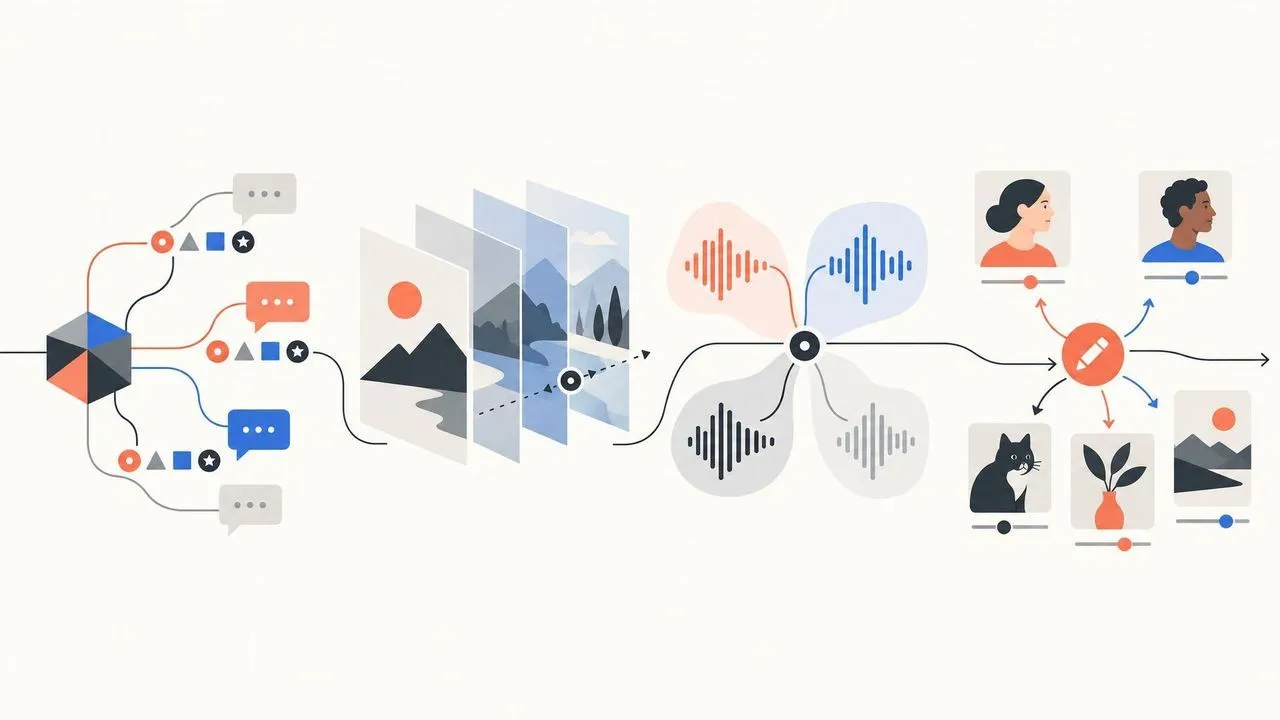
The projects — Project Screen Test, Project Sight Span, Project Sound Bender and Project Rinse Repeat — are technology previews that could eventually be developed for Creative Cloud apps or Firefly. Adobe has not committed to releasing them. Across the demonstrations, the shared idea was to make complicated filmmaking, image-editing and audio-mixing work more interactive without reducing every adjustment to another text prompt.
Screen Test and Sight Span
Project Screen Test starts with a set of personality traits and a voice, which can come from a preset, a written description or an uploaded audio sample. Users can then develop the character through an audition-like conversation, establishing details such as its backstory, temperament, goals, fears and movement quirks. A separate Personality tab allows manual adjustment of generated traits. After that development process, the tool can place the character in a described setting or scenario and produce an animated screen test.
The Verge found that the results gave characters a more identifiable and consistent personality than many animated AI characters. Screen Test is currently a standalone creative exercise, however, and its relationship to Adobe’s existing AI video tools remains unclear.
Project Sight Span converts a flat photograph, painting or illustration into a three-dimensional environment that viewers can navigate and reposition. It generates objects and backgrounds beyond the original frame, including imagery that appears when the viewer turns toward what was behind the original viewpoint. The approach therefore changes the apparent shooting point rather than simply selecting a different crop.
In The Verge’s demonstration, repositioned tattoos and facial features remained recognizable relative to the reference image, and Sight Span could preserve and replicate artistic styles. The navigable environment nevertheless appeared pixelated and ill-defined; resolution was restored after an angle was selected.
Sound Bender and Rinse Repeat
Project Sound Bender generates sound effects from a text description and synchronizes them with an uploaded video. Its square canvas assigns a relevant generated sound to each corner. Moving the cursor around that space changes which sounds dominate in real time, while individual corners can be customized with different effects. The result is a spatial mixer for exploring combinations of sounds rather than choosing just one generated effect.
Project Rinse Repeat addresses repetitive work within a single photograph. It can transfer one person’s blemish retouching to other people in a group, adapting the changes to each subject. Another demonstration added a shadow to one product and then reproduced it across products with different shapes and sizes.
The tool is built around Photoshop and recreates transferred changes with native Photoshop tools, leaving the resulting edits fully editable. That distinction matters for creative workflows: automation propagates an editing process while preserving the ability to revise individual results.
Creative Control and MAX Sneaks
Adobe research scientist Gautham Mysore said the interaction designs are also intended to give experienced creatives more precise control. He cited Sound Bender’s sonic exploration and Sight Span’s camera positioning as ways professionals could apply their judgment and refine results directly: “That connection between creative intent and control is a big part of what we’re exploring.”
Adobe’s official MAX Sneaks session page describes the event as a first-hand look at work underway in Adobe Labs. The session was scheduled for 5:30 p.m. EST on November 11, later than the morning disclosure of the projects.
For creative professionals, the practical question is whether precise, editable control will carry into any released versions. Screen Test still lacks a defined place in Adobe’s video workflow, while Sight Span’s demonstration showed degraded visuals during navigation, leaving their usefulness in production work unproven despite their more direct forms of creative control.