Apple has finally given the iPad mini the kind of upgrade it deserved. A new OLED display, a faster processor, improved speakers, a thinner design and even water resistance.
Apple has finally given the iPad mini the kind of upgrade it deserved. A new OLED display, a faster processor, improved speakers, a thinner design and even water resistance. On paper, there’s quite a lot to like.
But there’s also the price. And that’s where things become interesting.
Announced on 26th October, the new iPad mini comes with Apple’s A20 Pro processor and starts at ₹82,900 in India. Preorders opened on 28th October, with sales beginning on 6th November.
I’ve always liked the idea of the iPad mini. A tablet that’s considerably more comfortable to carry than a regular iPad, yet capable of doing almost everything its larger siblings can. It’s particularly appealing for reading, watching videos, browsing, taking notes or simply carrying something bigger than a smartphone without the weight of a full-sized tablet.
The latest model takes that idea further.
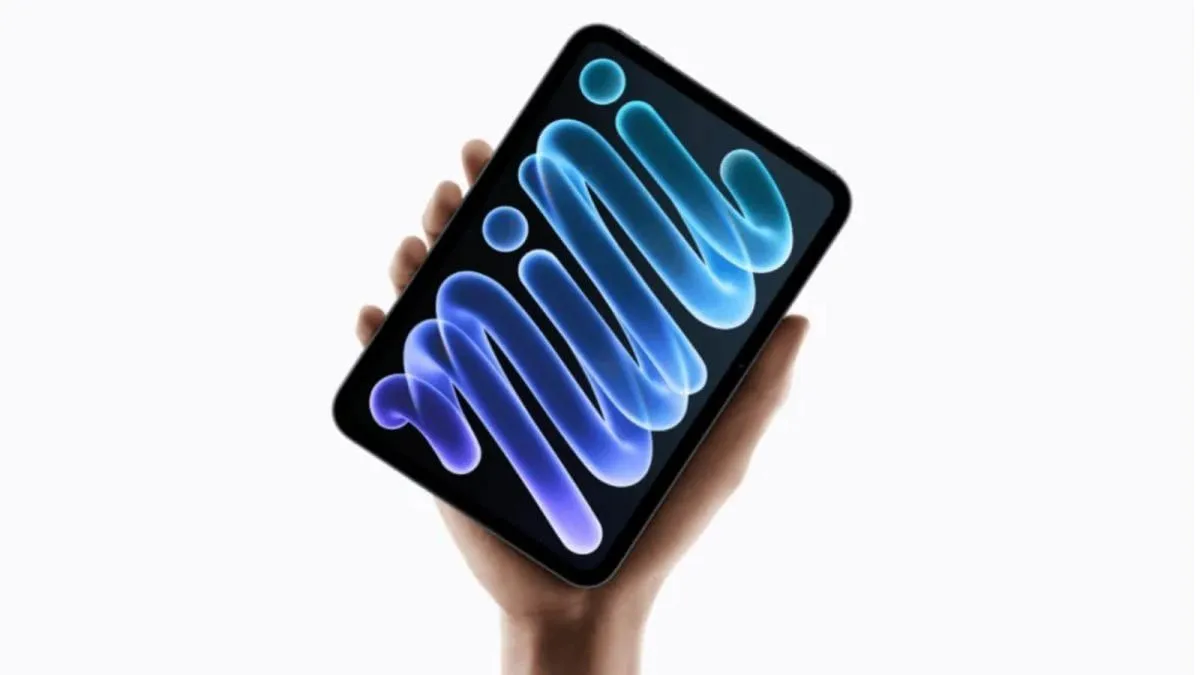
The first major improvement is the display. Apple has replaced the previous generation’s 8.3-inch LCD with a slightly larger 8.5-inch OLED screen. The bezels are thinner, and the tablet itself hasn’t grown larger.
OLED makes a difference, particularly when watching films, viewing photographs or reading in darker surroundings. Blacks look deeper because individual pixels can switch off completely. Colours have better contrast, and HDR content can reach a peak brightness of 1,200 nits. Normal screen brightness is rated at 600 nits, compared with 500 nits on the previous model.
There’s also an optional nano-texture display that reduces reflections. Useful if you regularly work outdoors or under bright lights, although it costs extra.
One disappointment is that Apple has retained the 60Hz refresh rate. At this price, I would have expected 120Hz, particularly when several competing tablets and even less expensive smartphones offer smoother displays.
Then there’s the A20 Pro chip.
Compared with the A17 Pro in the 2024 iPad mini, Apple claims up to 60% faster multithreaded CPU performance and up to 2.7 times faster graphics performance.
That’s quite a jump.
But how much of that performance does an ordinary user actually need?
For browsing, emails, Netflix, YouTube, reading books and taking notes, the previous iPad mini was already more than capable. The additional processing power makes more sense for demanding games, graphics applications, photo editing and newer AI features.
Interestingly, Apple has given the 512GB version a slightly more powerful configuration, with a six-core CPU and dual 16-core Neural Engine. The 128GB and 256GB versions get a five-core CPU and a single 16-core Neural Engine.
For regular use, I wouldn’t spend more simply to get that extra processing power.
The physical changes are more relevant to everyday users.
At 5.4mm thick and weighing just 255g for the Wi-Fi model, the new mini is thinner and around 38g lighter than its predecessor. That should make it more comfortable to hold for extended reading sessions.
Apple has also introduced IP67 water and dust resistance, a welcome addition for something people carry around so frequently. It doesn’t make the tablet waterproof, but accidental splashes are less worrying.
Now, here’s something particularly interesting about the speakers.
For the first time, Apple has designed an iPad without visible speaker holes. Yes, there are speakers, but you won’t find the familiar grilles along the edges that we’ve seen on previous iPads.
Apple calls this new arrangement Acoustic Display.
Instead of using conventional speaker openings, Apple has placed specially designed woofers behind the display, using the screen itself as part of the sound-producing system. The tweeters, which reproduce higher-frequency sounds, are cleverly hidden between the display glass and aluminium enclosure.
In simple terms, the sound appears to come through the screen rather than from speaker grilles along the edges.
Apple says this arrangement produces stronger bass, clearer high frequencies and higher volume. Early independent reviews suggest the speakers sound good for such a compact tablet, although they don’t necessarily deliver a dramatic improvement over the previous generation.
There’s another advantage to removing those speaker holes. The sealed design helps the iPad mini achieve its IP67 dust and water resistance rating.
I find this one of the more interesting engineering changes in the new mini. It’s not simply about making the speakers louder. Apple has changed how sound is produced and delivered without making the tablet thicker.
The front camera is still 12MP, but it now sits along the landscape edge, which makes much more sense for video calls. The rear camera is also 12MP, with an improved flash for scanning documents.
Connectivity has moved forward with Wi-Fi 7, Bluetooth 6 and Apple’s C2 modem on cellular models. The tablet supports eSIM, but not physical SIM cards.
Battery life, however, hasn’t changed dramatically. Apple still claims up to 10 hours of web browsing or video playback. There’s faster charging now, with approximately 50% charge in 30 minutes using a compatible 35W or higher charger. The supplied adapter is rated at 20W, so you’ll need a separate charger to get that speed.
Now comes the question that matters most. Should you buy this over another iPad?
The previous iPad mini with A17 Pro launched in India at ₹49,900 in October 2024. The new one starts at ₹82,900. That’s a ₹33,000 increase between launch prices.
Yes, the new display, processor, speakers and construction are better. But someone already using the A17 Pro mini for everyday tasks probably doesn’t need to upgrade immediately.
Things become even more interesting when we compare it with the iPad Air.
The 11-inch iPad Air with M4 starts at ₹64,900. That’s ₹18,000 less than the new mini.
The Air gives you a larger display, a powerful M4 processor and support for Apple’s Magic Keyboard. For students, office users and anyone who regularly works with documents, spreadsheets or multiple applications, I think the Air is the more sensible purchase.
The mini has better display technology and is considerably easier to carry, but you’re paying extra for that compact design.
Then there’s the iPad Pro with M5, starting at ₹1,39,900 for the 11-inch model.
The Pro offers a larger Tandem OLED display with 120Hz ProMotion, considerably more processing power, Face ID and a more capable setup for demanding creative work.
But unless you’re editing videos, working with graphics professionally or using applications that genuinely benefit from that additional power, the Pro may be more tablet than you need.
Coming back to the mini, Apple offers three storage options: 128GB, 256GB and 512GB.
The Wi-Fi models cost ₹82,900, ₹94,900 and ₹1,18,900 respectively. Cellular connectivity adds ₹18,000. Nano-texture glass is available on the 256GB and 512GB versions for another ₹12,000.
And don’t forget the accessories.
Apple Pencil Pro costs ₹11,900, while the USB-C Apple Pencil costs ₹7,900. The new Smart Folio cover is another ₹8,500.
A 256GB Wi-Fi iPad mini with Apple Pencil Pro and Smart Folio would therefore cost ₹1,15,300.
That’s a considerable amount of money for an 8.5-inch tablet.
So, who should consider the new iPad mini?
I think it makes sense for someone who specifically wants a small, lightweight tablet and values portability above screen size. Frequent travellers, readers, people taking handwritten notes, and those who use tablets while moving between locations will appreciate its design.
For everyone else, I’d look closely at the iPad Air before making a decision.
The new iPad mini is undoubtedly a substantial upgrade. Apple has addressed several limitations of the previous generation, particularly the display, speakers, charging and durability.
But a better product isn’t necessarily a better buy.
At ₹82,900, the iPad mini is no longer a relatively affordable way to enter Apple’s tablet ecosystem. It’s a premium compact tablet aimed at people who genuinely want its smaller size.
And that’s how I’d judge it. Not by how powerful Apple has made it, but by whether its size and features make enough difference to justify spending more than you would on an iPad Air.
Sometimes, smaller really is better. But it certainly isn’t cheaper.