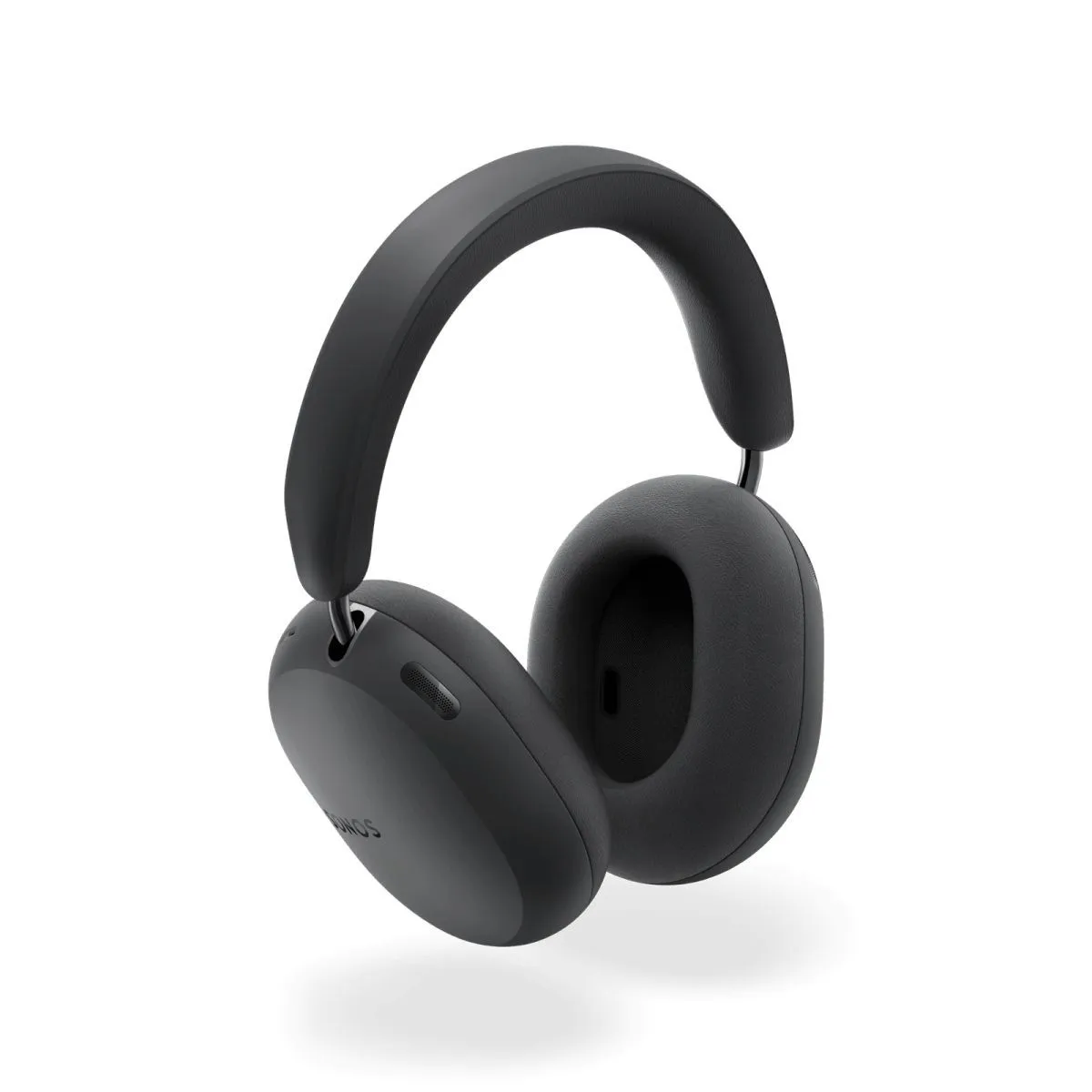
Sonos, the major audio equipment maker, has launched its second-generation flagship headphones, the Sonos Ace Ultra, offering an experience in which the headphones connect directly to Wi-Fi and play music streaming without going through a smartphone. Sony, for its part, will release the MDR-3R on November 20, a USB Type-C model that carries on the design of the MDR-3 headphones that debuted alongside the original Walkman in 1979. The contrasting approaches to connectivity are intersecting in the premium headphone market.
The defining feature of Sonos's new product is that the headphones themselves join the network built by the company's speakers and soundbars. A long press of a button on the headphones hands off a track playing on a room speaker directly to the listener's ears. The entire sequence of unlocking a smartphone, launching an app, and switching Bluetooth connection targets becomes unnecessary.
Playback control is completed on the device itself. Because it accesses streaming services directly over Wi-Fi, it has more bandwidth headroom than Bluetooth, allowing for higher-information-density sound, according to the company. The ability to move playback back and forth between speakers and headphones without interruption is also a strong selling point for those who enjoy music throughout the home.
Core performance has also been raised. Noise reduction is up to twice as strong as on the first-generation Sonos Ace, combining 10 microphones with "Adaptive ANC." Continuous playback lasts up to 35 hours with noise canceling or transparency mode active. It also supports fast charging, providing up to 3 hours of playback from a 3-minute charge.
On the audio front, it features custom 40mm dynamic drivers and supports spatial audio with Dolby Atmos and dynamic head tracking. It also includes adaptive EQ that automatically adjusts sound quality based on how the headphones are worn. Connectivity supports both Bluetooth 6.0 and Wi-Fi, and wired connections via USB-C and 3.5mm are also possible.
However, because it lacks a folding mechanism, it is bulky to carry. In terms of noise-canceling isolation, it reportedly falls a step behind the industry's top models in strong noise environments such as inside an aircraft cabin. The initial setup for the very concept of connecting directly to Wi-Fi may also seem cumbersome to users accustomed to Bluetooth.
Sony's MDR-3R takes the opposite design philosophy. The connection terminal has been changed from the original analog plug to USB Type-C, but it works simply by plugging the cable into a USB Audio Class 1.0-compatible smartphone or computer, requiring neither charging nor Bluetooth pairing. Pricing is open, with an expected street price of around 8,000 yen (about $50) including tax. It comes in silver and includes interchangeable blue and orange ear pads.
The exterior follows the MDR-3's lightweight headband style, and the SONY logo on the aluminum ornament features the same half-etching and diamond-cut finish as the original. It weighs approximately 38g excluding the cable. The drivers are the same 23mm diameter as the original, newly designed with reference to the design information of the time, with the magnet changed from samarium cobalt to neodymium. Sony says it widened the low and high ranges while adjusting the balance from the midrange to the upper-midrange to enhance vocal thickness and clarity.
Sony cites the structural shift in the wired earphone market as the planning backdrop. According to the company's research, while the overall wired earphone and headphone market has contracted slightly since fiscal 2022, USB Type-C earphones have been an exception, expanding in sales scale. Apple's adoption of the USB Type-C port starting with the iPhone 15 released in September 2023 provided a tailwind, and demand grew rapidly from fiscal 2023. However, USB Type-C headphones are currently deployed mainly as computer peripherals, and Sony sees room for growth in the smartphone segment.
Another backdrop is younger consumers' affinity for "Showa and Heisei retro." Film cameras, records, cassettes, and flip phones are embraced as fresh precisely because the younger generation has never experienced them, and wired headphones are joining that trend, Sony analyzes. The simplicity of being freed from the hassle of charging and pairing is seen as a counterpoint to fully wireless products.
Sony will also release on November 20 the "MDR-3R Stranger Things Edition," a collaboration with the Netflix series "Stranger Things." It will be available in limited quantities at Sony Store, with an expected price of around 10,000 yen (about $63) including tax. Matching the world of the series set in the 1980s, it features a design based on red and black.
While both products are headphones in the same premium price range, the directions they pursue are diametrically opposed. Sonos deepens the lock-in to its own ecosystem, premising an always-on Wi-Fi connection and eliminating the smartphone as an intermediary. Sony uses the ease of connection and the narrative quality of its design to draw in consumers interested in retro culture.
In terms of market impact, Sonos's introduction of a new usage pathway—direct Wi-Fi connection—could spur other companies' premium models to adopt smartphone-independent playback features. For Sony, the move is a stepping stone toward gaining a foothold in the smartphone peripherals market using the common USB Type-C standard.
Sonos's product is primarily aimed at users who already own the company's speakers or soundbars at home, and other companies' options remain for those who choose based on standalone isolation performance or portability. Sony's product, being wired, will also differentiate itself from those seeking the convenience of fully wireless. The diversification of connection methods expands choices for users considering an upgrade, while also complicating the criteria for product selection.