Market Mastery
Webinar by Vishal Malkan
Find the weak links
in your portfolio by Vishal Malkan
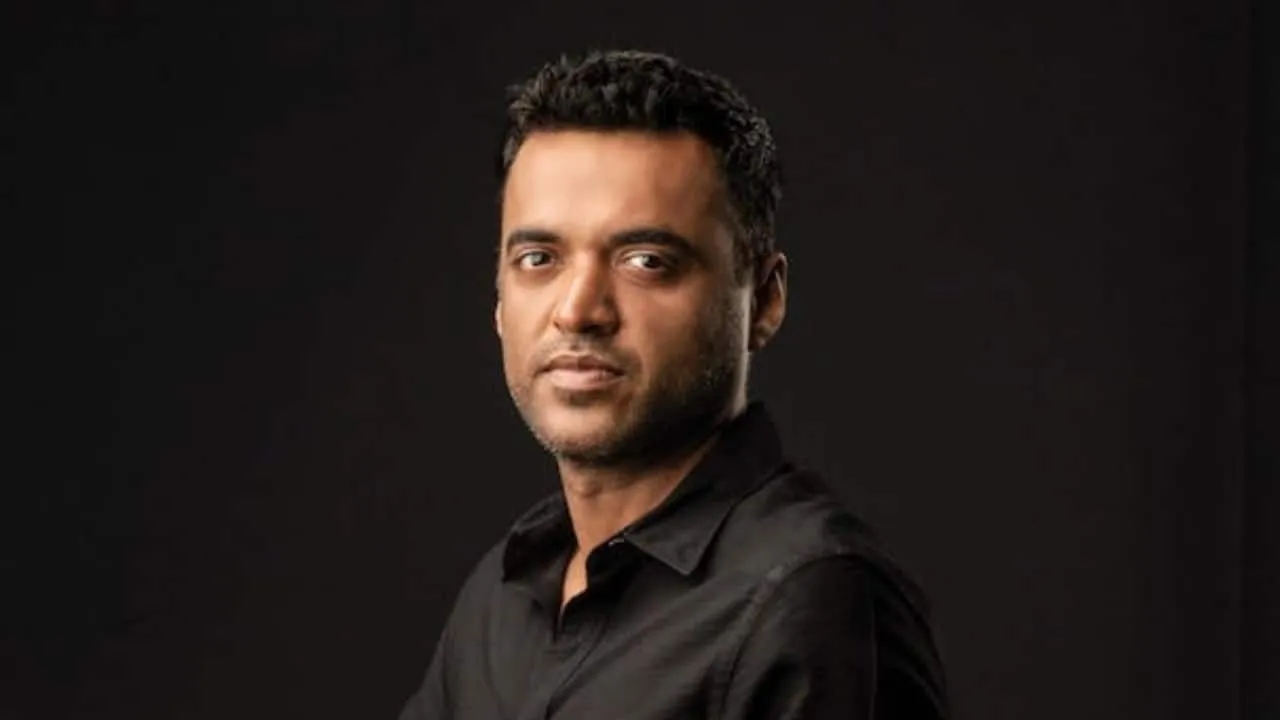
Zomato founder Deepinder Goyal has hit back at Indian doctors criticising his brain-monitoring wearable 'Temple', defending the science behind the device and insisting that the company is not making unsubstantiated claims to generate profits.
In a statement addressed to "concerned Indian doctors" on social media platform X, Goyal said the criticism surrounding Temple was misplaced and argued that the product's business model, investment and plans for independent scientific validation demonstrated his commitment to the project.
Responding to allegations and concerns raised by doctors, Goyal said Temple offered a 14-day, no-questions-asked return policy, arguing that customers would quickly identify any shortcomings in the product. He said that if the device did not deliver on its promises, the company would fail before recovering even a fraction of its research and development investment.
Goyal also revealed that the company had already spent $30 million developing Temple, of which $20 million came from his personal funds. He maintained that selling a few thousand devices would recover only a small portion of the investment, making allegations of a commercial scam illogical.
"I left the Eternal CEO role to chase purpose with Temple. This is not about money," Goyal said, adding that he had sufficient wealth and was not willing to risk a reputation built over two decades for short-term financial gains.
He further pointed out that employees had invested in the company's funding round a few months ago, while the ongoing fundraising exercise was largely backed by customers. According to Goyal, this demonstrated that people associated with the company and its product had confidence in its work.
Goyal compares Temple'S development with WHOOP
Addressing concerns over the scientific credibility of Temple, Goyal said the company was working towards publishing its research and would make its findings available for public scrutiny.
He argued that wearable technology companies often launch products before completing extensive independent validation studies, citing WHOOP as an example. Goyal said WHOOP launched its fitness band in 2015, while its first published validation followed several years later.
However, he maintained that Temple was being held to a higher standard, adding that pre-prints of its research papers would be released before peer-reviewed publications.
"At some point you have to stick your neck out and say: we believe in our science, and the product is now valuable enough for people to pay for and use. We believe we are there. More validation continues in public," he said.
Goyal also asserted that the company's claims could be independently verified by individuals and institutions, expressing confidence that several independent studies would emerge once the device became available for wider use.
What is Temple?
Temple is a wearable device developed under Goyal's research initiative to monitor physiological signals associated with cerebral blood flow. The small, metallic, pill-shaped device is worn on the side of the head, near the temple, and is designed to track changes in brain-related blood-flow signals in real time.
The device is linked to Goyal's Gravity Ageing Hypothesis, which proposes that gravity's long-term impact on blood circulation could play a role in the ageing process, particularly in the brain.
However, the hypothesis and the device's potential medical applications have faced scrutiny from doctors and medical researchers, who have questioned whether readings from a sensor placed at one point on the head can reliably represent blood circulation across the brain.
In his latest response, Goyal maintained that the company was confident about its research and its ability to demonstrate the technology's potential.
He also hinted that Temple had several features that had not yet been made public, adding that some of its most significant developments had little to do with doctors.
"The most groundbreaking features in Temple are not even public yet. And some of them, thankfully, have nothing to do with doctors," he said, ending his statement with a pointed remark: "If not, keep raging."