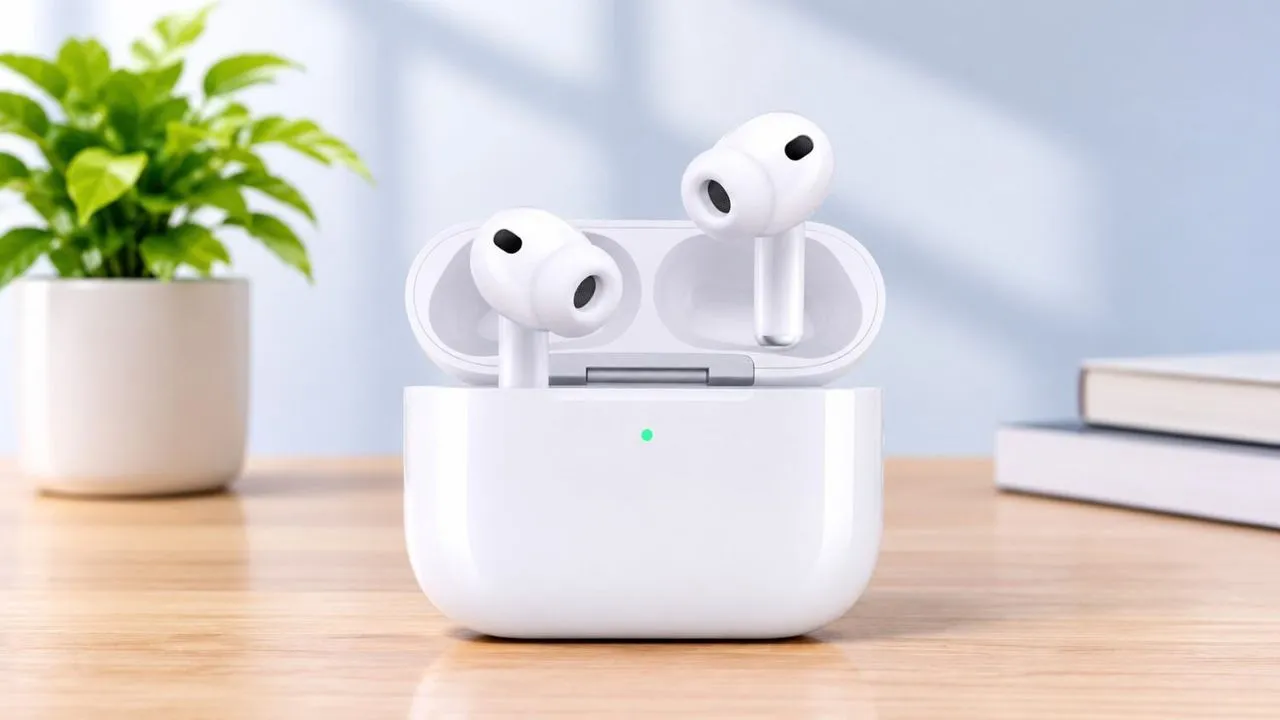
AirPods 3 can generally work as Bluetooth audio devices on Linux, though audio behavior varies by system. What Linux could not access were the internal motion sensors and their associated head-tracking data. Developer Matteo Gaudioso, known on GitHub as starman-tech, decided to close that gap.
The result is MousePods, an open-source Python project that reads AirPods motion data and converts head movement into mouse cursor input. It requires no iPhone, no Mac, and no modification to AirPods firmware.
One MTU Setting Was Blocking Everything
The sensors were present and functional; a single protocol mismatch kept Linux from finding them.
AirPods 3 expose their motion sensors as virtual HID devices through Apple’s RemoteHID protocol, carried over Apple’s accessory protocol stack. Linux’s default Bluetooth L2CAP receive MTU (the packet-size ceiling governing Bluetooth data transfers) of 672 bytes was too small to surface those devices, according to the project’s documentation. Raising it to 2,582 bytes, the value documented as used by iOS, changed what Linux could see.
Once the correct MTU is set and the appropriate HID-report sequence is sent, the AirPods begin streaming fused motion data to the connected Linux machine. That stream includes orientation, gyroscope readings, acceleration, and gravity vectors. The project’s documentation reports measured sample rates of up to approximately 210 Hz.
Claude as a Pair Engineer, Not the Engineer
The project documentation is specific about how AI contributed and where human judgment took over.
Gaudioso’s project documentation describes Claude as an “AI pair engineer,” listed as assisting with hardware probes, public research review, firmware analysis, code, and tests. Gaudioso supplied the physical hardware, performed validation, and directed the work throughout. This is iterative human-and-AI development, not autonomous AI reverse engineering of Apple hardware.
What It Does Today and What It Doesn’t
Head-mouse control is confirmed; simulator integration remains a community conversation rather than a finished feature.
The primary documented use is a head mouse: the project reports that paired AirPods 3 or AirPods Pro 2 allow users to move the cursor by moving their head. Community discussion has raised the possibility of OpenTrack or similar simulator integration with flight and racing simulators, but that is not currently implemented. MousePods provides motion data and cursor control; it is not yet a drop-in replacement for dedicated head-tracking hardware.
The project targets Linux systems running BlueZ and Python, with paired AirPods and access to /dev/uinput for virtual mouse control. Compatibility is hardware- and software-dependent, and the repository treats the work as experimental.
The Broader Point
Missing Linux support and missing hardware capability are not the same thing.