Market Mastery
Webinar by Vishal Malkan
Find the weak links
in your portfolio by Vishal Malkan
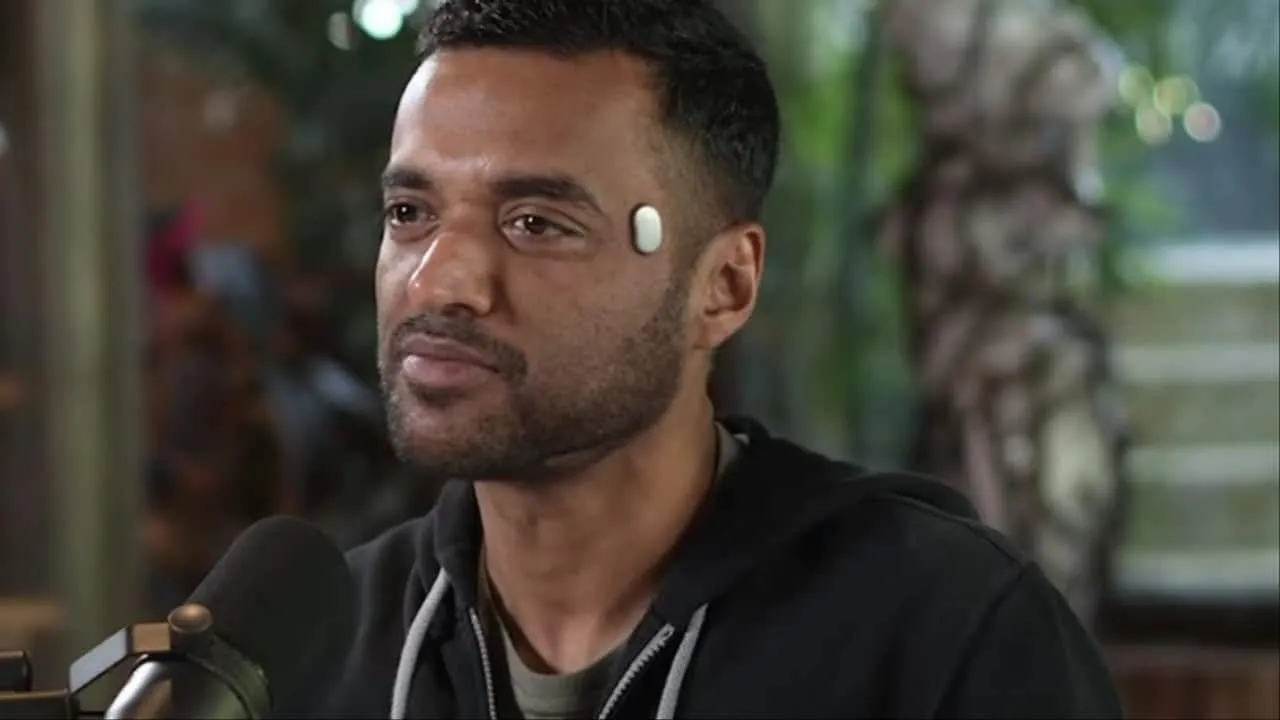
Deepinder Goyal, founder of Temple and former CEO of Eternal, on Friday unveiled Temple---a new wearable device that he describes as the world's first "roomdeaf voice AI companion", designed to listen to its wearer without using a microphone, camera or screen.
Announcing the device, Goyal said Temple uses motion sensors to detect vibrations generated by the wearer's voice and convert them into text. The technology, which he has termed "roomdeaf audio", is designed to capture only the user's voice while filtering out conversations and sounds in the surrounding environment.
"Temple doesn't have a mic, but can still hear you," Goyal said, describing the device as an alternative to voice-enabled AI products that rely on microphones and potentially capture conversations happening around their users.
According to Goyal, Temple is activated through a double tap. A small vibration confirms that the device is listening, while another buzz indicates that it has finished processing the interaction. The device is designed to work without users having to take out their smartphones.
Goyal said the idea emerged while he was working on developing a health wearable as a weekend project, when he was still heading Eternal. An engineering breakthrough during the process prompted him to return to building full-time with Temple.
How Temple will work
The wearable is designed to be attached to the temple using medical-grade adhesive tapes called Grips. According to Goyal, these are designed for continuous, multi-day use, including during showers, swimming, workouts and sleep. The device is expected to require recharging once a week.
Goyal said the absence of a microphone and camera means Temple cannot record conversations happening in the surrounding environment. He said the device could be used in settings such as boardrooms, concerts and other crowded spaces without capturing the conversations of people around the wearer.
The device is also intended to function as a personal memory and reminder companion. Users will be able to dictate ideas, record everyday observations, set reminders for birthdays and anniversaries, and receive notifications through vibrations on the wearable.
Other proposed features include sending messages to loved ones, receiving alerts when someone replies, setting medication reminders and recording personal notes without having to use a smartphone.
Goyal said users could also log everyday health-related observations, such as headaches and dizziness, allowing Temple to identify patterns over time and potentially provide useful insights that users or their doctors might otherwise overlook.
Health tracking and AI features
Beyond its AI capabilities, Temple is being developed as a health and wellness wearable. Goyal said its position near the superficial temporal artery could enable it to capture health signals that conventional wrist- and finger-based wearables may not be able to monitor.
According to him, the device already supports several health-tracking metrics, including heart rate (HR), heart rate variability (HRV), sleep and VO2 max.
The company is also working on additional features such as automatic chewing detection for calorie tracking, snoring-pattern monitoring, sleep-position tracking, jaw-clenching detection and rapid eye movement (REM) tracking for sleep insights. Continuous core body temperature monitoring is another feature under development.
Goyal said the company was working on research breakthroughs, particularly in an area he referred to as 'Entropy', and was validating the findings before sharing further updates.
Privacy at the centre of Temple
Positioning privacy as a central feature of the product, Goyal said Temple's conversations would be end-to-end encrypted and would not be accessible to model companies or even the company's own team.
He said the company would not use users' personal data for advertising or sell it to advertisers.
Unlike conventional AI assistants, Temple is being positioned as a companion rather than a full-fledged assistant. Goyal said the device would focus on functions that are natural to its form factor and do not require a screen, adding that it would not be designed to carry out tasks such as shopping on behalf of users.
Describing Temple as an evolving technology project rather than a finished product, Goyal said the company intended to continuously develop its capabilities through research and development.
Temple 01 launch timeline
Goyal said the first version, Temple 01, is scheduled to begin shipping in early 2027 with both AI and health features.
He described the first device as the beginning of a longer development journey, inviting early adopters to participate in shaping the technology and its future applications.
"Temple 01, shipping early 2027 with both AI and health features, is just the start," he said.
In a prrevios post, he had teased X users saying that a lot of people had asked him why did he leave Eternal---a $35 billion company he founded 18 years ago---to build Temple.
"Why did I leave Eternal? What are we building at Temple? What’s our vision statement? What do we have in store for humanity?," said the Eternal founder in a post on X.
"Temple is an ambitious project. The team is delusional enough to think we can build this. And we will," he said.