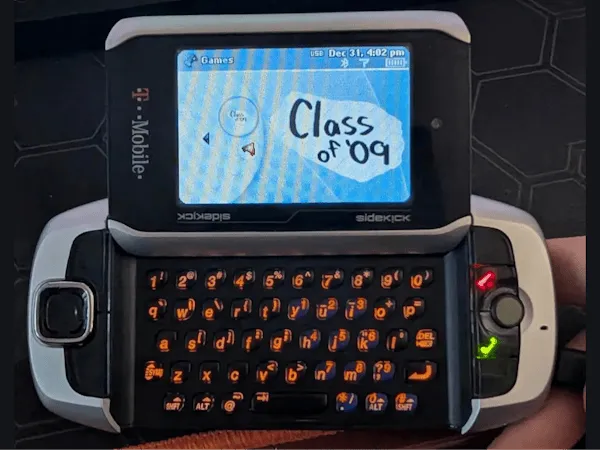
Long before smartphones became the pocket-sized computers we know today, the T-Mobile Sidekick was giving people a taste of the future. Released in 2002, it featured a full QWERTY keyboard, instant messaging, and push notifications at a time when most phones were still using multi-tap texting. But the Sidekick had one major weakness: it depended heavily on Danger's servers, which shut down in 2011, leaving the devices with much of their functionality permanently disabled.
Or at least that's how things stood until Ashe decided to bring the Sidekick back to life. More than two decades after its debut, this hardware hacker has cracked its security system, built a browser-based simulator, and started recreating the long-defunct backend services.
The first challenge was getting custom software running on a real Sidekick 3. DangerOS, the phone's Java-based operating system, only accepted applications signed by Danger or an authorized carrier. Developers could once obtain special keys to bypass this restriction, but that program disappeared along with the company.
After tracking down an archived software development kit and factory firmware images, Ashe discovered that Danger's developer certificates relied on a 512-bit RSA key. That was a relatively modest security measure even in the early 2000s, and modern computers can break it with enough processing power.
Using the open source CADO-NFS factoring software, Ashe distributed the workload across seven computers with a combined 220 CPU cores. After about eight and a half hours, the machines had factored the public key, making it possible to reconstruct Danger's original private signing key.
With that key, Ashe generated a valid developer certificate and installed it on a Sidekick 3. The phone accepted it, unlocking the ability to run custom applications. The first test was a port of the visual novel Class of '09, complete with graphics, audio, and notifications.
Unlocking the hardware was only one part of this project. Ashe also created a browser-based Sidekick simulator that runs the original DangerOS software through a custom Java interpreter written in JavaScript. Visitors can explore the interface, launch applications, and play games without owning the hardware.
Still, the device isn't very useful without the original servers it connected to. To fix this, Ashe built Re:Danger, a replacement for the cloud services that originally powered the Sidekick. So far, Ashe has restored basic functions like clock synchronization and instant messaging, with Discord standing in for the long-defunct messaging networks. A basic web proxy even allows the simulated phone to browse modern websites.
There is still plenty of work ahead before this project is complete. Re:Danger currently works only with the simulator, and connecting an actual Sidekick will require additional effort. Ashe plans to experiment with a software-defined radio to create a private GSM network that can connect the original hardware to the new servers.
Even as it currently stands, Re:Danger is already bringing a forgotten piece of mobile history back to life. And with any luck, those old Sidekicks might soon be doing more than collecting dust in a drawer.