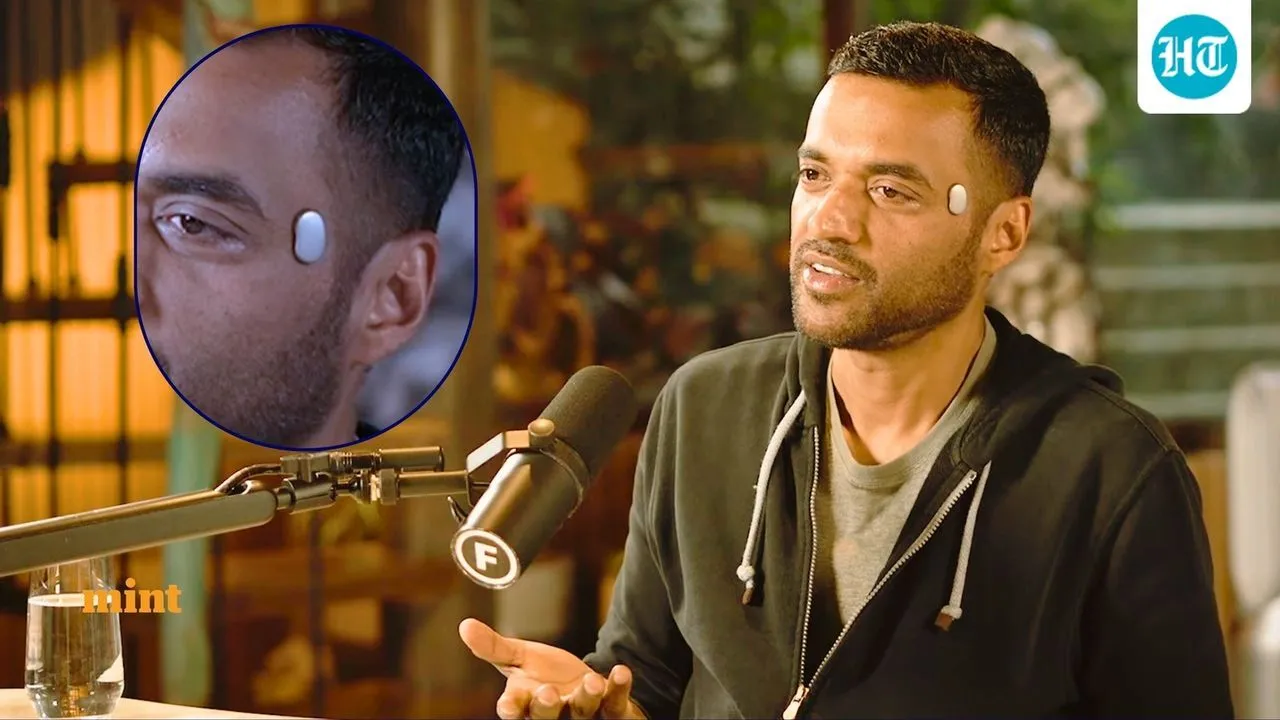
A man’s viral LinkedIn experiment to "reverse engineer" the microphone-free voice-capture technology behind Deepinder Goyal’s wearable device, Temple, has caught the attention of the entrepreneur himself. After the man claimed that he converted physical vibrations into text using a standard laptop motion sensor, Goyal praised him, revealed key technical details about how Temple operates, and offered him a chance to test the device for a day.
“I reverse engineered Deepinder Goyal's Temple so my laptop can hear me without a microphone,” wrote Krishna Veera Vanamali Y, who works at a venture capital firm, adding, “Not exactly (I don't have the device) but I wanted to test his claim that physical micro-vibrations generated through the skin and skull when speaking can be converted into text.”
Also Read: Deepinder Goyal defends Temple amid criticism over its science, says it's not a scam
In the following lines, he explained in detail how he used his laptop's accelerometer, a type of motion sensor, to mimic the device's technology.
“This only worked on slowed audio played from the laptop speakers directly. Which makes sense because Temple sits pressed against your head with what I'd guess is a much faster bone-conduction sensor with higher sensitivity than this. This is also why Temple can't 'hear' people around/near you because the sensor can only detect physical surface vibrations,” he wrote as the concluding lines of the post.
About Temple:
The official website describes it as “world’s first precision fitness tracker with Roomdeaf AI that listens only to you.”
The site explains the device was created in collaboration with a multidisciplinary panel of researchers and scientists. The scientists who serve on the panel are: Dr David Salat, Dr Danielle Posthuma, Dr David Boas, Dr Meher Juttukonda, Dr Rachael Seidler, Dr Anna Devor, Dr Carmen Sandi and Dr Baptiste Lacoste. They are all PhD holders in different fields.
Controversy surrounding Temple:
Temple has been caught in a storm of controversy since opening pre-orders at ₹85,000 on November 1. Several prominent Indian doctors and medical specialists publicly questioned the scientific credibility of the forehead-worn device. Pushing back against the medical scrutiny, Goyal insisted that Temple is strictly a "fitness and AI device" rather than a medical product.
A note on the official site also reads, “Temple is not a medical device, and is not intended to diagnose, treat, cure, mitigate or prevent any disease or medical condition. It is not a substitute for professional medical advice.”
As backlash over the ₹85,000 price point intensified online, Goyal sparked a fresh debate on November 8 by tweeting that the wearable is not built for the domestic market.
Also Read: Deepinder Goyal says his 'Zomato guy' reputation works against his new health-tech venture Temple
"Temple is not made for India. It’s made for the world," he wrote on X. The remark drew sharp pushback from sections of India’s startup and business community, with several founders and consumers criticising the tone as dismissive of homegrown buyers who already spend heavily on global wearables.