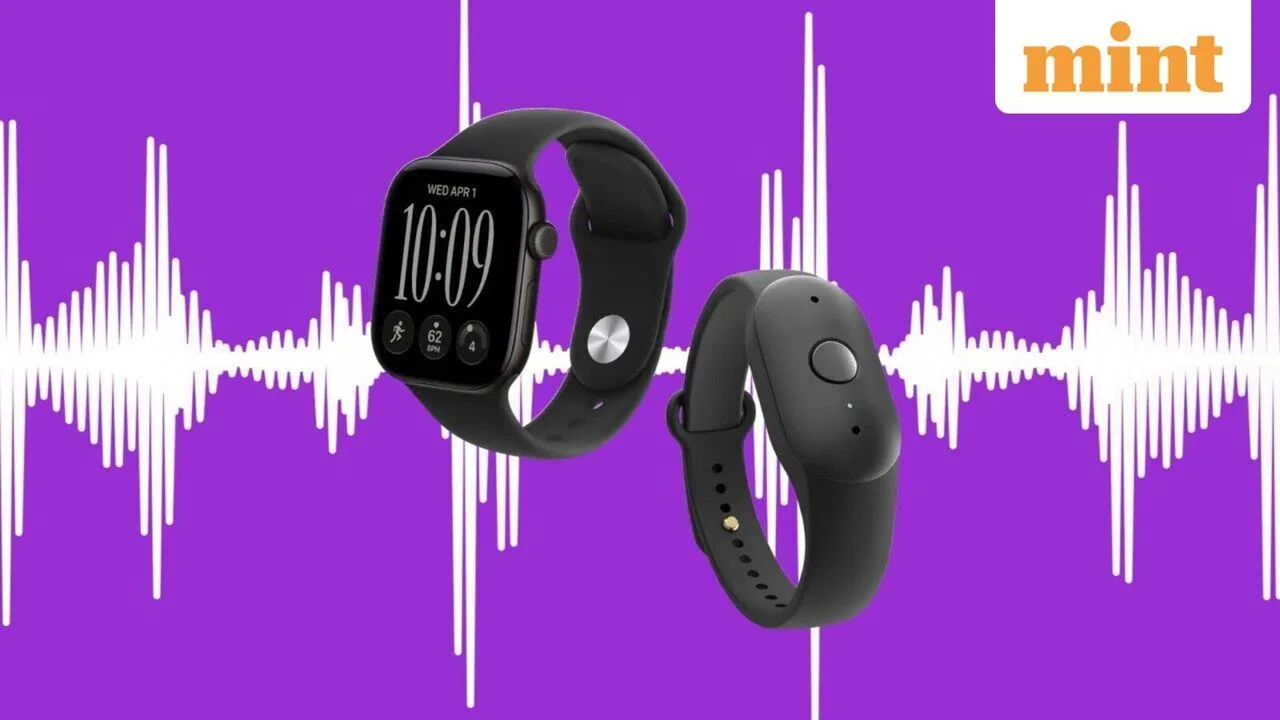
Their pitch is to augment our memory. I get the appeal. If I don’t put it on my calendar or to-do list, it slips my mind entirely.
But what about privacy, both mine and that of anyone whose voice gets recorded? If we know a wearable is listening, we might speak less freely, unsure of where that transcript might end up.
The Apple Watch and Bee bracelet are more covert than some AI devices, like Meta Glasses. People were surprised when I said they were recording our conversations. But the subtlety speaks to something bigger: One day soon, we might have to assume anything has ears.
Memory palace
AI is really good at processing speech. Just ask anyone who has replaced typing with laptop-whispering.
Apple Watch Series 12 (or Ultra 4) and the Bee bracelet can make sense of hours’ worth of ambient audio. The devices scooped up a lot of my personal information, ranging from work gossip to health-insurance planning.
Apple and Amazon say the data is private and employees can’t access it. That’s partially reassuring, but there’s still a deeply sensitive record that lives on my phone. I would hate for it to get out, by hack or leak or accidental sharing.
There are two new Apple Watch features: Live Rewind generates short transcripts from the last 15 seconds of speech when prompted, while Siri Recap generates high-level summaries of your conversations, and stores them in the Siri app.
Double-pressing the digital crown triggers Live Rewind. It only shows a few sentences, and the accuracy is hit or miss. You can purge or save the snippet to the Siri app. You might use it in a lecture or a meeting if you missed something, just beware: The watch emits an audible alert chime, even on silent mode.
Siri Recap is more interesting. When the Apple Watch detects a conversation, it sends encrypted audio to your iPhone, which transcribes the text and routes a condensed version to Apple’s Private Cloud Compute servers. You can’t view the transcript, only an outline that appears in the Siri app after a few minutes. Summaries auto-delete after a week unless you save them. You can set the watch to never record at certain times or locations.
It’s factual and sometimes hilariously devoid of context. Some recent bullets:
“Currently holding 40 bucks cash”
“UPS package already labeled”
“Tape on the ground in the office”
Not exactly riveting, but such is my day-to-day. Most of these details would make no sense to anyone but me. Reviewing the recaps felt less like peering into an external brain and more like an end-of-day memory-jogging exercise.
Bee keeps more detailed notes—word-for-word transcripts and summaries, plus proactive suggestions, such as to-do lists. I also liked that I could press and hold the button to save voice notes. Bee streams the audio to your phone via Bluetooth, then to Bee Private Compute servers where it’s transcribed and summarized.
An onboarding page says, “Bee listens to help you reflect, remember and grow.” It also settles domestic debates.
My husband, Will, and I both made morning plans assuming the other was on kid duty. The previous day, he had mentioned his plans. I had assumed he’d looked at our shared calendar, where he would have seen what time I had already blocked off.
We turned to the Bee transcript. It wasn’t a perfect record—it doesn’t convey tone or even get all the words right. But sure enough, it showed he never specified when his plans were taking place. Nobody was “right,” but we got to the bottom of it.
One Bee to-do item reminded me to remove the car-seat cover for the next wash. Less actionable but more telling was Bee’s tab for personal insights: It noted that my social and family logistics are “intensifying around Thanksgiving,” with travel timing and backup child care needs as “active stressors.” I am considering booking a spa day.
Despite occasionally mixing up names and facts, both devices were generally accurate. Having watched family members navigate dementia, I wondered how this tech could have helped them.
But reading my record of the week, I got an icky feeling like all of this was too much information.
‘Can I record you?’
Out of social courtesy—and legal obligation—I asked people whether they minded my recording them.
No, I explained, the wearables don’t produce audio files, and there’s no way to listen back to what it heard. The Bee bracelet turns on a green now-recording light. When Siri Recap is active, the icon lights up in the Control Center but there’s no chime for that.
To my surprise, no one flat-out refused. Perhaps they were being polite, or maybe it’s becoming more of a norm, especially here in San Francisco.
At a birthday party last weekend, I got tired of awkwardly asking permission. With a quick button press on the Bee and a tap on the Apple Watch, I shut off the recording functions—and felt relief.
California is one of several states that require all-party consent, which means all participants in a private conversation must agree to be recorded. As long as a device is listening and extracting information from data—even if it only retains summaries—it likely constitutes a legally regulated recording, says Eric Goldman, professor of law at Santa Clara University.
In one-party consent states, you don’t have to ask. “Even if the law were to permit nonconsensual recording, is that really the right way to live our lives?” Goldman says.
Asking permission is the right thing to do. But how long will that last if these products proliferate everywhere?
I wouldn’t recommend buying a wearable just to log your life. If you’re upgrading your Apple Watch anyway, it’s worth trying the memory-aid functions. If you really want a dedicated note-taker like Bee, just be mindful of what it’s picking up—and take it off before your next dinner party. Keeping memories isn’t worth losing friends.