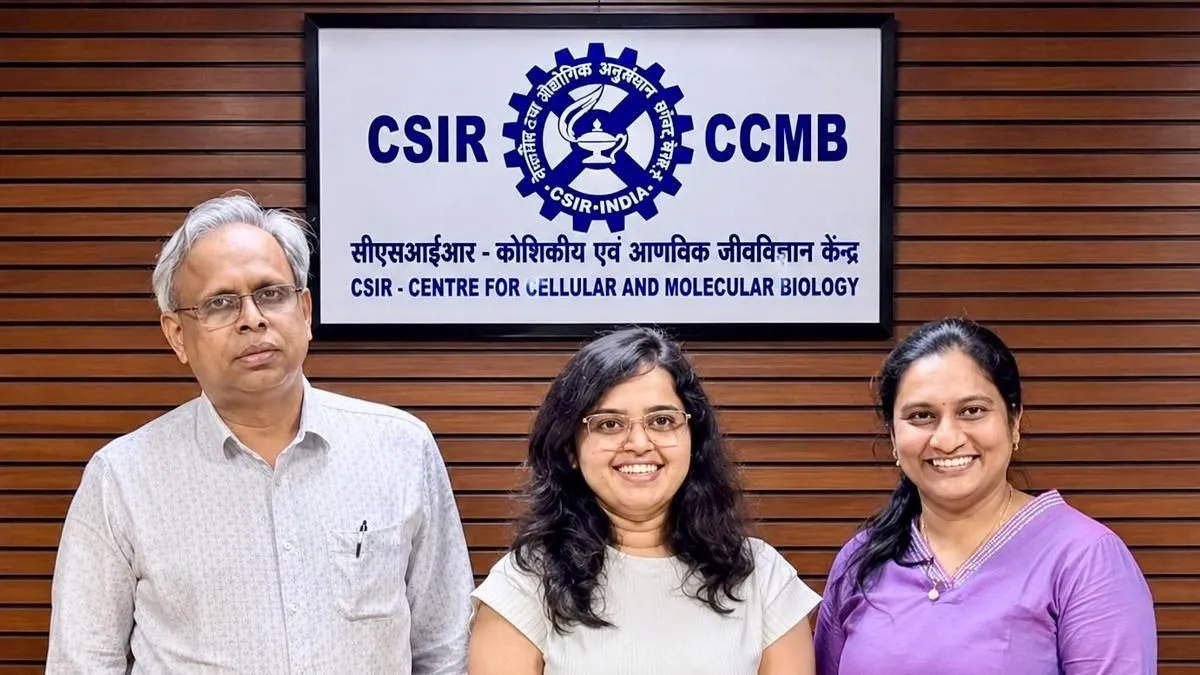
A team of scientists at the CSIR-Centre for Cellular and Molecular Biology (CCMB) has identified critical weaknesses in the bacterium that causes Tuberculosis (TB), a finding that could pave the way for the development of new treatments against one of the world’s deadliest infectious diseases.
The discovery is particularly significant for India, which accounts for nearly a quarter of global TB cases and about a third of drug-resistant infections, according to the World Health Organisation’s Global TB Report 2025. Drug-resistant TB remains a major public health challenge, as treatment requires a combination of antibiotics taken over several months and is becoming increasingly difficult due to the emergence of resistant strains.
Led by CCMB Director Vinay Kumar Nandicoori, the research team mapped the protein export machinery of Mycobacterium tuberculosis (Mtb), the bacterium responsible for TB. The study sheds light on how the pathogen transports proteins within and outside its cells, a process essential for its growth, survival and ability to cause disease.
The research was carried out by joint first authors Priyadarshini Sanyal and Jagadeeshwari Uppada in collaboration with scientists from the Institute of Mathematical Sciences, Chennai, led by Areejit Samal, and the Translational Health Science and Technology Institute, Faridabad.
Using a combination of computational modelling and laboratory experiments, the researchers identified 92 key components and nearly 200 molecular reactions involved in the bacterium’s protein transport network. These included the general Sec pathway, the Twin-Arginine Translocation (Tat) system and the specialised ESX secretion systems unique to this group of bacteria.
“Protein secretion acts like a delivery system inside the bacterium and is vital for its survival,” said Dr Uppada. The team focused on two major secretion pathways, SecA1 and Tat, employing CRISPR-based gene-silencing technology to reduce their activity. The results were striking: bacterial growth declined sharply both in laboratory cultures and inside immune cells, demonstrating that both pathways are essential for the pathogen’s survival.
Dr Priyadarshini Sanyal said further analysis revealed that disrupting these systems affected the export of more than 100 proteins in the SecA1 pathway and around 140 proteins linked to the Tat system. Researchers also observed structural damage to the bacterial cell membrane, making it unstable and more permeable. Proteins that normally remain inside the bacterium began leaking into the surrounding environment.