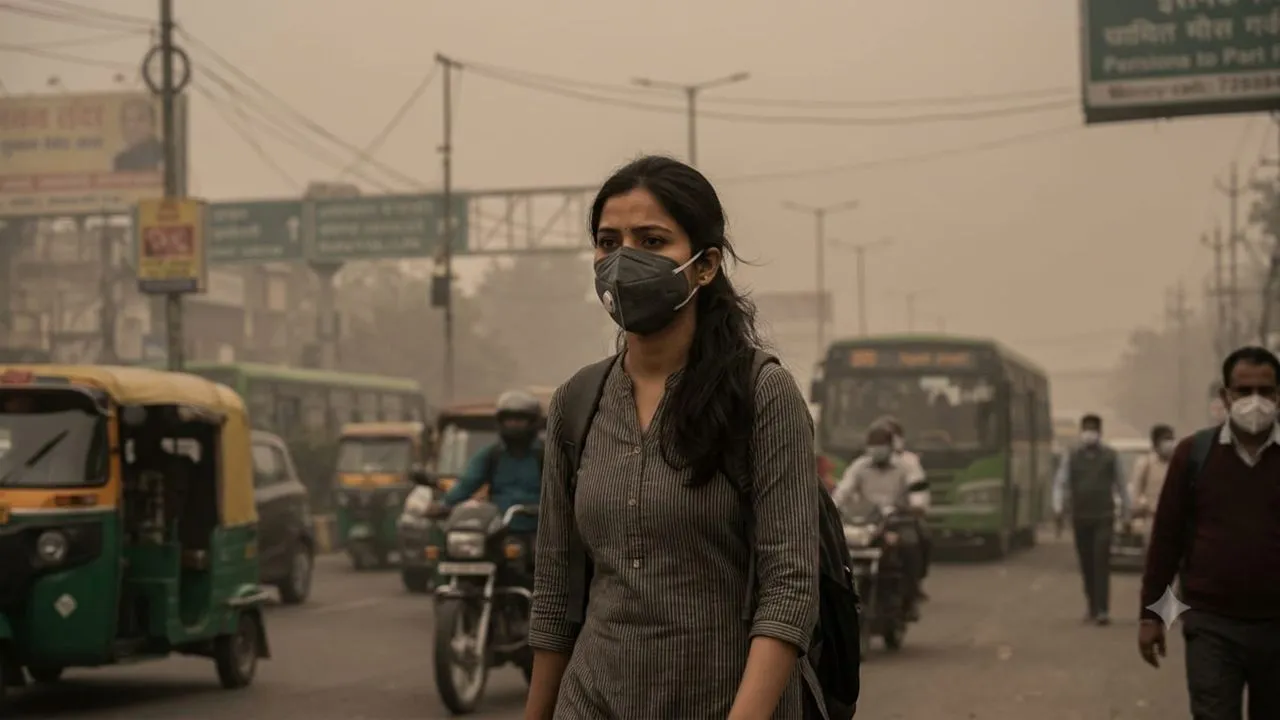
You may never have smoked a cigarette. But that does not mean you are completely protected from lung cancer. Doctors are increasingly reporting a changing profile of lung cancer patients, with more women, younger people and non-smokers being diagnosed. The discussion around risk is also moving beyond tobacco to include environmental exposures from polluted outdoor air to the smoke and pollutants people may encounter inside their homes. "The demographic of lung cancer has changed significantly. In the 1980s, we typically saw lung cancer in men over 60, most of whom were smokers. But over the last 5-10 years, we have been seeing a different pattern. More women, non-smokers and younger people are being diagnosed with lung cancer. The profile of the patient is changing," says Dr Harsh Vardhan Puri, Senior Consultant, Thoracic, Robotic & Lung Transplant Surgery, Institute of Chest Surgery, Medanta - The Medicity, Gurugram.
The Changing Numbers
Lung cancer continues to be a major public health concern in India. A 2025 study published in JAMA Network Open, based on data from the National Cancer Registry Programme, estimated 1,05,209 cases of lung and bronchus cancer in India in 2024. Of these, 74,763 were among men and 30,446 among women. But the changing profile of patients is not only about the number of women being diagnosed. It is also about the growing recognition that lung cancer can affect people who have never smoked. A study at Sir Ganga Ram Hospital, which examined 150 lung cancer patients, reported that the proportion of non-smokers had risen from around 10% in an earlier group to nearly 50% in the more recent group studied. This is a hospital-based finding, not a national estimate, but it points to a shift doctors are observing in clinical practice.
The Gender Gap: Why Women's Risk Is Often Overlooked
For Vandana Mahajan, a cancer and palliative care counsellor, the issue is also deeply personal. Having experienced thyroid cancer herself, she has spent years working with people diagnosed with cancer and supporting them through treatment and care. "Lung cancer is no longer a disease that affects only people who smoke. The growing concern around young Indian women who have never smoked reminds us that the air we breathe, the environment we live in and exposures beyond our control may also affect our health. A woman does not need to smoke to be at risk of lung cancer. Awareness, early diagnosis and prevention must become priorities," says Vandana.
READ | GRAP III Imposed In Delhi-NCR Amid Rising Pollution Levels
Indoor Air Pollution: A Risk Inside The Home
Lung cancer among women who have never smoked is an important area of research. One factor that deserves greater attention is long-term exposure to environmental pollutants, including household air pollution.
Dr Sunny Virdi, Associate Director, Alchemist Hospitals, Panchkula points to adenocarcinoma, a subtype of lung cancer that is particularly common among people who have never smoked. "Lung cancer is no longer a disease restricted to smokers, and rising air pollution is an important public health concern. Adenocarcinoma, the most common subtype of lung cancer worldwide, is also the predominant type seen in people who have never smoked. Prolonged exposure to polluted air, particularly fine particulate matter (PM2.5), is associated with an increased risk of lung cancer. These microscopic particles can penetrate deep into the lungs, triggering chronic inflammation and biological changes that may contribute to cancer development."
The discussion must also include the air inside homes. In households that rely on solid fuels such as wood, coal and biomass for cooking, smoke can release fine particles and other harmful pollutants. Poor ventilation can increase exposure, particularly when cooking is done over long periods.
Women and children can face a greater share of this exposure in households where they spend more time cooking or near cooking areas. The World Health Organization identifies household air pollution as a risk factor for lung cancer and highlights the disproportionate health burden it places on women and children. The risk conversation, therefore, cannot be limited to whether a person smokes. The quality of the air inside the home matters too.
When Symptoms Are Missed, Diagnosis Can Be Delayed
Delayed diagnosis, often because symptoms are overlooked or mistaken for common respiratory illnesses, can affect the stage at which lung cancer is detected and the treatment options available. "Many women with lung cancer are diagnosed at an advanced stage. One reason is that symptoms such as a persistent cough are often mistaken for an allergy or a respiratory infection. In some cases, tuberculosis is suspected before the underlying malignancy is detected. This can delay diagnosis. The good news is that treatment options have improved significantly. Depending on the type and stage of cancer, surgery, targeted therapies and immunotherapy can offer meaningful benefits. In some cases, outcomes among non-smokers may be better than those seen in smokers," says Dr Virdi.
Air Pollution And The Lung Cancer Connection
Outdoor air pollution is another concern, particularly in cities such as Delhi-NCR, where people are exposed to high levels of particulate matter. The International Agency for Research on Cancer (IARC) has classified outdoor air pollution and particulate matter as carcinogenic to humans.
A 2025 global study estimated that nearly 1.95 lakh cases of lung adenocarcinoma worldwide in 2022 were attributable to ambient particulate matter pollution. The findings add to the evidence linking polluted air with the burden of lung cancer.
As Dr Puri points out, environmental exposure needs to be taken seriously. "In cities like Delhi-NCR, where air pollution frequently reaches hazardous levels, even lifelong non-smokers are exposed to a significant environmental health risk. While smoking remains a major cause of lung cancer, we must recognise that the air we breathe can also contribute to the disease."
Don't Ignore The Symptoms
One of the challenges with lung cancer is that symptoms can be subtle in the early stages. A persistent cough may be dismissed as an allergy or irritation caused by pollution, while breathlessness may be attributed to other respiratory problems. An ICMR analysis of 22,645 lung cancer cases found that 44.8% of patients had distant spread of the disease by the time they were diagnosed.
A persistent cough, coughing up blood, unexplained weight loss, chest pain or worsening breathlessness should prompt medical evaluation. These symptoms do not automatically indicate cancer, but they should not be ignored particularly if they persist or worsen. Smoking remains the leading risk factor for lung cancer, but it is not the only one. Outdoor air pollution, household smoke, second-hand smoke and certain occupational exposures also deserve attention.
For women and people who have never smoked, the message is especially important: lung cancer should not be ruled out simply because there is no history of tobacco use. Greater awareness, cleaner household energy, better air quality, research into lung cancer among never-smokers and timely medical evaluation are all part of the response. Because not everyone diagnosed with lung cancer has ever smoked. And that is a reality we can no longer afford to overlook