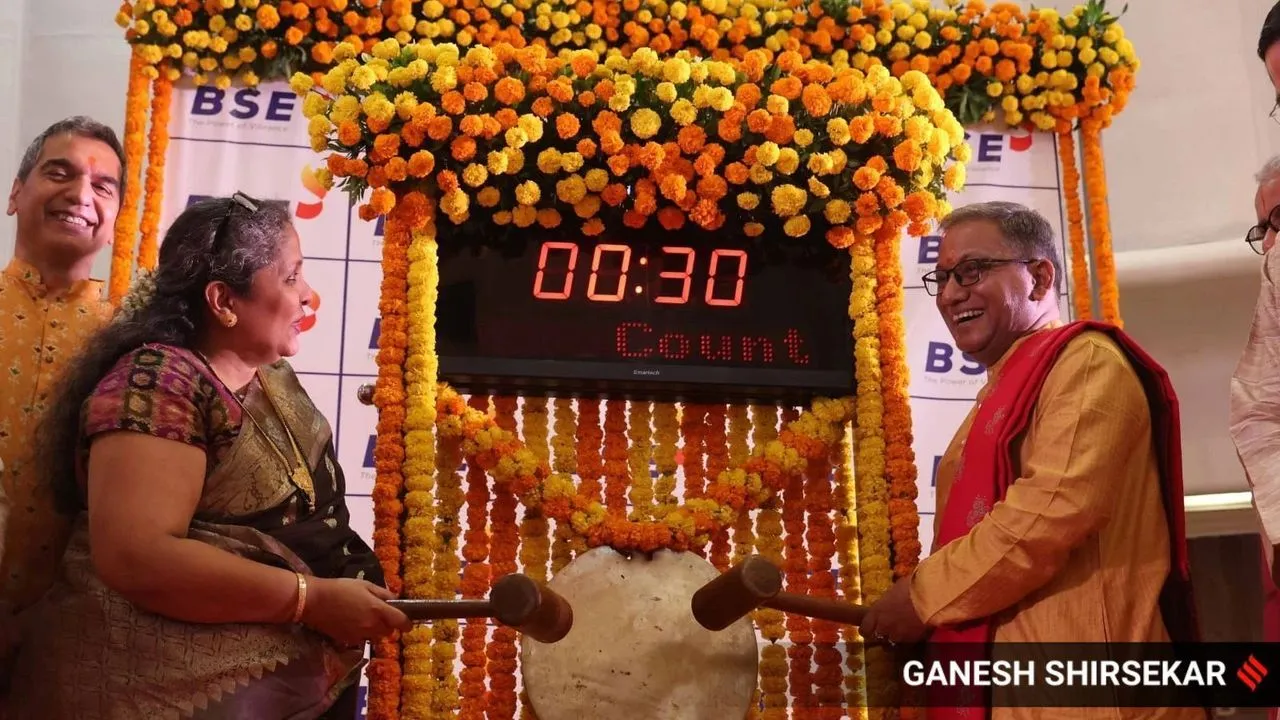
“From a market perspective, we believe the outlook for the coming Samvat (Hindu new business year) remains constructive, albeit with expectations of moderate and more selective returns,” said Avinash Agarwal, SVP and head of equity at Bandhan Life. Earnings growth, rather than valuation expansion, is likely to be the primary driver of market performance going forward, he added.
Sectoral indices ended mixed on Sunday, with pharmaceuticals and healthcare adding as much as 2%. Meanwhile, IT and financial services weighed, with heavyweights such as ICICI Bank and HDFC Bank ending lower. Broader market indices, which had sat out of the rally on Friday, saw robust gains.
Ramdeo Agrawal, Chairman and co-founder of Motilal Oswal Financial Services, said: “After two years of stagnation, market has the potential to give investors bumper returns by next Diwali, because of the confluence of low valuation and high earnings growth.”
Having fallen as much as 15% in 2026, Indian markets have got a significant boost in recent days as foreign investors have returned in droves following a drop in artificial intelligence (AI) driven markets such as US, Taiwan, and South Korea, with the latter two having fallen as much as 45% from their peaks. Foreign portfolio investors bought shares worth $4.6 billion this week until Friday. This marks a big departure from what has prevailed for the better part of three years: from January 2024 to October this year, foreign investors have dumped $50 billion worth of Indian shares.
Fueling the fears about an AI investment reversal is the Democrats’ resounding win in the US midterm elections, with investors concerned whether new lawmakers will slow down the construction of data centres. However, after a 5.5% fall on Thursday, the tech-heavy Nasdaq Composite rose 1.1% on Friday.
India, which was largely bypassed by the AI investment boom of the last year due to its low exposure to the new technology, has emerged as an ‘anti-AI’ play. Indian IT firms, which were decimated as their business came under pressure from the automation of several services from newer and newer AI models, have recovered some investor favour.
With the rupee stabilising after the Reserve Bank of India took measures on October 10 to make it more expensive to buy protection from a weaker rupee and removing oil marketing companies’ demand for dollars from the open market, and companies reporting robust second quarter earnings, foreign investors have found reasons to buy Indian shares.
If the Democrats’ midterms victory has hit AI firms, it has also raised hopes of the end of the war in West Asia, which should bring down global energy prices.
Experts consider crude oil prices as the biggest factor deciding the direction of the Indian market going ahead. The current winning run has coincided with fuel prices declining sharply to closer to $90 a barrel.
Meanwhile, in Israel, Gadi Eisenkot – Prime Minister Benjamin Netanyahu’s strongest rival – was chosen by President Isaac Herzog on Saturday to form a new government after neither Eisenkot nor Netanyahu managed to secure a majority in the parliamentary elections late last month.
Eisenkot, who will now have up to six weeks to form a new government, is a former chief of the Israel Defence Forces. Netanyahu is currently governing Israel in a caretaker capacity.
In a sign that uncertainty remains, the India VIX – a pressure gauge of the market – gained for the third straight session on Sunday, ending 5% higher. This shows that uneasiness remains in the Indian market despite the strong rally over the past few sessions.